Why the sewer lateral is a blind spot
The lateral is the private pipe between the house and the public sewer main, usually under the front yard. In most cases the homeowner is responsible for it. A general inspector can run water in sinks and flush toilets, but a line can drain normally during a short test and still be cracked, sagging or half full of roots.
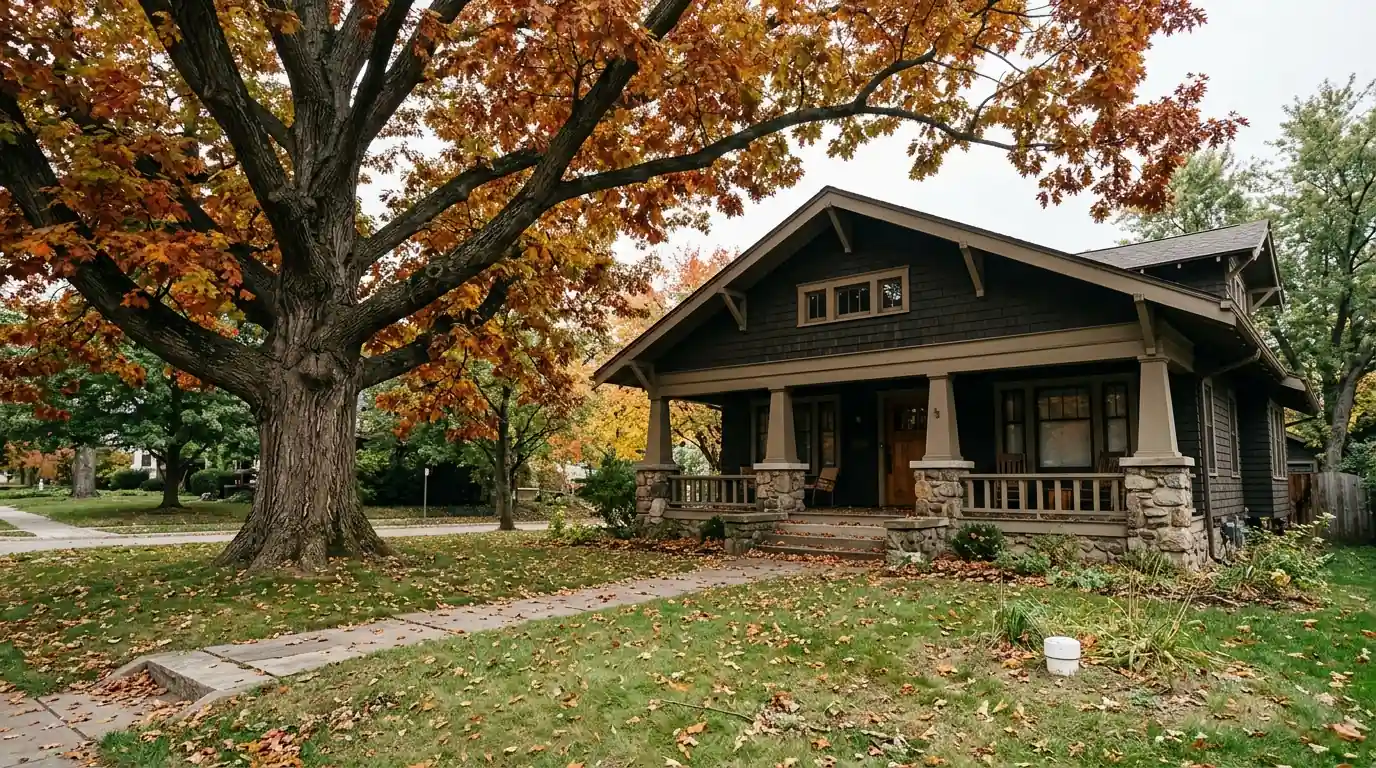
That matters most in Salem's older neighborhoods. Homes in Grant, Highland, Fairmount Hill, Gaiety Hill and Northeast Salem were often built between the early 1900s and the 1940s, and many still have their original clay or concrete laterals. Postwar homes in areas like Morningside, Candalaria and Lansing can have pipe that is now 50 to 70 years old. Big street trees sit over many of these lines.
A sewer scope puts a camera inside that pipe so you can see its condition before the purchase is final, while you still have time to ask questions. It is a short visit compared with the cost of what it can uncover, and it turns the most hidden part of the plumbing into something you can actually see, measure and price before the house becomes yours.
How a pre-purchase scope works
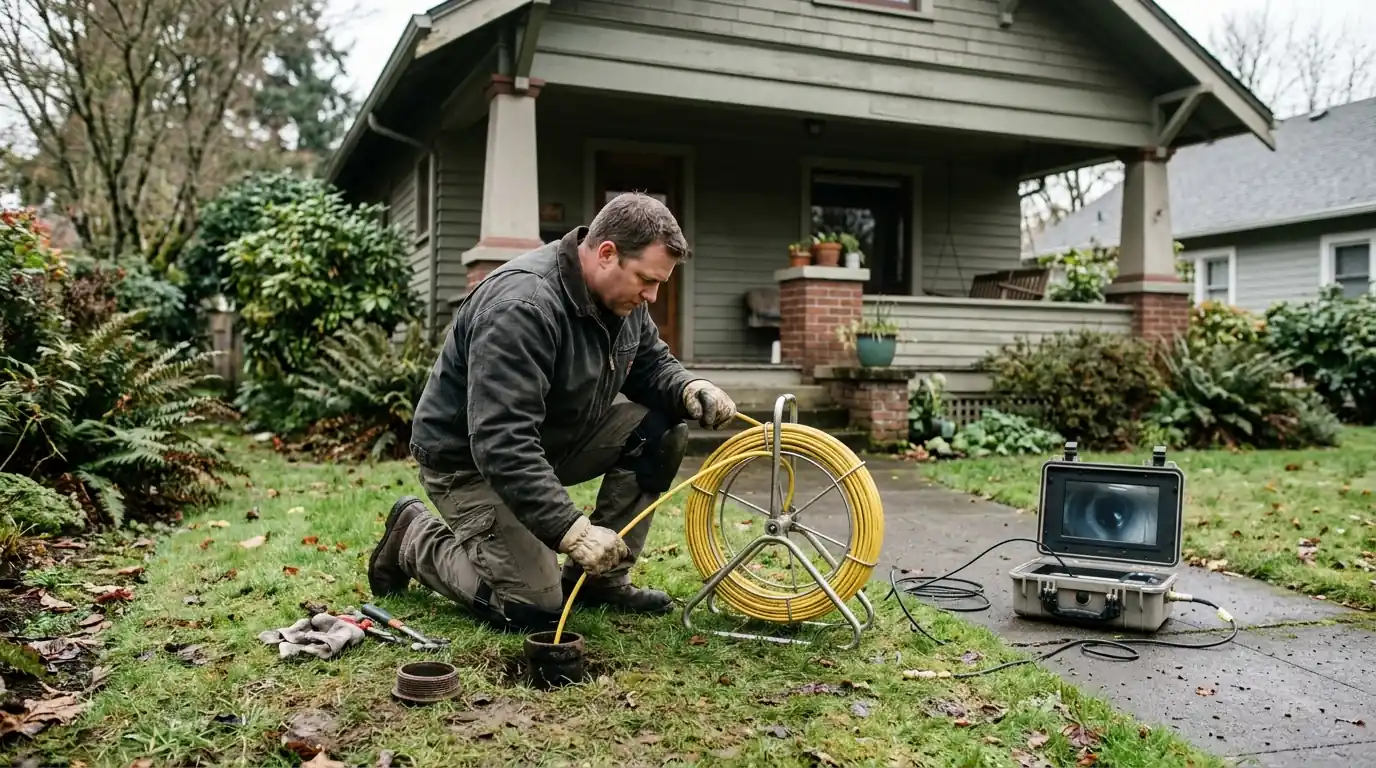
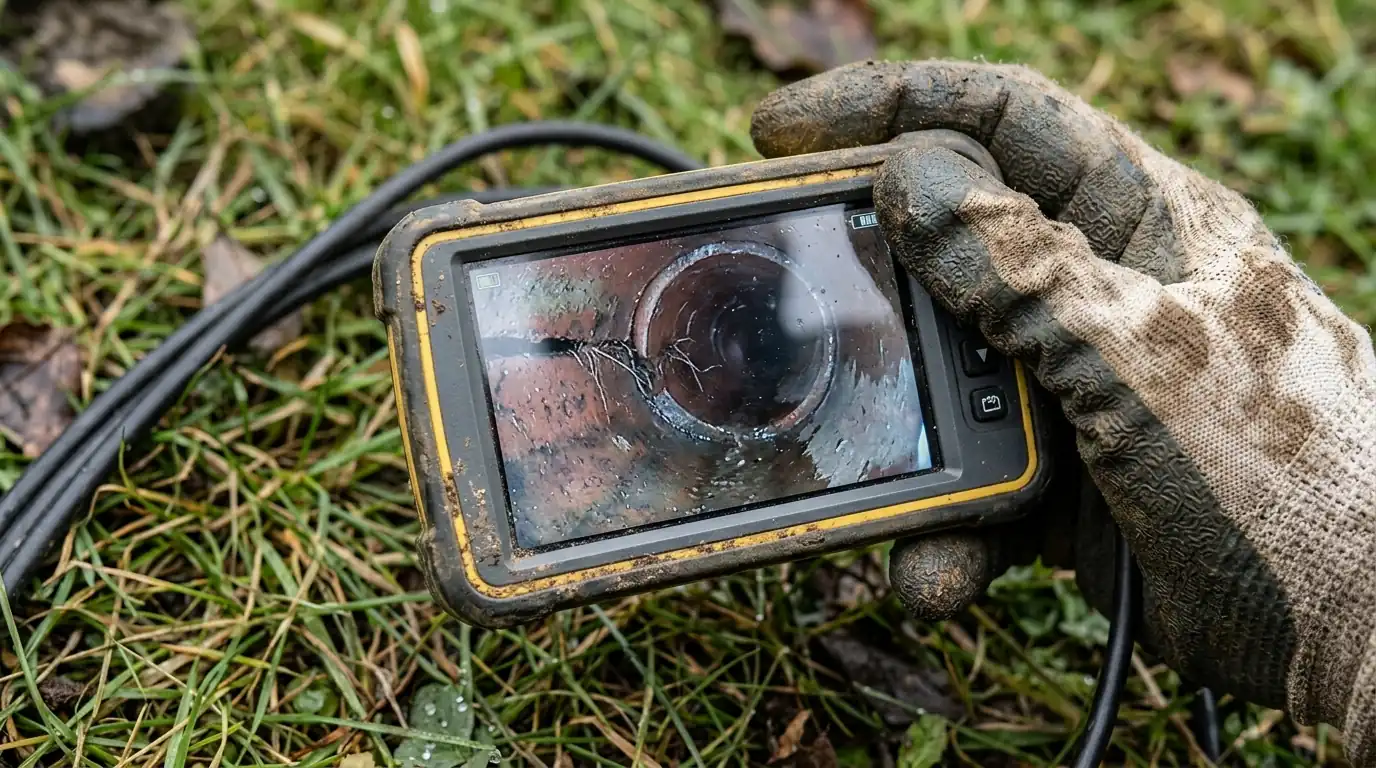
Our plumber finds the cleanout, the capped access pipe that leads into the main line, usually near the foundation or out in the yard. A waterproof camera on a flexible push rod goes in and travels toward the street while it records. A locating transmitter in the camera head lets the plumber mark the surface above any problem and estimate how deep the pipe runs.
The plumber watches the screen live and narrates what the camera sees, noting the distance from the cleanout at each joint, crack, or change in pipe material. Running water through the line during the scope can show where it pools. You get the recording afterward to share with your agent or keep for your records.
In Salem, a sewer camera inspection typically runs $219 to $389. Homes without an accessible cleanout can take longer, and the final price is given before work starts. If roots or debris block the camera partway, the plumber may recommend clearing the line first so the rest of the pipe can be seen, rather than guessing about the section past the blockage.
What the camera can reveal
Sewer laterals fail in a few familiar ways. Each one looks different on video, and each one points toward a different kind of fix. These are the findings that come up most in Salem scopes, roughly in the order we see them, and the plumber will point each one out on the screen as the camera passes it.
Rainy-season scopes can show one more thing. When groundwater rises in a Salem winter, it can seep into a line through open joints and cracks, and that clear water running along the bottom of the pipe is a hint that the joints are no longer sealed. Standing water that does not move is different, and it usually marks a belly in the line.
- Root intrusion at clay or concrete joints, from fine hairs to dense masses
- Offset joints where one section has shifted out of line with the next
- Cracks, broken sections, or missing pieces of pipe wall
- Sags or bellies where water and waste sit in a low spot
- Older pipe types like Orangeburg that deform as they age
- Changes in material where someone already repaired part of the line
Reading the findings without panic
Not every finding is a deal breaker. A few fine roots at one joint in an otherwise straight clay line may only call for root cutting, which typically runs $329 to $649 in Salem. A single cracked section near the house might be a spot repair, typically $1,890 to $5,400. A line with offsets, breaks and roots at joint after joint is a different story and usually points to replacement.
Full lateral replacement in Salem typically runs $6,900 to $18,500, and trenchless lining or bursting typically runs $8,400 to $21,000, depending on length, depth, and what sits on top of the pipe. Those are wide ranges because a short, shallow line under a lawn is very different from a long, deep run under a driveway and mature trees.
Ask the plumber to tell you the distance and depth of each problem, and which issues are urgent versus ones to watch. A problem a few feet from the foundation is reached differently from one under the sidewalk near the street, and that changes the price. When a permit is required for sewer work, we pull it, and that belongs in the plan too.
Using the scope in a home purchase
Schedule the scope early in your inspection period so there is time to act on what you learn. If the line needs work, the recording and a written description give you something concrete to discuss with the seller through your agent. Some buyers ask for a repair before closing, some negotiate on price, and some simply plan the work into their first year in the house.
If the seller has already had the line scoped, ask for the full video, not just a summary, and check the date. A clean scope from years ago does not show roots that have grown in since. When the house has been vacant for a while, the line may also have dried out, and a fresh scope with water running gives a truer picture of how it behaves.
Practical advice for Salem buyers
Treat a sewer scope as standard for any Salem home built before the 1980s, and especially for houses with big trees out front. Note where the cleanout is during the showing. If there is none, ask whether one can be added, since a cleanout makes every future visit simpler. Sewer cleanout installation in Salem typically runs $789 to $2,190.
Keep the scope video after you move in. If a slow drain shows up years later, comparing new footage to the original shows what changed. If you are buying in Salem and want the lateral checked before closing, call First Choice Rooter, and a plumber will scope the line and walk you through the footage on site.
- A general home inspection usually does not show the condition of the sewer lateral.
- A camera scope reveals roots, cracks, offsets, sags and old pipe types before you close.
- Ask for the distance, depth and urgency of every problem so you can weigh the cost of fixing it.
- Keep the video, since it becomes a baseline for any future drain trouble in the house.