Water Heater Installation
Water heater installation means draining and removing the old tank, setting a new gas or electric unit, and connecting the water, gas or power, venting and relief valve.
See the serviceWater heaters
No hot water, a shower that turns cold halfway through, or a tank making strange noises usually traces back to one failed part. We test the heater, find that part, and replace it on the spot.
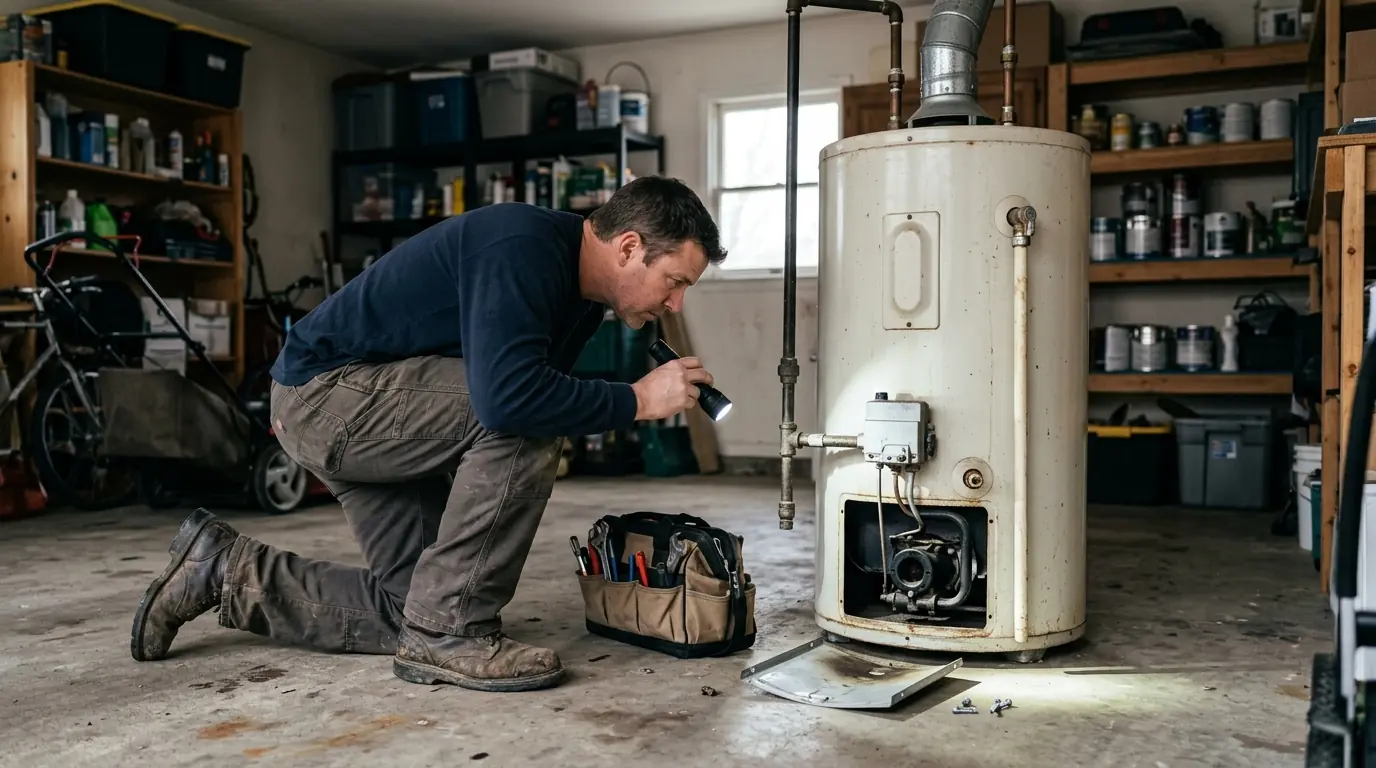
Water heater repair means finding why a tank has stopped heating properly and fixing that part instead of replacing the whole heater. On gas units that is often the thermocouple, flame sensor or gas control valve. On electric units it is usually a burned-out element or a failed thermostat. Call when hot water runs short, the pilot will not stay lit, or the tank leaks at a fitting.
A tank water heater has only a handful of parts that wear out, and most of them can be replaced in an hour or two. The trick is testing before swapping parts. We check the gas supply, the flame, the electrical readings and the condition of the tank itself, so you only pay for the part that actually failed.
Sometimes the honest answer is that the tank is near the end. A heater that is leaking from the body, rusted through at the base, or old enough that a big repair costs a large share of a new unit is worth a frank conversation. We tell you which situation you are in before any work starts.
Older gas heaters use a standing pilot and a thermocouple, a small metal rod that sits in the pilot flame and makes a tiny electrical current. That current tells the gas valve it is safe to stay open. When the thermocouple wears out, the pilot lights but dies as soon as you let go of the button.
Newer models use a hot surface igniter and a flame sensor instead. If the sensor gets coated with soot or dust, the control cannot tell the burner is lit and shuts the gas off after a few seconds. Cleaning or replacing it usually brings the heat back.
The gas control valve on the front of the tank holds the thermostat, the pilot circuit and the main gas shutoff in one unit. When it fails, the burner may refuse to light, cycle on and off, or overheat the water. Many newer valves flash a status light code that tells us which circuit is at fault. A failed valve is replaced as a whole part, and we leak-test every gas joint afterward.
Most electric tanks have two heating elements, upper and lower, each with its own thermostat. The upper element heats first, then hands off to the lower one. If you get a short burst of hot water and then lukewarm, the lower element or its thermostat has often failed. With no hot water at all, we look at the upper side and the high-limit reset button.
Minerals and grit settle to the bottom of every tank over time. On a gas heater, water trapped under that layer flashes to steam and pops or rumbles when the burner runs. On electric tanks, sediment can bury the lower element and burn it out. Flushing the tank clears loose sediment, and we check how much has hardened.
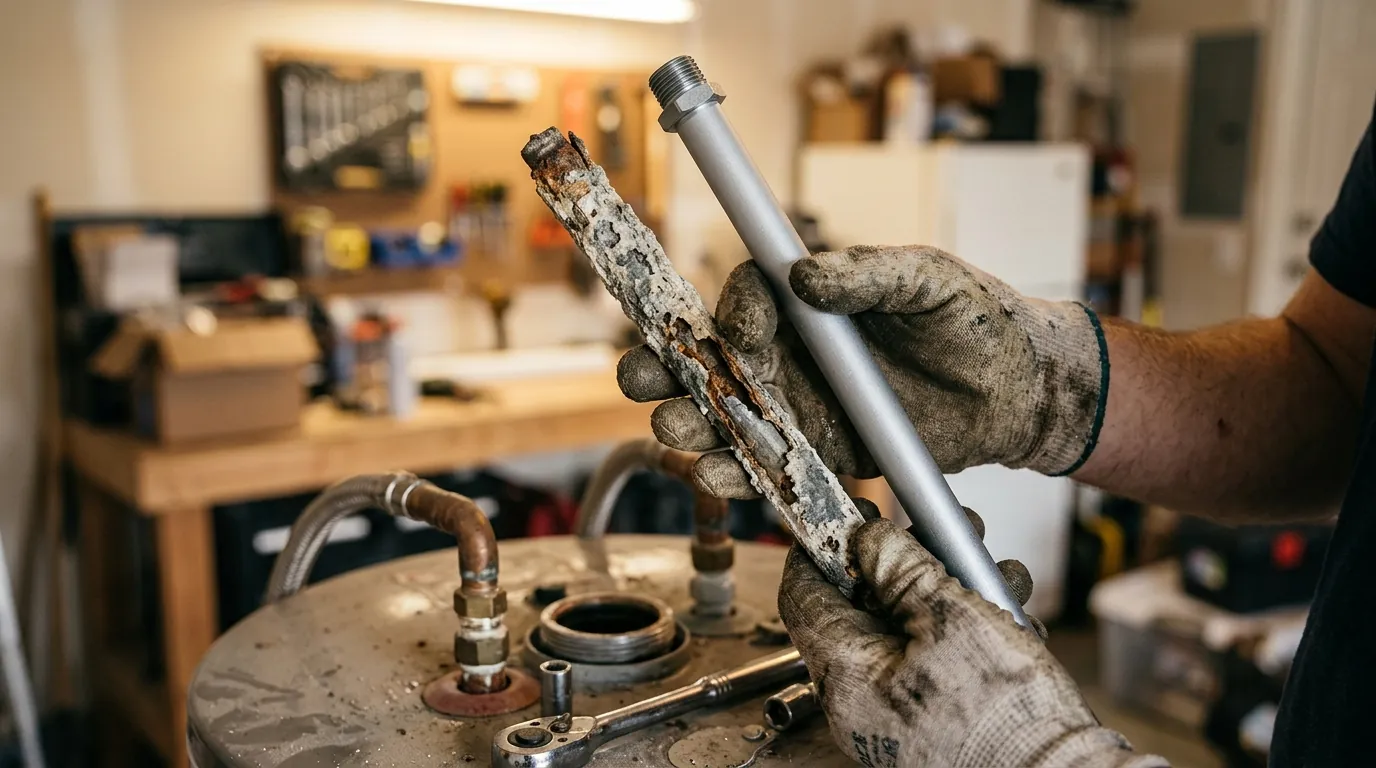
The anode rod is a metal rod hung inside the tank that corrodes so the steel tank does not. Once it is eaten down to bare wire, the tank itself starts to rust. Replacing a worn anode can add useful years to a heater that is otherwise sound.
Warning signs
On the visit
We look for gas odor, scorching, water on the floor and proper venting before we touch the controls.
On gas units we check supply, pilot, igniter and valve; on electric units we meter the elements and thermostats.
You hear what failed, what the part costs, and whether the tank's age and condition make repair worthwhile.
We fit the new part, relight or restore power, and bring the tank back up to temperature.
We check the burner or elements through a full heating cycle, test gas joints, and confirm the relief valve works.
| What is included | Typical range |
|---|---|
| Water heater diagnosis and repair | $179 to $589 |
| Thermocouple or flame sensor replaced | $189 to $345 |
| Gas control valve replaced | $389 to $589 |
| Anode rod replaced with tank flush | $249 to $429 |
The part and access set the final number, and we quote it after testing, before any repair begins. If replacement makes more sense, we price that too so you can compare.
Around Salem
We see the most repair calls from garage and crawlspace water heaters in Salem's postwar neighborhoods like Morningside, Lansing and East Lancaster, where cold winter air around the tank makes a weak pilot or tired element show itself first.
Prices for every service are on one page: the First Choice Rooter price list.
Call (971) 326-9414Questions
The most common cause is a worn thermocouple that no longer signals the gas valve to stay open. A dirty pilot tube, a weak gas supply, or a draft blowing across the burner can also put it out. In garages, a door left open on a windy winter day can do it. We test each possibility instead of replacing parts blindly.
It depends on what failed. A thermocouple, flame sensor or element on an older tank is a small repair and often makes sense. A failed gas valve is a bigger cost, and a leak from the tank body cannot be repaired at all. We look at the anode rod, the base and any rust before giving you a straight answer.
Yes. When sediment piles up around the lower element, it insulates the element from the water, so the element runs hotter than it was designed to and burns out early. You may notice the tank heating more slowly before it fails. Flushing the tank once a year keeps the lower element clear and helps it last longer.
The temperature and pressure relief valve opens when pressure or heat in the tank gets too high. Steady dripping often means pressure is building as water heats, because a pressure regulator or check valve has closed off the system with no expansion tank to absorb it. A worn valve can also leak. We measure pressure to find which one it is.
Bacteria in the tank can react with certain anode rods and produce a sulfur smell, mostly on the hot side. It shows up more in heaters that sit unused for a while. Flushing the tank and swapping the anode for a different alloy usually fixes it. If the cold water smells too, the cause is somewhere else in the plumbing.
Related work
Water heater installation means draining and removing the old tank, setting a new gas or electric unit, and connecting the water, gas or power, venting and relief valve.
See the serviceTankless water heater service means flushing the heat exchanger with a descaling solution, cleaning the inlet filter, checking the burner, fan, flame sensor and vent, and reading any.
See the serviceA pressure regulator, or pressure reducing valve, sits on the main water line and lowers street pressure to a level your plumbing can handle.
See the serviceA real person answers 24/7. Tell us what the drains are doing and we will send a First Choice Rooter plumber with the right equipment on the truck.