Sewer Line Replacement
Sewer line replacement means removing or abandoning the old lateral and installing new pipe from your foundation to the public sewer main.
See the serviceSewer lines
When your sewer line runs under a driveway, a big tree or a finished yard, an open trench can cost more in damage than the pipe itself. Trenchless methods renew the pipe through small access points.
Trenchless sewer repair renews a failing lateral without digging along its whole length. Pipe lining cures a resin-soaked tube inside the old pipe to form a new one, while pipe bursting pulls new pipe along the old path and breaks the old line apart as it goes. It fits when the line runs under hardscape or mature trees and its condition allows the method.
In a lot of Salem yards the sewer line runs right under the things people least want torn up: a long driveway, a brick walk, a mature oak or a garden that took years to grow. Trenchless work keeps the digging to one or two pits, often one at the house and one near the street, and does the rest underground.
Not every line is a good candidate, and the method depends on what the camera shows. A cracked but round clay pipe suits lining. A pipe with a deep sag, a full collapse or a change in size along the run may need bursting, a partial dig, or conventional replacement. We tell you which applies before you commit to anything.
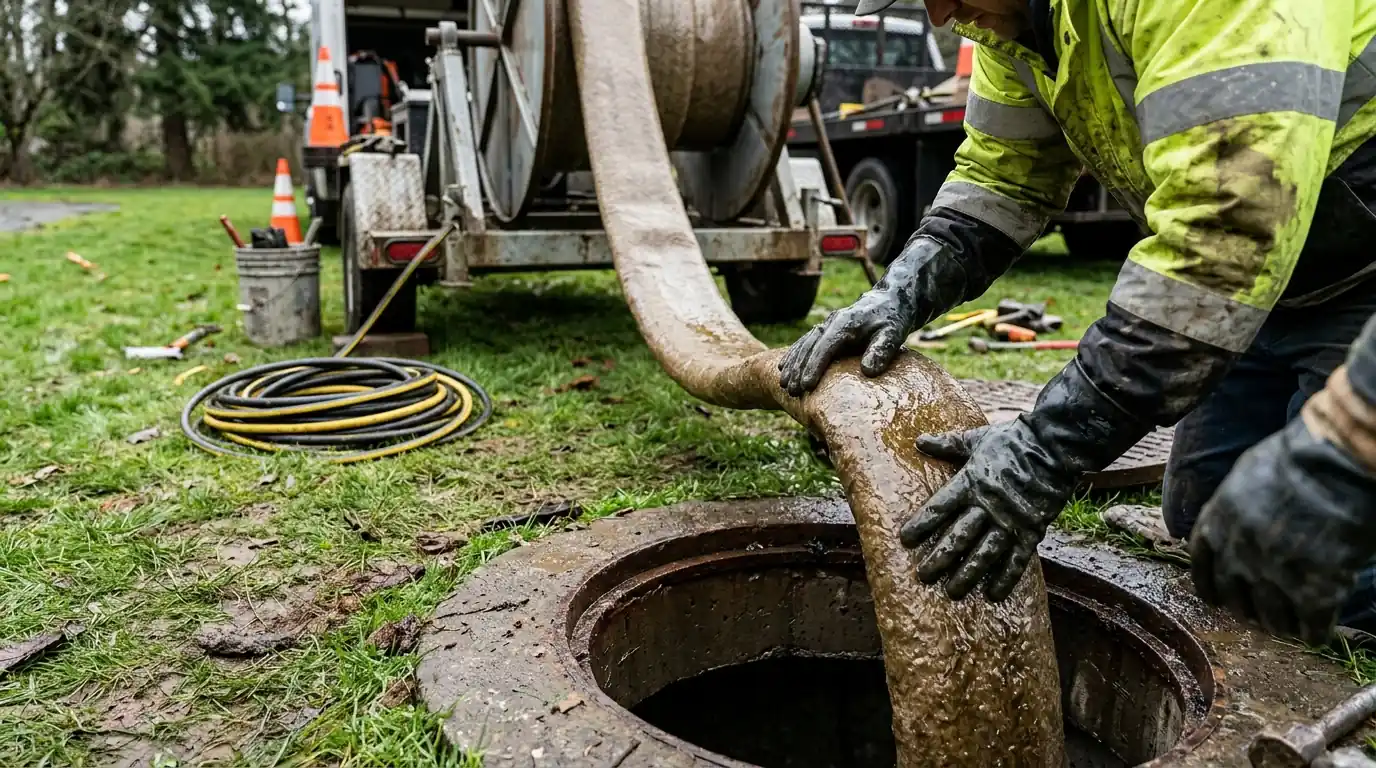
First the old pipe is cleaned down to the bare wall with a cutter or water jet, and every root is removed. A felt or fiberglass tube is saturated with resin and pulled or inverted into the line using air or water pressure, which presses it tight against the old pipe. The resin cures with hot water, steam or light, leaving a jointless new pipe inside the old one. Branch connections are then reopened from inside with a small robotic cutter.
A liner takes the shape of whatever it goes into. If the line has a belly, the finished liner has a belly. If a section has collapsed or an offset has closed off much of the opening, the tube cannot get past or will wrinkle there. Lining also trims a little off the inside diameter, which matters little on a four-inch lateral but counts on smaller lines.
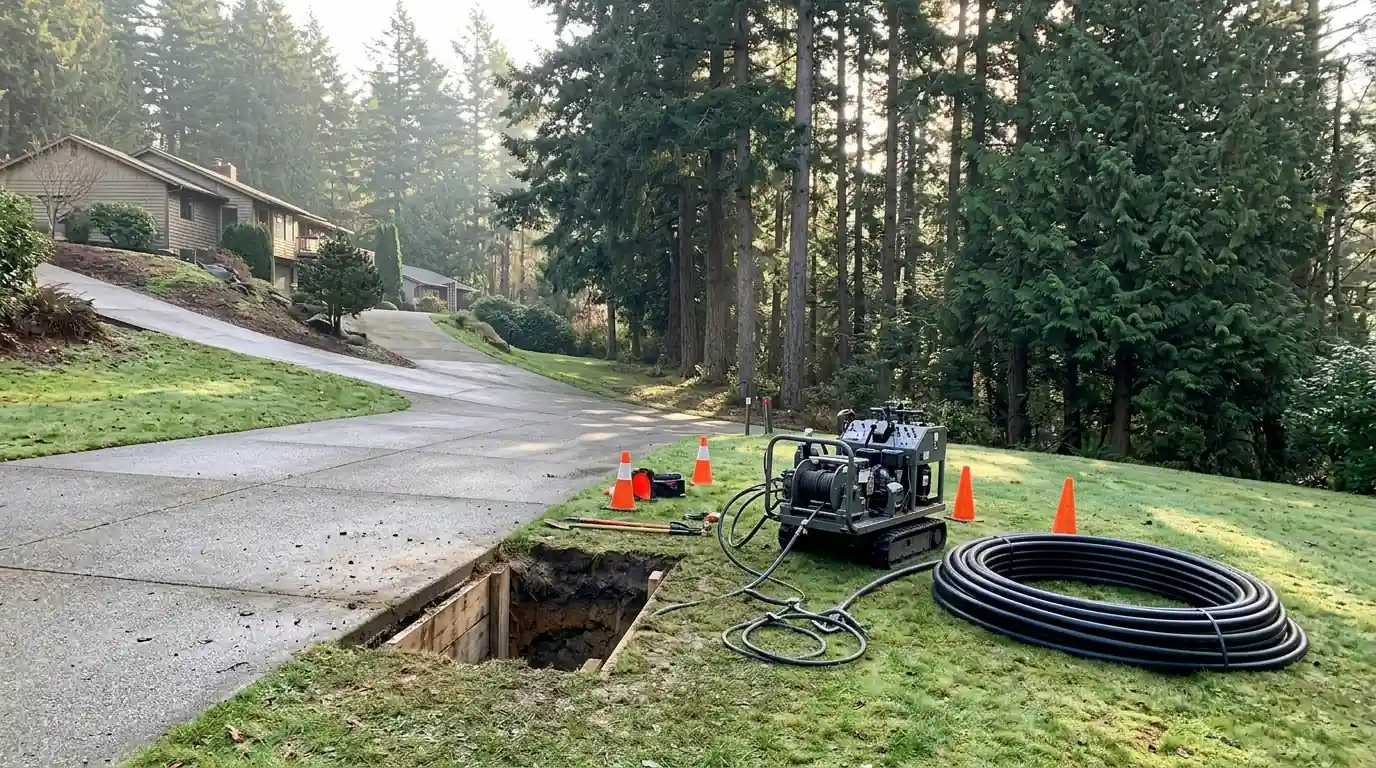
Bursting starts with a pit at each end of the run. A steel cable is fed through the old line and attached to a cone-shaped bursting head, with new high-density polyethylene pipe fused to the back of it. A hydraulic puller draws the head through, cracking the old clay or cast iron outward into the soil while the new pipe follows into the same space. The new pipe can match the old size or go a little larger.
We compare the camera video, the depth, the number of connections and what sits nearby. Lining suits round pipe with many cracks or root joints. Bursting suits lines that are badly broken but still follow a clean path, and it needs room for pits plus clearance from gas and water lines running alongside.
When neither method fits a particular stretch, a short open dig there combined with trenchless work on the rest is often the best value. We lay out each option with its trade-offs, what it means for the yard, and how long the line is offline, so you can choose.
Warning signs
On the visit
We camera the full line and measure its length, diameter and depth, checking every connection and bend.
Based on the footage, we recommend lining, bursting or a hybrid, and explain what each means for your yard.
We dig the access pits, then clean the old pipe with a cutter or jetter so the new pipe has a clear path.
The liner is inverted and cured in place, or the bursting head pulls new polyethylene along the old path.
We reopen any branch connections, run the camera through the finished pipe, and fill in the access pits.
| What is included | Typical range |
|---|---|
| Trenchless lining or bursting, full lateral | $8,400 to $21,000 |
| Robotic reinstatement of a branch connection | $480 to $960 |
| Short open dig at a collapsed section, same project | $1,640 to $3,870 |
Run length, pipe size, depth and the number of connections set the price. Once the plumber has studied your video, you get the price before any pit is opened.
Around Salem
Trenchless work makes the most sense in the South Salem hills and around Bush's Pasture Park and Fairmount Hill, where laterals run under long driveways, retaining walls and mature oaks and firs that owners want to keep.
Prices for every service are on one page: the First Choice Rooter price list.
Call (971) 326-9414Questions
Cure time depends on the resin and the cure method. Hot water and steam cures usually take a few hours, and light-cured liners go faster once the equipment is set up. Ambient-cure resins take longer. In most cases the line is back in service the same day the liner goes in, after we reopen connections and run the camera through it.
Not on its own. Both lining and bursting follow the path of the old pipe, so a sag stays a sag. If the camera shows a belly, we usually dig that section, rebuild the bedding and relay it to grade, then use trenchless methods on the straight runs. That hybrid keeps most of the yard intact while fixing the low spot.
Bursting pushes broken pipe outward into the soil, so it needs some clearance from foundations, gas lines and water lines running close alongside. Utility locates come first, and we check the depth and spacing of anything near the route. When something sits too close, we expose it or switch that stretch to lining or a short dig.
Slightly. A liner adds a thin wall inside the old pipe, so the inside diameter shrinks a little. On a typical four-inch residential lateral, the smooth jointless surface usually makes up for it, because nothing catches on old joints anymore. On a smaller line or one with several tight bends, we weigh that loss before recommending lining.
Often, yes. Pipe bursting tends to work well, since Orangeburg breaks apart easily and the new pipe follows the old path. Lining is riskier, because a liner needs a firm, round host pipe and flattened Orangeburg cannot give it one. The camera video tells us what shape your line is in before we recommend either method.
Related work
Sewer line replacement means removing or abandoning the old lateral and installing new pipe from your foundation to the public sewer main.
See the serviceA sewer camera inspection is a video trip through the pipe that carries waste from your house to the public main.
See the serviceHydro jetting sends water at very high pressure through a hose with a nozzle that has rear-facing jets.
See the serviceA real person answers 24/7. Tell us what the drains are doing and we will send a First Choice Rooter plumber with the right equipment on the truck.