Toilet Installation
Toilet installation covers removing the old toilet, checking the rough-in distance and closet flange, repairing a broken or low flange, setting the new toilet on a fresh seal.
See the serviceFixtures and hookups
A toilet that runs all night, rocks when you sit, or leaves a damp ring at the base is wasting water and sometimes rotting the floor. We find the worn part and fix it.
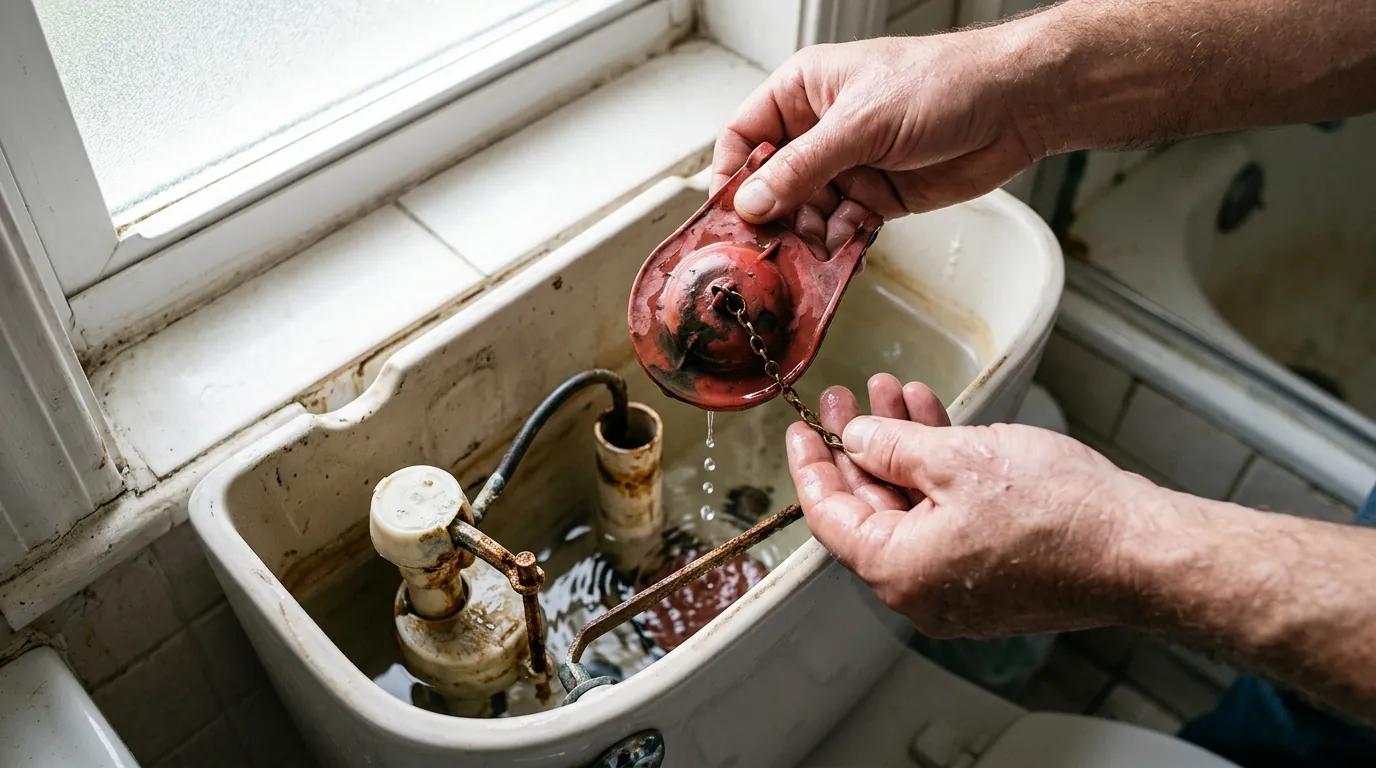
Toilet repair means replacing or adjusting the parts inside the tank and under the bowl: the fill valve, flapper, flush valve, handle, supply line and the seal at the floor. You need it when the tank refills on its own, the flush is weak, water shows up around the base, or the toilet moves when you sit. Most repairs are finished in one visit.
A toilet is a simple machine, and that is good news. Water arrives through a supply line, a fill valve refills the tank, and a rubber flapper holds that water until you press the handle. When one small part wears out, the whole toilet starts acting up, and the symptom usually points straight at the part that failed.
Our plumbers carry common fill valves, flappers, flush valve seals, closet bolts and wax rings, so a typical Salem toilet repair is one trip. If the real problem is cracked porcelain or a floor gone soft under the toilet, we show you what we found and talk through options first.
The fill valve is the tall assembly on one side of the tank. It opens when the water level drops and closes when its float rises to the set height. If the float sits too high or the valve seal is worn, water spills into the overflow tube and the toilet hisses or tops itself off every few minutes.
The flapper sits at the bottom of the tank over the flush valve opening. Chlorinated water and age harden the rubber, and a warped flapper lets a slow trickle slip into the bowl. You hear the fill valve kick on at night with nobody using the bathroom. That phantom refill is the classic flapper symptom.
A strong flush depends on a full tank, a clean flush valve opening, and open rim and siphon jets under the bowl. Grime in those jets slows the swirl, and you end up pressing the handle twice. Salem water is soft, so heavy scale is uncommon, though old toilets still collect buildup.
Sometimes a weak flush is not the toilet at all. A partial clog in the trap, a blocked roof vent, or a sewer lateral filling with roots can make a bowl drain lazily. We test the toilet on its own first, then look farther down the line if other drains act up too.
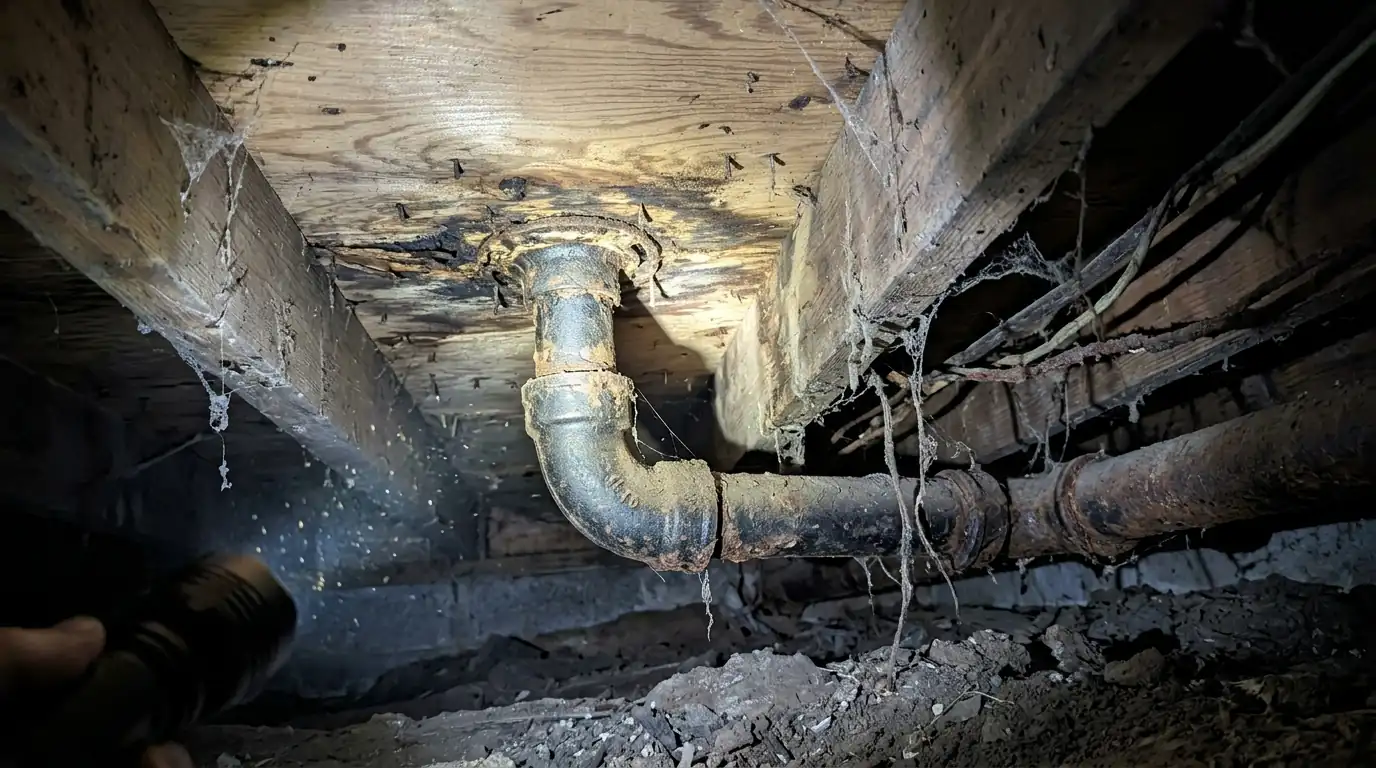
Water around the base usually means the seal between the toilet horn and the closet flange has failed. A wax ring compresses over time, and once a toilet rocks even slightly, the seal opens and water escapes with each flush. Tank bolts and a sweating tank can also wet the floor, so we rule those out.
Most Salem homes sit over a crawlspace, so a slow base leak drips onto the subfloor and joists where nobody sees it. Over months the plywood around the flange softens and rots. When we pull a leaking toilet we probe the subfloor, confirm the flange is screwed to solid wood, and tell you plainly if a section needs repair.
A toilet with sound porcelain is almost always worth fixing. New internal parts cost far less than a new toilet and restore the flush on most models. We lean toward repair unless the china is cracked, the flush valve is an odd design parts no longer fit, or it is an old high-volume model you want to retire.
Hairline cracks in a tank can seep for weeks before they split, so we look closely at the porcelain while we work. If replacement makes more sense, we can handle it as a toilet installation, with the price given before we start.
Warning signs
On the visit
We ask what you have noticed, flush a few times, and watch the tank and bowl to see which part is misbehaving.
We dye-test the flapper seal, compare the water level to the fill line, and inspect the fill valve, chain and handle.
We rock the toilet, look at the bolts and caulk line, and probe the floor for softness when a base leak is suspected.
You get a firm price before work starts, then we replace the failed parts and set the float to the correct height.
We run several flushes, watch the tank bolts and base for seepage, and leave the bathroom clean.
| What is included | Typical range |
|---|---|
| Typical toilet repair, parts and labor | $139 to $329 |
| Fill valve and flapper replaced together | $159 to $269 |
| Toilet pulled and reset on a new seal | $189 to $319 |
Most Salem toilet repairs land inside the first range. Your plumber sees the toilet before quoting a final price, and subfloor repair, if needed, is priced on its own.
Around Salem
Toilet repairs come up all over Salem, but older homes in Grant, Highland and Northeast Salem show more rotted subfloors, because years of base leaks drip into the crawlspace below.
Prices for every service are on one page: the First Choice Rooter price list.
Call (971) 326-9414Questions
That is called a phantom flush. Water is slipping past the flapper into the bowl, the tank level drops, and the fill valve tops it back up. A hardened or warped flapper is the usual cause, though a pitted flush valve seat or a tangled chain can do it too. A dye test confirms it, and the fix is quick.
Both work when the closet flange sits at the right height and is fastened to solid wood. A wax ring molds itself to the flange and has a long track record, but it only seals once, so a toilet that gets lifted needs a new one. A foam or rubber seal tolerates small adjustments and stays clean. We pick based on your flange height and condition.
Sometimes. Restricted rim jets, a low tank level or an object stuck in the trap will cause repeat clogs, and those are toilet repairs. If the bowl checks out but clogs keep coming, the trouble is usually farther down the drain or in the sewer lateral, and we will say so.
Turn the small valve behind the toilet clockwise until it stops, then flush to empty the tank. Older multi-turn stops in Salem homes often seize or drip at the stem when finally turned. If yours will not close or leaks, we can replace it with a quarter-turn valve during the toilet repair.
It can. A leaking flapper runs water around the clock, and a fill valve spilling into the overflow tube wastes even more. Read your water meter, use no water for an hour, and read it again. If the numbers moved and the toilet is the only thing hissing, a toilet repair should stop it.
Related work
Toilet installation covers removing the old toilet, checking the rough-in distance and closet flange, repairing a broken or low flange, setting the new toilet on a fresh seal.
See the serviceClogged toilet repair means clearing the curved trapway inside the toilet or the closet bend under the floor.
See the serviceLeak detection is a step-by-step search for water escaping from your pipes where you cannot see it.
See the serviceA real person answers 24/7. Tell us what the drains are doing and we will send a First Choice Rooter plumber with the right equipment on the truck.