Main Sewer Line Rooter Service
Main line rooter service clears the single pipe, called the lateral, that carries all household waste from the foundation to the city sewer.
See the serviceDrain cleaning and rooter
Big maples, oaks, firs and sweetgums send fine roots into old sewer joints looking for water, and those roots grow into a mat that stops the line. We cut them out and find where they entered.
Root removal means running a sewer machine fitted with a toothed cutting blade through the lateral to shear off roots that have grown in through the pipe joints. You need it when your main line slows or backs up on a repeating cycle, often worse in late summer and fall, and especially in an older home with a clay or concrete lateral near large trees.
Tree roots do not break into a sound pipe by force. They follow moisture. Warm, damp air leaks from a hairline gap at a clay joint, and the nearest root tip turns toward it, slips through the opening and finds a steady supply of water and nutrients inside. From there it branches into a dense, hair-like mass that catches paper and waste.
Salem is full of mature street and yard trees, and many of its older homes still drain through clay or concrete laterals with a joint every couple of feet. That combination makes root intrusion the classic rooter call in town. Cutting the roots restores the flow; the camera tells you how many joints are open and how bad they are.
Older clay laterals were laid as short bell-and-spigot sections, with the joints packed in mortar or an early sealing compound. Over decades that packing cracks and the soil around it shifts. A root tip enters through the gap and spreads along the bottom of the pipe where water runs.
As the root mass thickens it forces the joint open further, and the next winter of saturated soil lets the section settle out of line. That is how a minor root problem grows into an offset or cracked joint if it is left alone for years.
A root cutter is a flat, toothed blade or a set of spring-loaded blades that spin at the end of a heavy cable. It is sized close to the inside diameter of the pipe so it shaves roots flush with the wall instead of poking a hole through the middle.
We usually make a first pass with a smaller head to restore flow, then follow with a full-width cutter. When the root mass is heavy, a jetting pass afterward washes out the loose fibers so they do not tangle up again a few feet downstream.
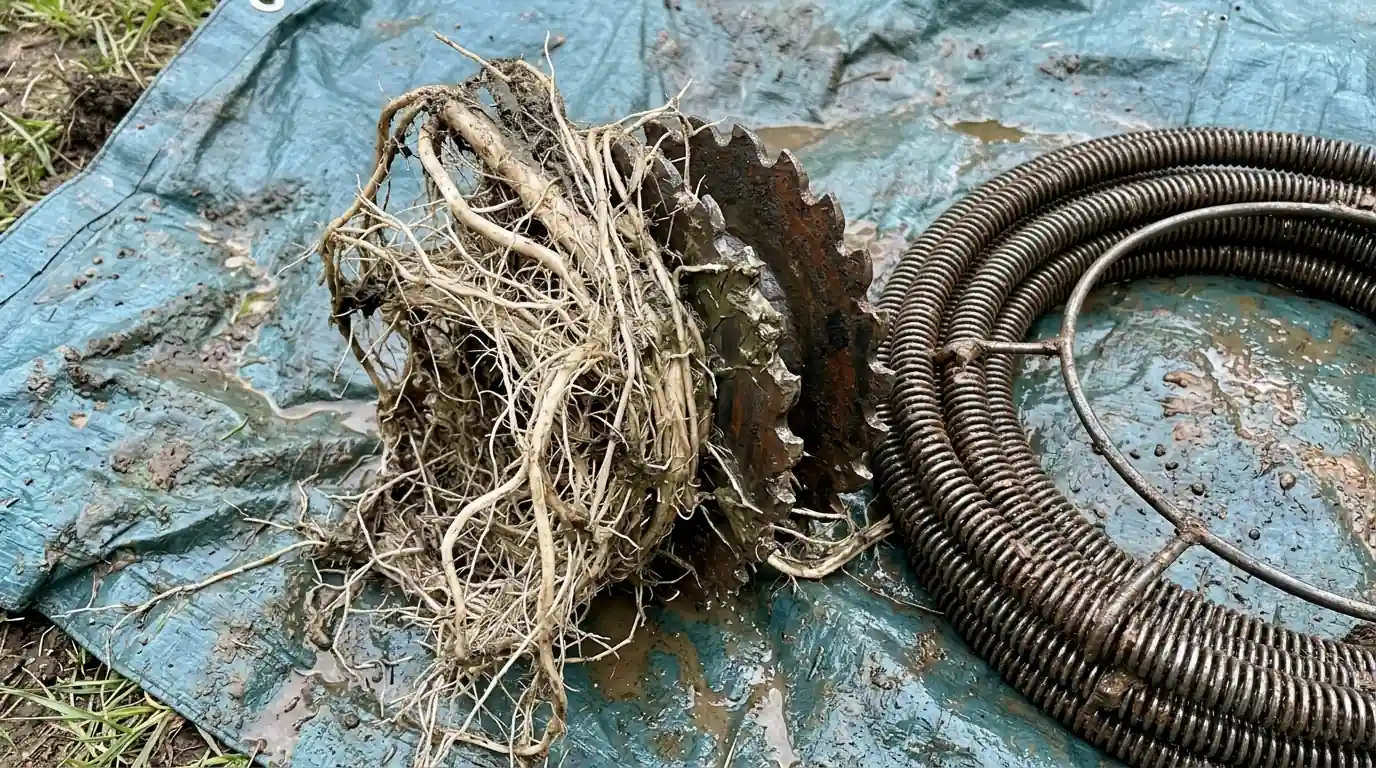
Cutting removes the root that is inside the pipe but leaves the opening it used, and the tree on the other side is still alive and still thirsty. Pruned roots often regrow more densely, the way a trimmed hedge fills in. Most root-prone lines need cutting again within one to three years.
The lasting answer is closing the joints, either by repairing the damaged sections or by lining or replacing the lateral. The camera footage from your visit gives you what you need to weigh that decision on your own timeline and budget.
You do not have to remove a tree you love to keep the sewer working. Many Salem homeowners keep the trees and plan regular root cutting until they are ready to repair the lateral. Knowing where the line runs and which trees sit closest to it makes that plan far easier to manage.
If you are planting, keep new trees, and especially thirsty species like willows and poplars, well away from the path the lateral takes to the street. A short camera locate before planting tells you where that path runs, so the new tree and the old pipe never have to meet.
Warning signs
On the visit
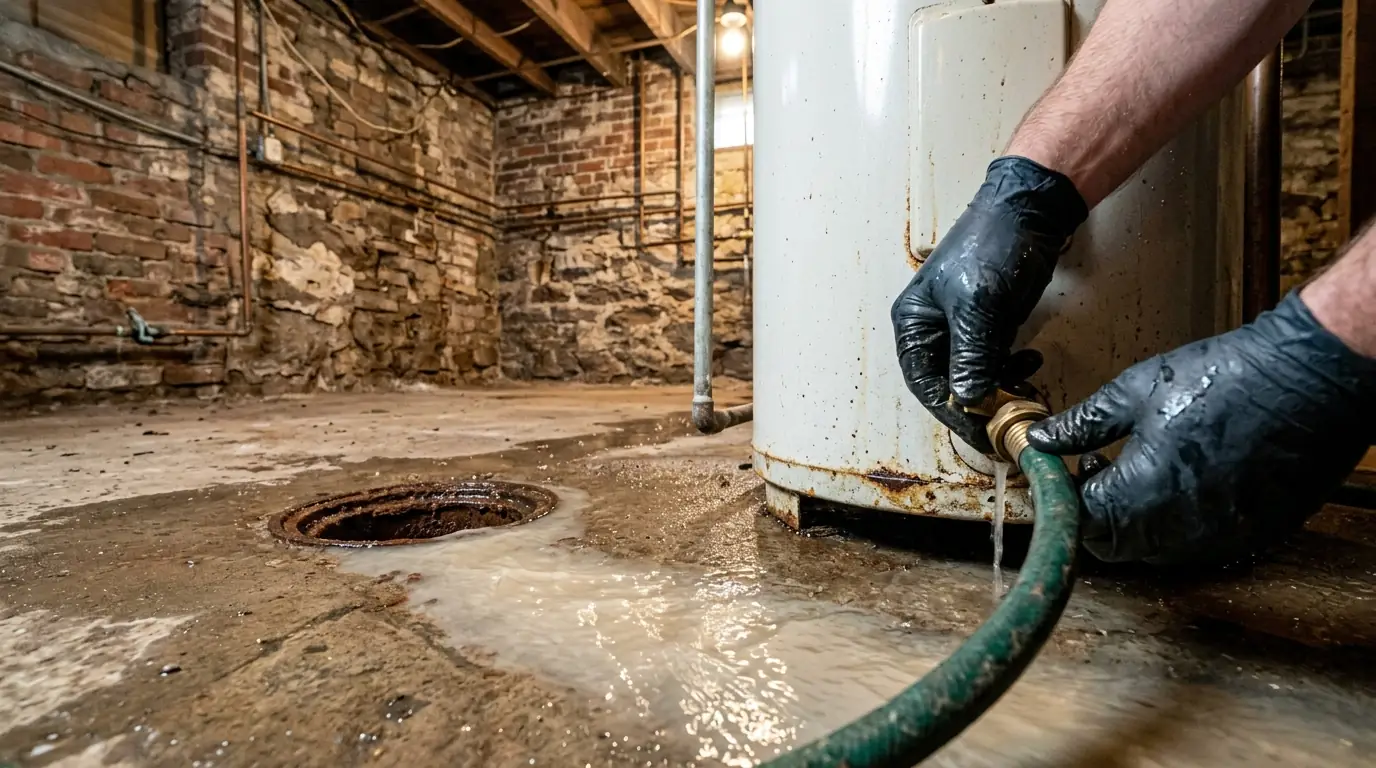
We open the outside or crawlspace cleanout, release standing water, and measure toward the street to plan the cut.
A smaller cutting blade goes in first to break through the root mass so the backed-up water can drain away.
A full-width root cutter makes slow passes along the lateral, shearing roots flush with the inside wall at every joint.
We flush the line, then run a camera to show you each intrusion point and the footage where it sits.
We explain whether scheduled cutting is reasonable or whether specific joints are damaged enough to plan a repair.
| What is included | Typical range |
|---|---|
| Root cutting through an existing cleanout | $329 to $649 |
| Camera pass with footage after cutting | $169 to $279 |
| Follow-up jetting to flush heavy root mats | $219 to $389 |
Root jobs vary with how many joints are open and how far out the roots sit, so treat these as typical figures. Your exact quote comes on site, before cutting starts.
Around Salem
Roots are the main rooter call around Bush's Pasture Park, Gaiety Hill, Highland and Fairmount Hill, where clay laterals from the early 1900s run beneath the canopies of old maples, oaks and firs.
Prices for every service are on one page: the First Choice Rooter price list.
Call (971) 326-9414Questions
Any tree near a leaking joint can send roots in, but fast-growing, water-hungry trees are the usual offenders. Willows, poplars, silver maples and big sweetgums show up often, and large oaks and firs can reach farther than people expect. Fruit trees are smaller but are often planted close to the house, right over the lateral.
Most root-prone laterals need cutting every one to three years. The interval depends on how many joints are open, the type of tree and how dry the summer was. After the first visit, watching how quickly the line slows again gives you a good sense of the right schedule for your house.
Foaming root treatments can slow regrowth for a while when used as directed, and some homeowners use them between cuttings. They do not open a blocked line or seal the joint, so they are a supplement at best. Follow the label closely, since they go into the sewer and the soil around it.
Cutting the fine roots inside a sewer pipe takes away a small fraction of a mature tree's root system, so it rarely causes visible harm. The tree keeps drawing water from the soil around it. Roots inside the pipe are a symptom of a leaking joint, and the tree is simply taking water that is already escaping.
Yes. Root cutting is done entirely from inside the pipe through a cleanout, so the yard stays untouched. Digging only comes into the picture if the camera shows a joint so damaged or offset that it needs a spot repair, or if you decide to replace or line the lateral to stop the roots for good.
Related work
Main line rooter service clears the single pipe, called the lateral, that carries all household waste from the foundation to the city sewer.
See the serviceA sewer camera inspection is a video trip through the pipe that carries waste from your house to the public main.
See the serviceTrenchless sewer repair renews a failing lateral without digging along its whole length.
See the serviceA real person answers 24/7. Tell us what the drains are doing and we will send a First Choice Rooter plumber with the right equipment on the truck.