Whole-House Repiping
Whole-house repiping replaces every hot and cold supply line from the main shutoff to each fixture.
See the serviceEmergency and commercial
Salem water is soft, so most homes do not need a softener. If you are bothered by chlorine taste, sediment or odor, we install carbon, sediment and reverse osmosis filters that fit how you use water.
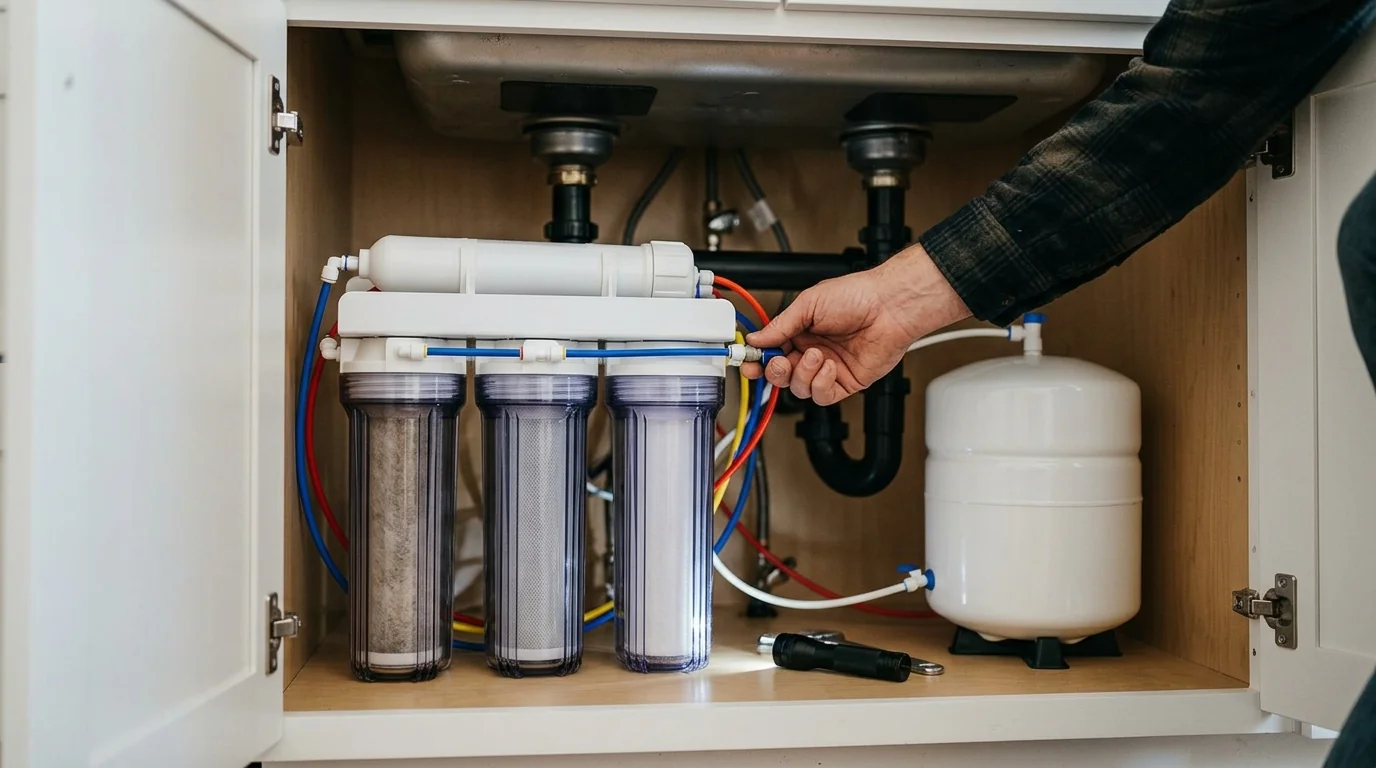
Water filtration means installing filters that remove what you do not want from your tap water. For Salem homes, that usually means sediment filters for grit, carbon filters for chlorine taste and odor, and reverse osmosis for drinking water. Systems can be under-sink or whole-house. You need it when your water tastes or smells of chlorine, carries grit, or you simply want cleaner drinking water.
Salem city water comes from the North Santiam River and is naturally soft, so most homes here do not need a water softener and we will not try to sell you one. What people usually notice is chlorine taste and smell, or a bit of sediment after a main break or a cold snap.
We install systems sized to the problem. A simple under-sink carbon filter often handles taste for drinking and cooking. A whole-house sediment and carbon setup helps if you want filtered water at every tap. Reverse osmosis gives the most thorough drinking water filtration. We explain each option before you decide.
Treated city water carries a small amount of chlorine to keep it safe through miles of pipe. It does its job, but some people taste or smell it, especially in a glass of cold water or a pot of coffee. Carbon filters are the standard answer, because activated carbon traps chlorine and many taste and odor compounds.
Sediment is the other common complaint. Older galvanized pipe in the house can shed rust, and work on city mains can stir up fine grit. A sediment filter at the main catches it before it reaches your faucets, fixtures and water heater. Some homeowners also want filtration after the 2018 algae-toxin advisory.
An under-sink carbon filter connects to the cold line feeding the kitchen faucet or a separate drinking water faucet. It removes chlorine taste and odor and many other compounds, depending on the cartridge. Cartridges need replacing on a schedule, usually every several months, based on use and the filter's rating.
A reverse osmosis system pushes water through a fine membrane after carbon and sediment prefilters, then stores it in a small tank under the sink. It removes far more than carbon alone. It also sends some water down the drain as it works, and needs a drain connection and its own faucet on the sink or counter.
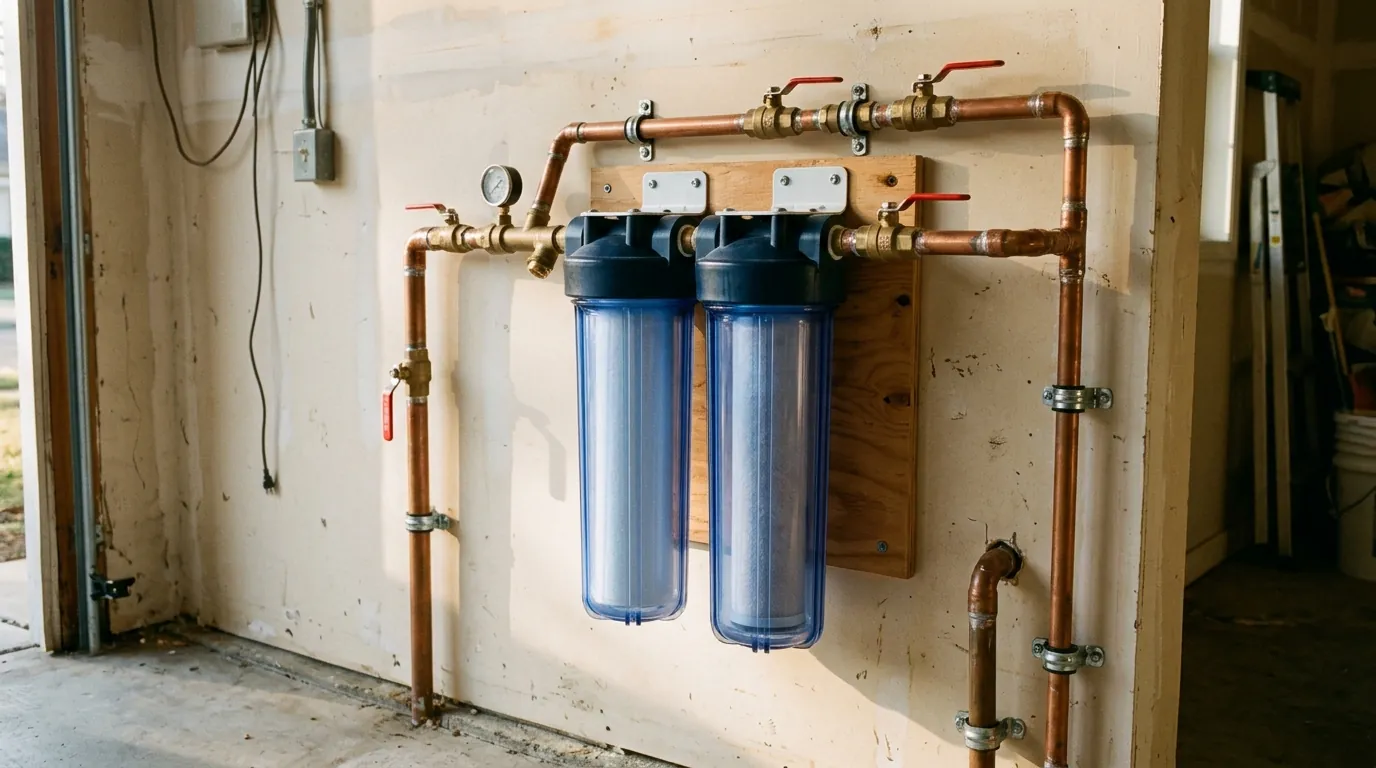
A whole-house system installs on the main water line where it enters the home, often in the crawlspace or garage in Salem houses. It usually pairs a sediment filter with a larger carbon filter so every tap, shower and appliance gets filtered water. Showers with less chlorine smell are a common reason people choose one.
We size the system to your water use and pipe size, and install bypass valves so you can change filters or bypass the system without shutting off the house. Whole-house filters need space and access for cartridge changes, so we plan the location with that in mind.
Hard water leaves scale in fixtures and water heaters, and softeners fix that. Salem city water is soft to begin with, so a softener rarely adds much for homes on city water. We would rather spend your money on the filter that matches what you actually notice.
Homes outside the city on private wells are a different story. Well water around the Mid-Willamette Valley varies, and some wells carry iron, sediment or hardness. If you are on a well, a water test tells you what is there, and we can talk through filtration options based on those results.
Warning signs
On the visit
We ask what you notice in your water, where you want filtered water, and whether you are on city water or a well.
We check the main line, crawlspace or garage access, sink cabinet space and nearby drain points for the system.
We suggest the system that fits your concern and give you the full installed price before any work starts.
We mount the filters, connect supply and any drain lines, add bypass or shutoff valves, and flush the cartridges.
We show you how to change cartridges, how often to do it, and how to bypass the system when needed.
| What is included | Typical range |
|---|---|
| Under-sink filtration installed | $289 to $689 |
| Whole-house filtration installed | $1,190 to $3,890 |
| Reverse osmosis faucet added through countertop | $89 to $169 |
Cartridge replacements over time are not part of the install figure. System choice and your plumbing set the final price, which you get before work starts.
Around Salem
Filtration interest comes from all over Salem, but older homes in Grant, Highland and Fairmount Hill with remaining galvanized pipe often want sediment filters, while newer South Salem homes usually ask about chlorine taste.
Prices for every service are on one page: the First Choice Rooter price list.
Call (971) 326-9414Questions
Most homes on Salem city water do not. The water comes from the North Santiam River and is naturally soft, so it leaves little scale. If you are bothered by taste, chlorine or sediment, a water filtration system is usually the better fit. Homes on private wells may differ and should test first.
A carbon filter traps chlorine and many taste and odor compounds as water passes through it. Reverse osmosis pushes water through a fine membrane, usually after carbon and sediment prefilters, and removes much more. Reverse osmosis filtration costs more, needs a storage tank and a drain connection, and wastes some water.
It depends on the filter and how much water you use. Many under-sink carbon cartridges need replacing every several months, and sediment filters may need it sooner if your water carries grit. Reverse osmosis membranes last longer. We tell you the schedule for your water filtration system when we install it.
A properly sized whole-house filter has little effect on everyday pressure when the cartridges are fresh. As filters load up with sediment, flow can drop, which is a sign it is time to change them. We size the system to your pipe and water use so filtration does not starve your showers.
Yes. An under-sink or inline filter can feed the refrigerator and ice maker line along with the kitchen faucet, or a separate inline filter can be added to the refrigerator supply. Many refrigerators have their own filter, but some homeowners add one upstream for better taste and longer filter life.
Related work
Whole-house repiping replaces every hot and cold supply line from the main shutoff to each fixture.
See the serviceAppliance hookup service covers connecting dishwashers, washing machines and refrigerator ice makers to water supply and drain.
See the serviceFaucet repair means replacing the cartridge, ceramic disc set, washers, seats or O-rings that control water flow, plus fixing supply connections underneath.
See the serviceA real person answers 24/7. Tell us what the drains are doing and we will send a First Choice Rooter plumber with the right equipment on the truck.