Frozen and Burst Pipe Repair
This service covers thawing frozen supply lines safely and repairing pipes that have split or pulled apart from freezing.
See the servicePipes, leaks and water lines
A water bill that jumps for no reason, a meter that keeps turning, or a damp spot with no clear source usually means a hidden leak. We find it with testing, not guesswork, before anything gets opened.
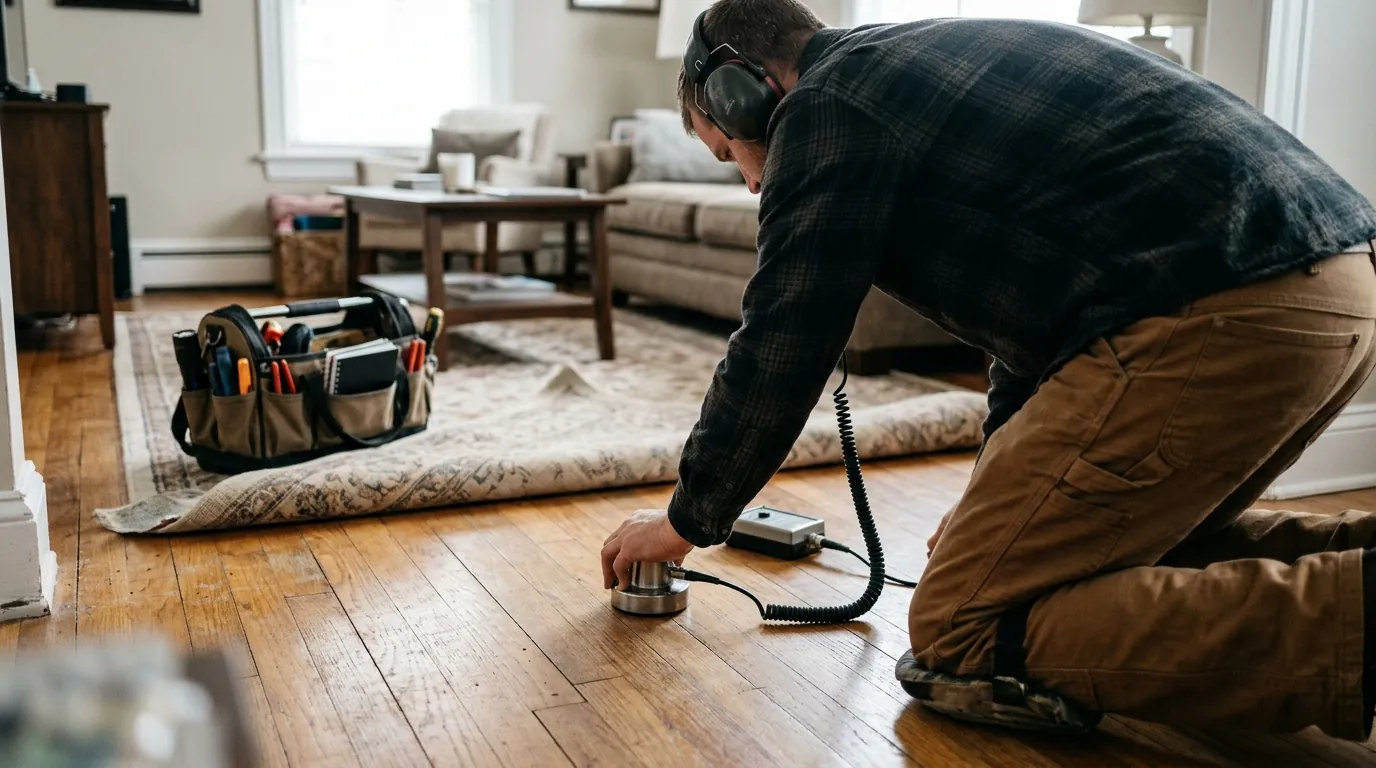
Leak detection is a step-by-step search for water escaping from your pipes where you cannot see it. We start at the water meter to confirm a leak exists, isolate parts of the system, then pinpoint the spot with acoustic listening, thermal imaging and moisture readings. You need it when your bill climbs, the meter moves with everything off, or stains and musty smells appear.
Most leaks in a Salem house are not dramatic. A pinhole in a copper line under the floor, a weeping fitting behind a shower wall, or a toilet flapper that never quite seals can waste water for months before anyone notices. By the time a ceiling stain shows up, the framing above it has usually been wet for a while.
Our job is to narrow the search so the repair opening is small and in the right place. We test the system as a whole, split it into sections, and then listen and look for the exact spot. You get a clear answer about where the water is going and what it will take to stop it.
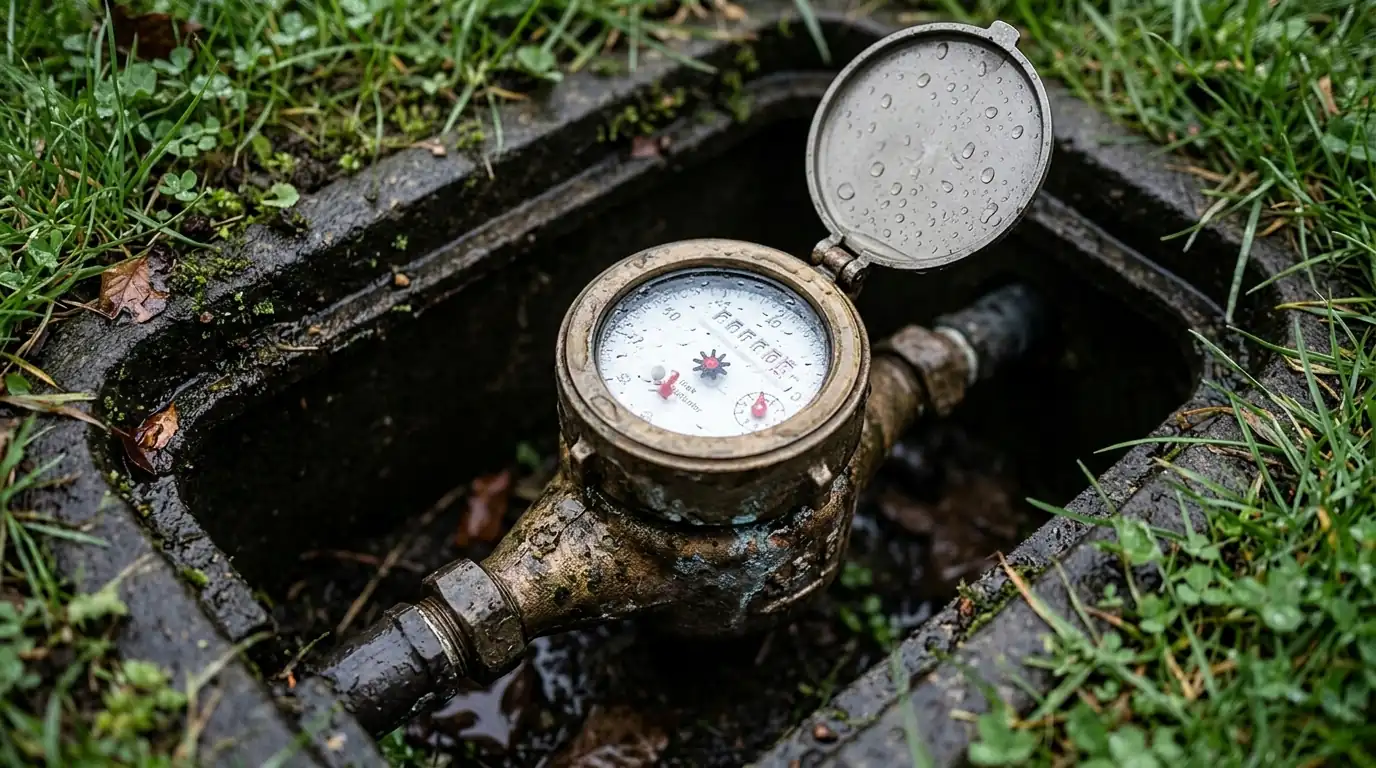
Your water meter is the first and cheapest diagnostic tool on the property. With every faucet, appliance and irrigation zone shut off, the small leak indicator on the dial should sit still. If it creeps, water is leaving the system somewhere downstream of the meter, and the next question is where.
We then close the main shutoff at the house. If the dial stops, the leak is inside the home. If it keeps moving, the problem is in the buried line between the meter and your foundation, which calls for a different kind of repair entirely.
Water forced out of a small hole under pressure makes a hiss that travels along the pipe and through the floor. Our ground microphones and contact sensors amplify that sound so the plumber can follow it to the loudest point, which is usually within a short distance of the actual opening.
Thermal imaging works differently. Hot water leaks warm the surface around them, and cold leaks cool it as moisture evaporates, so a wall or floor shows a patch that does not match its surroundings. Moisture meters then confirm what the camera suggests.
Because most Salem homes sit over a crawlspace, a lot of supply piping runs where nobody looks. A slow drip there soaks the vapor barrier, pools on the soil and raises humidity under the house until the subfloor starts to smell. We check the crawlspace early in every leak search.
Shower valves, tub spouts and wax rings under toilets are the other usual suspects. Water from those spots can run along a joist and show up several feet away, so the stain you see is not always where the leak is.
A supply leak runs all day because the pipe is always under pressure. A drain leak only shows up when water goes down that line, so wet spots that appear after showers or laundry point to drain piping, a failed trap or a cracked cast-iron fitting. We run fixtures one at a time to tell the two apart.
Warning signs
On the visit
We confirm a leak exists and whether it sits inside the house or on the buried line out to the meter.
Valves and caps let us test hot, cold and individual branches separately, so the search area keeps getting smaller.
The plumber works over the suspect area with acoustic gear, a thermal camera and a moisture meter to locate the source.
We mark the leak point, show you the readings, and explain the repair options with a price before anything is opened.
With your go-ahead, we open the smallest access needed, fix the pipe or fitting, and pressure test it before closing up.
| What is included | Typical range |
|---|---|
| Leak detection visit with meter test and pinpointing | $229 to $489 |
| Pipe or fitting repair at the located spot, same visit | $189 to $640 |
| Small access opening cut and left ready for patching | $79 to $165 |
Price depends on how many branches need testing and how hard the area is to reach. The plumber gives you the final price before work starts, after seeing the job.
Around Salem
Leak searches come up often in the older homes around Grant, Highland and Fairmount Hill, where aging galvanized and early copper lines run through crawlspaces, and in South Salem hillside homes where high water pressure strains fittings.
Prices for every service are on one page: the First Choice Rooter price list.
Call (971) 326-9414Questions
Turn off every faucet, appliance and sprinkler, then watch the small leak indicator on your water meter for 10 to 15 minutes. Any movement means water is leaving the system. Writing down the full meter reading and checking it again after a couple of hours with no use works too, and it catches very slow leaks.
Not as a first step. The point of locating the leak precisely is to keep the opening small. Most searches end with one marked spot, and the access cut is often a square of drywall or a section reached from the crawlspace. In a raised-floor home, many leaks can be repaired from below with no interior opening at all.
Yes. If the meter keeps moving after the house shutoff is closed, the leak is outside. We listen along the line between the meter and the foundation with ground microphones to find the loudest point. Depending on the pipe's age and condition, a spot repair may make sense, or replacing the whole service line may be the better call.
Water follows the easiest path. It can run along a pipe, a joist or the top of a wall plate for several feet before it soaks through drywall. That is why we trace the source with listening and moisture readings instead of cutting where the stain is. Opening at the stain often misses the leak entirely.
It does, and it is one of the most common hidden water wasters we find. A flapper that does not seal lets water trickle from the tank into the bowl around the clock, often with no sound. A few drops of food coloring in the tank will show up in the bowl within about 15 minutes if the flapper is leaking.
Related work
This service covers thawing frozen supply lines safely and repairing pipes that have split or pulled apart from freezing.
See the serviceCrawlspace plumbing repair covers the supply lines, drain and vent piping, and shutoffs that run beneath a raised floor.
See the serviceWater service line replacement means installing a new buried pipe between the water meter and the house, then connecting it to your main shutoff.
See the serviceA real person answers 24/7. Tell us what the drains are doing and we will send a First Choice Rooter plumber with the right equipment on the truck.