Main Sewer Line Rooter Service
Main line rooter service clears the single pipe, called the lateral, that carries all household waste from the foundation to the city sewer.
See the serviceSewer lines
Many older Salem houses have no outdoor access to the main sewer line, so every clog means pulling a toilet or crawling under the house. We install a cleanout that opens straight into the lateral.
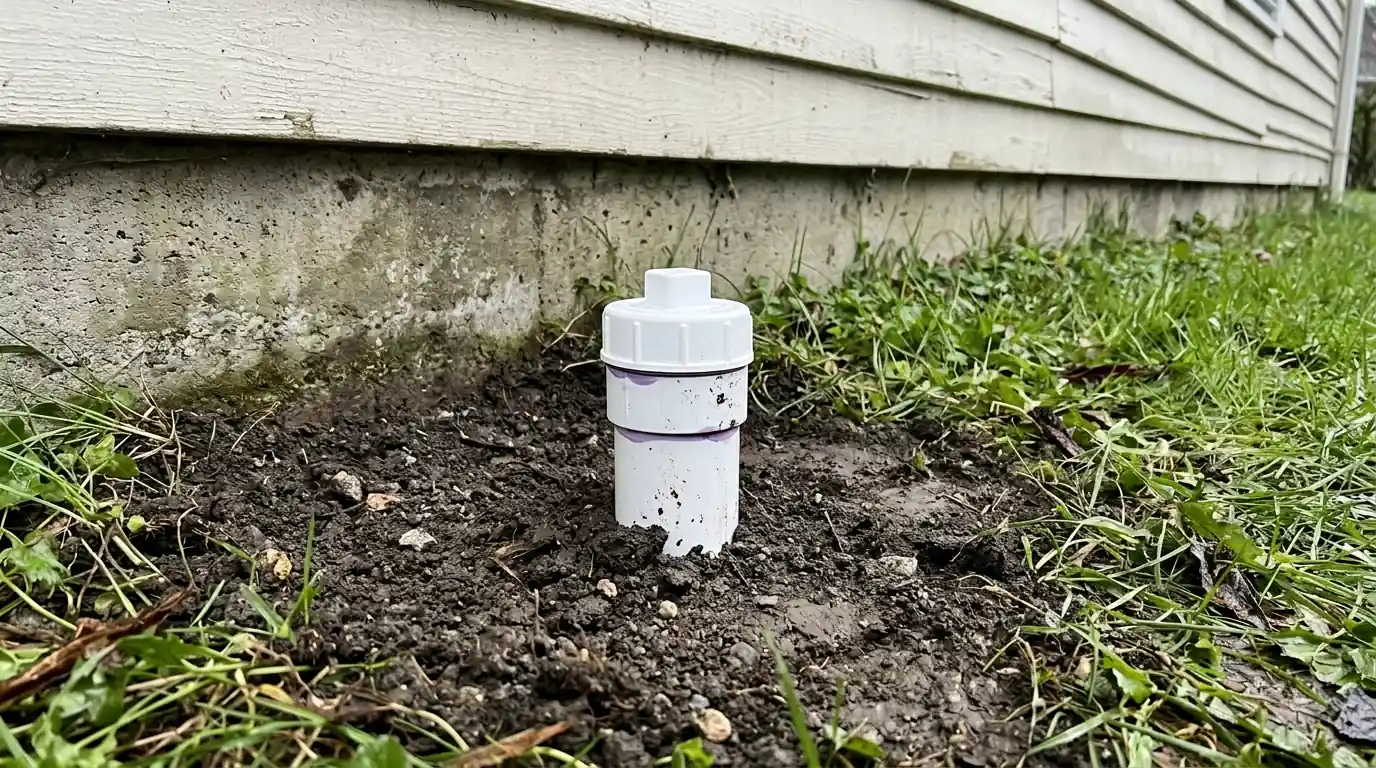
A sewer cleanout is a capped pipe that rises from your main sewer line to ground level, giving plumbers a straight entry for cable machines, jetters and cameras. Installing one means digging to the lateral near the foundation, cutting in cleanout fittings, and running a riser to grade with a sealed cap. You need one if your home has no outside cleanout or only a buried one.
Plenty of homes built before the 1960s were finished with no outside cleanout at all, or with one that ended up buried under a planter or a walk years ago. Without it, clearing the main line means pulling a toilet off the floor or reaching through a vent on the roof, which is slower, messier and harder on the equipment.
A two-way cleanout outside the foundation solves that. It lets us run a cable or camera toward the street or back toward the house, and it gives a backup somewhere to show itself outdoors. Compared with a sewer repair it is a small job, and it makes every future drain call faster.
A cleanout gives the cable a straight shot into the lateral, with no toilet trap or tight bend between the machine and the clog. That allows a bigger cutting head, more power at the blockage, and less risk of a stuck cable. It also keeps the work outdoors, so whatever drains out when the clog breaks is handled outside instead of on your bathroom floor.
A one-way cleanout points only downstream, toward the street, which works for rodding the lateral. A two-way cleanout uses a pair of angled fittings so we can go downstream to the main or upstream toward the house drain under the crawlspace. For most homes we recommend the two-way style, because it covers both halves of the line from one spot.
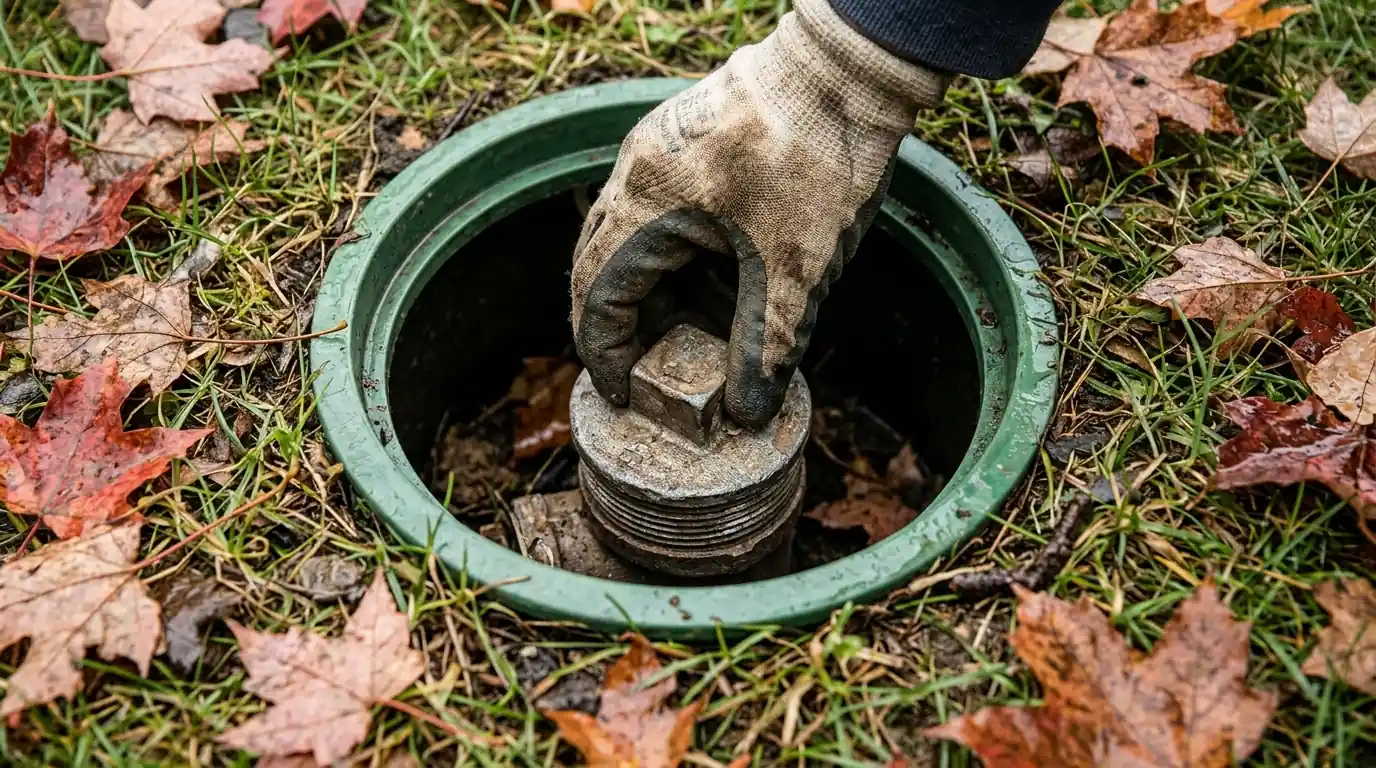
We locate the lateral near where it leaves the foundation and dig down to it. A short piece of pipe is cut out and replaced with the cleanout fittings, joined to the old clay or cast iron with shielded couplings so the slope stays true. A riser runs up to grade and gets a threaded cap. Where the cap sits in a lawn or walk, we add a protective box so mowers and feet do not crack it.
Before cutting in a new fitting, we check whether the house already has a cleanout that was covered over. We look in the crawlspace near where the drain exits, along the foundation, and in old planting beds, and we can run a camera with a sonde from inside to trace the line. Uncovering an existing cleanout and raising it to grade often costs less than installing a new one.
Warning signs
On the visit
We trace where the sewer leaves your foundation, from the crawlspace or with a camera and locator.
We choose a place close to the house, clear of downspouts and walkways, where the riser will be easy to reach.
A small pit exposes the lateral, and we check the pipe material and its condition at that point.
We remove a short section and install the cleanout fittings with shielded couplings, keeping the line's slope.
The riser comes up to grade with a threaded cap, we run water through, and the pit is backfilled.
| What is included | Typical range |
|---|---|
| Two-way cleanout installed outside the foundation | $789 to $2,190 |
| Buried cleanout found and raised to grade | $340 to $790 |
| Protective box set around the cleanout cap | $95 to $185 |
Pipe depth, material and what covers the line affect the price. We confirm the depth first and quote the job before digging.
Around Salem
Homes in Highland, Grant and the Gaiety Hill area most often lack an outside cleanout, since many were built when an outdoor cleanout was not part of the plan, and their crawlspace drains make toilet-pull rodding slow and messy.
Prices for every service are on one page: the First Choice Rooter price list.
Call (971) 326-9414Questions
Usually within a few feet of the foundation, along the path where the sewer leaves the house. That spot lets us reach both the house drain and the lateral to the street. We avoid putting the cap in a driveway, under a downspout or where water pools after rain, and we place it where you can find and open it without moving anything.
Yes. We cut out a short section of the cast iron and join the cleanout fittings with shielded couplings made for cast iron. Before cutting, we check the old pipe at that spot, because thin or heavily scaled cast iron can crack when it is cut. If the pipe is badly worn there, we replace a slightly longer piece.
It does. When the lateral clogs, sewage rises toward the lowest opening. With a cleanout outside, opening the cap carefully lets that backed-up water spill outdoors before it reaches a tub or toilet inside. It also gives us direct access to clear the blockage, so the mess and the equipment both stay out of the house.
It should sit at or just above grade, where you can see it and open it with a wrench. A cap buried under soil or bark is hard to find in a hurry and lets dirt work into the threads. In lawns we set it just below the mower line inside a protective box, so it stays visible but safe from the blades.
Look along the foundation on the side where the main drain leaves, for a round cap a few inches across, often white plastic or black cast iron with a square nut. Check the crawlspace near the same wall. If you find nothing, we can trace the line with a camera from inside and tell you whether a buried cleanout exists.
Related work
Main line rooter service clears the single pipe, called the lateral, that carries all household waste from the foundation to the city sewer.
See the serviceA sewer camera inspection is a video trip through the pipe that carries waste from your house to the public main.
See the serviceSewer backup service is the urgent response when wastewater comes up through the drains because the main line is blocked or the lateral has failed.
See the serviceA real person answers 24/7. Tell us what the drains are doing and we will send a First Choice Rooter plumber with the right equipment on the truck.