Crawlspace Plumbing Repair
Crawlspace plumbing repair covers the supply lines, drain and vent piping, and shutoffs that run beneath a raised floor.
See the servicePipes, leaks and water lines
When winter groundwater rises under your house and the sump pump stops keeping up, water collects fast. We repair failed pumps, install new pits and pumps, and set up discharge and backup properly.
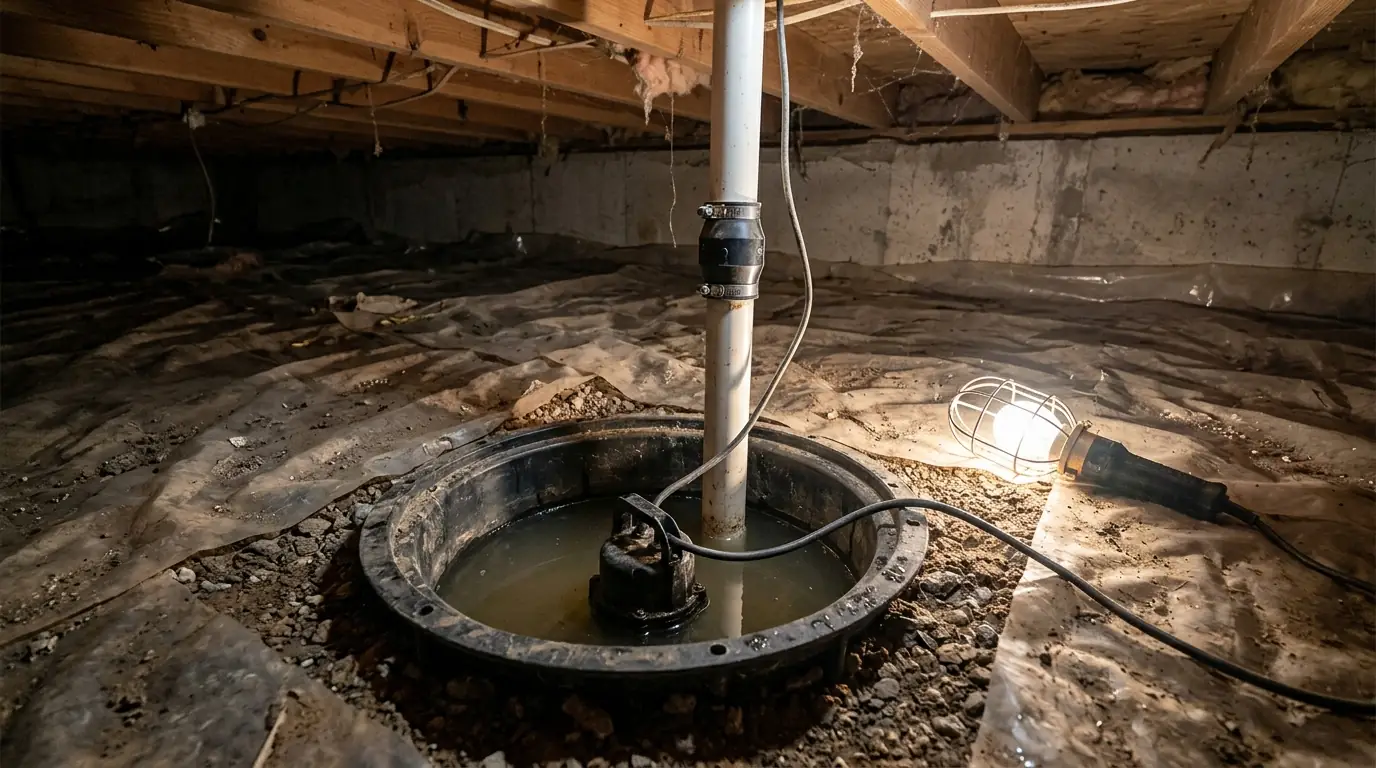
Sump pump service covers repairing or replacing the pump that removes groundwater collected in a pit below your crawlspace or basement floor. We test the float switch, check valve and discharge line, replace failed parts or the pump itself, and can add a battery backup. You need it when the pump runs constantly, will not start, hums without moving water, or water is pooling under the house.
Salem's wet season runs from about October to May, and the long soaking winter rains push groundwater up under many homes. In a crawlspace or basement with a sump, that water drains into a pit, and the pump lifts it out and away from the foundation. When the pump quits in January, the pit can overflow within hours.
Most sump problems are small parts failing at the wrong time. A float hangs up on the pit wall, a check valve sticks and lets water fall back in, or the discharge line freezes or clogs outside. We find which part failed and fix the whole setup so it works through the rest of the season.
The pit is a basin set into the lowest part of the crawlspace or basement floor, often fed by perforated drain pipe that collects water around the foundation. As groundwater rises, it flows into the basin. When the water reaches a set level, the float switch turns the pump on.
The pump pushes water up through a discharge pipe, out through the wall and away from the house. When the level drops, the float switches the pump off. During heavy storms it can cycle every few minutes, which is normal so long as it keeps up.
The check valve on the discharge line lets water out but stops it from falling back into the pit when the pump shuts off. If it fails, the same water drains back and the pump has to move it again, wearing itself out. A rattle or thump when the pump stops often points to the check valve.
Float switches come in tethered and vertical styles. A tethered float can catch on the pit wall or the power cord and stick in the on or off position. Debris in the pit can jam either style, so we clean the basin as part of any repair.
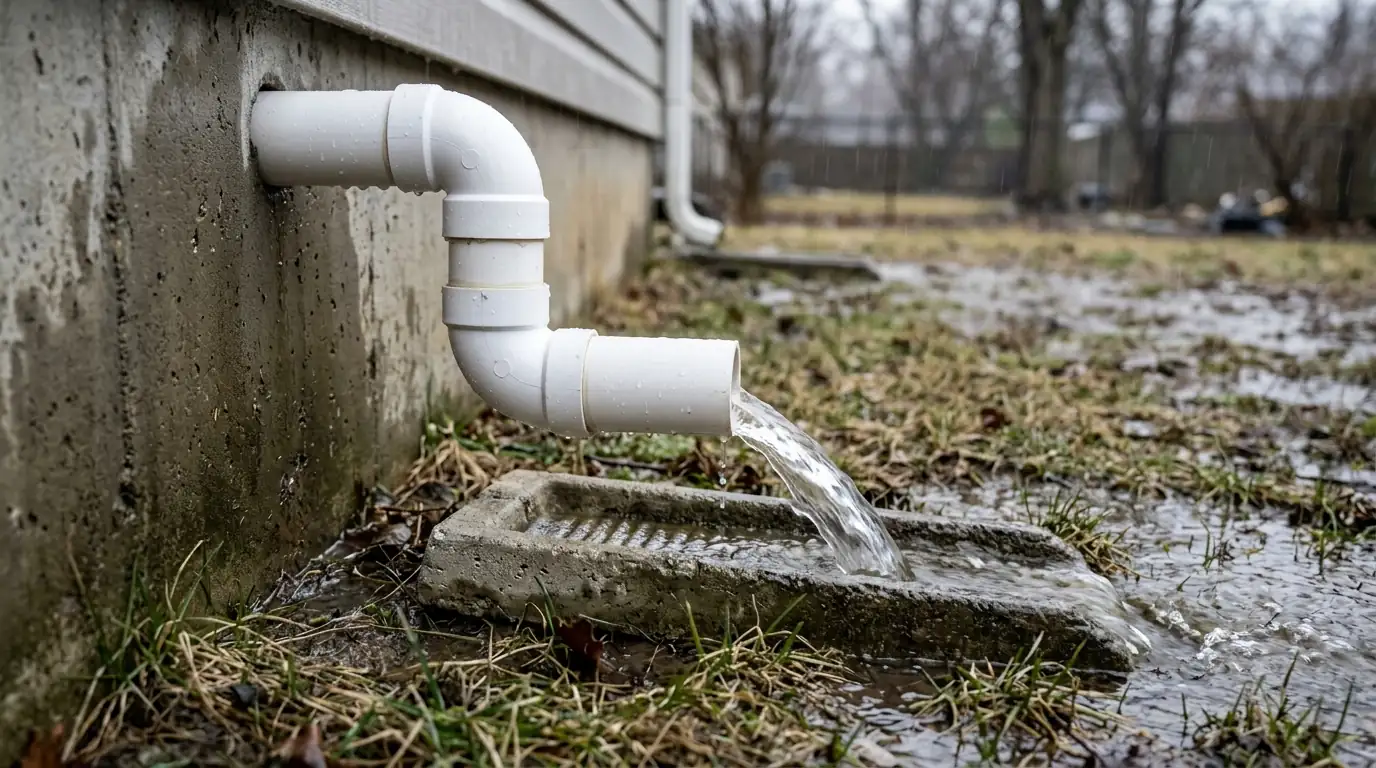
Where the discharge goes matters as much as the pump. A line that ends right at the foundation sends water back into the ground it just came from. We route it far enough out to slope away from the house, to a storm line or approved outlet where that is allowed.
Outdoor discharge pipe can freeze during a cold snap or fill with leaves and soil. A freeze relief fitting near the house lets water escape if the outer section is blocked, so the pump does not run against a dead end.
The worst storms tend to bring both heavy rain and power outages, which is exactly when a sump pump is needed most. A battery backup pump sits in the same pit with its own float, ready to take over if the main pump loses power or fails.
The backup runs from a sealed battery with a charger and an alarm that sounds when it kicks on. Batteries age, so the system should be tested before each wet season. We install backups on new systems and can add one to most existing pits.
Warning signs
On the visit
We check the water level, clean debris from the basin and watch a full cycle to see how the pump behaves.
The float switch, outlet power and check valve are tested so we know which part has failed, if any.
You get the cause and a price to repair parts or replace the pump, along with any backup or discharge changes.
We fit the new pump or parts, a new check valve where needed, and route the discharge away from the foundation.
The pit is filled with water to confirm the pump starts, empties the basin and shuts off cleanly every time.
| What is included | Typical range |
|---|---|
| Sump pump repair, float, check valve or wiring | $219 to $489 |
| New sump pump installed in an existing pit | $689 to $1,690 |
| Battery backup pump added to the same pit | $590 to $1,140 |
| Discharge line extended away from the foundation | $185 to $440 |
Pit condition, pump type, access and discharge distance shape the price. The final price is given before work starts, after the plumber has seen the pit and the outlet.
Around Salem
Sump calls peak in winter in low-lying parts of Northeast Salem, Lansing, Hayesville and East Lancaster, and in homes near Pringle Creek and Mill Creek, where groundwater rises under crawlspaces after weeks of steady rain.
Prices for every service are on one page: the First Choice Rooter price list.
Call (971) 326-9414Questions
Many pumps run around 7 to 10 years, depending on how hard they work each winter. In a Salem crawlspace that sees heavy groundwater from October to May, the motor works more and may wear sooner. A pump that is rusty, noisy or running much longer per cycle than it used to is close to replacement.
Yes, and it is common in Salem, since most homes sit over crawlspaces rather than basements. We dig a pit at the lowest point of the crawlspace, set a basin, and connect it to drain lines or a gravel bed that collects groundwater. The discharge runs out through the foundation and away from the house.
Groundwater in the Willamette Valley rises through the winter and can keep flowing into the pit for days after rain stops. Steady cycling in that case is normal. If the pump runs without stopping, the float may be stuck, or a failed check valve is letting the same water fall back in. Both are quick checks on a visit.
If losing the pump would put water under your floor or into finished space, a backup is worth having. Winter storms that bring heavy rain also bring outages, and a primary pump cannot run without power. A backup also covers a stuck float or a burned-out motor while the main pump waits for repair.
It should carry water far enough from the foundation that it does not soak back into the soil around the house, on a slope that runs away from the building. Some homes tie into a storm line where that is allowed. Discharge should not go into the sanitary sewer or onto a neighbor's lot.
Related work
Crawlspace plumbing repair covers the supply lines, drain and vent piping, and shutoffs that run beneath a raised floor.
See the serviceStorm drain cleaning clears the underground pipes that carry rainwater from downspouts, yard drains and sometimes foundation drains away from the house.
See the serviceEmergency plumbing is urgent repair for problems that are causing damage right now or will soon: burst or frozen pipes, sewer backups, leaking water heaters, overflowing toilets that.
See the serviceA real person answers 24/7. Tell us what the drains are doing and we will send a First Choice Rooter plumber with the right equipment on the truck.