Tankless Water Heater Service
Tankless water heater service means flushing the heat exchanger with a descaling solution, cleaning the inlet filter, checking the burner, fan, flame sensor and vent, and reading any.
See the serviceWater heaters
If you are tired of running out of hot water, or want the garage space a tank takes up, a tankless unit heats water only as you use it. We size, mount and vent it around how your household actually uses hot water.
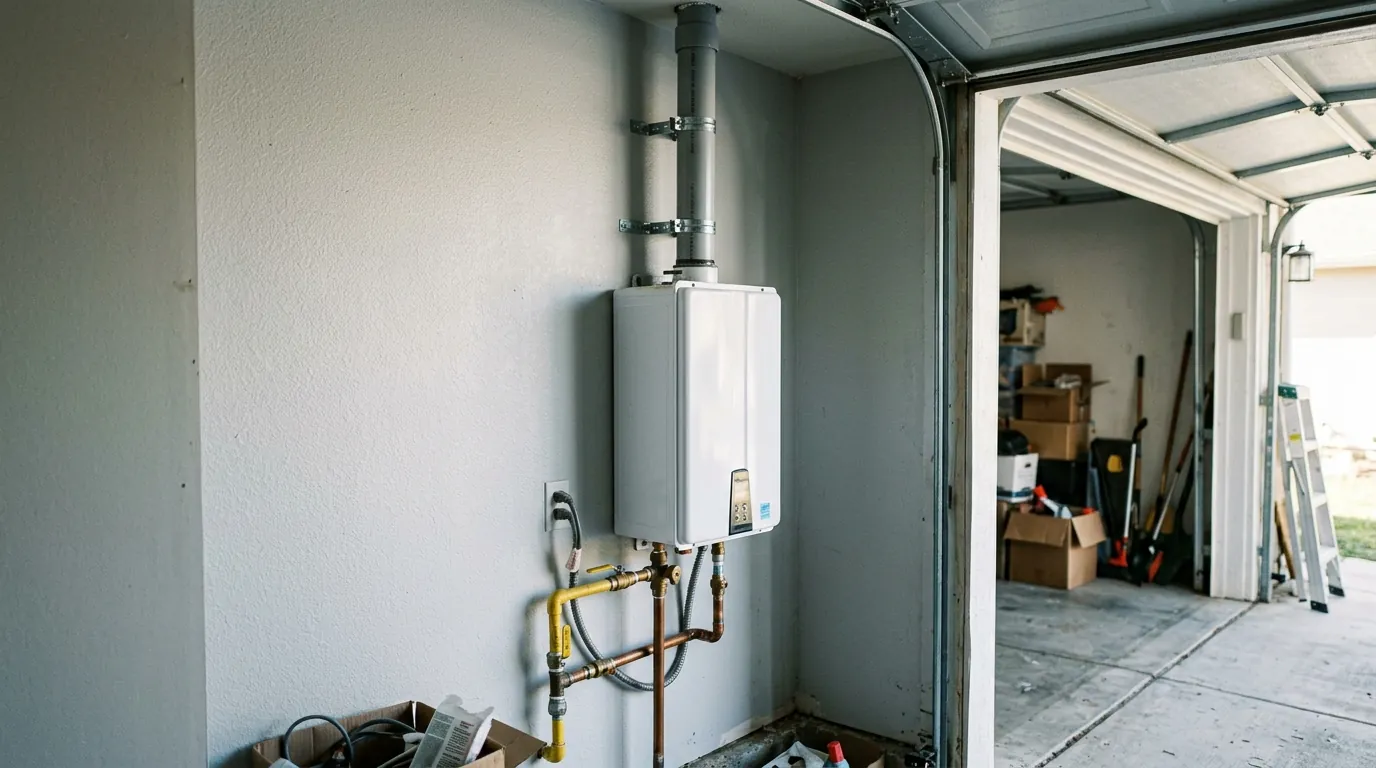
Tankless water heater installation replaces a storage tank with a wall-mounted unit that heats water as it flows through a heat exchanger. The job includes sizing by flow rate and temperature rise, upgrading the gas line or electrical service, running a sealed vent, and fitting isolation valves for later flushing. It suits homes that want continuous hot water and are ready for a larger upfront cost.
A tankless heater does not store anything. When a hot tap opens, a flow sensor tells the burner to fire, and water is heated as it passes through a coiled heat exchanger. As long as the unit is sized for the demand, the hot water keeps coming through back-to-back showers.
The tradeoff is the install. A gas tankless unit needs far more gas at full fire than a tank does, a dedicated vent, and often a condensate drain. Many conversions need a bigger gas line from the meter. We look at all of that on the first visit so the price you see covers the whole job.
Tankless units are rated by how many gallons per minute they can heat at a given temperature rise. In winter, Salem's incoming water runs colder than in summer, so the unit has to lift it further to reach shower temperature. We add up the fixtures likely to run at once, such as two showers and a dishwasher, then pick a unit that can carry that flow on a cold January morning, not just in August.
A gas tankless heater can draw several times the gas of a standard tank at full burn. The old half-inch line that fed a tank often cannot deliver that without the pressure sagging and the burner stumbling. We measure the length of the run and the other gas appliances on it, then upsize the line as needed. The unit also needs a standard outlet for its controls and fan, and whole-house electric tankless models need heavy dedicated circuits.
Non-condensing units send hot exhaust out through stainless steel vent pipe. Condensing units pull extra heat from the exhaust, which cools it enough to use PVC venting but also produces acidic condensate. That water has to go somewhere, usually through a small neutralizer and into a drain line.
We route the vent through a wall or roof with the clearances the manufacturer specifies from windows, doors and the gas meter, so exhaust cannot drift back into the house. Every joint is sealed, and the termination gets a screen so birds and wasps cannot nest in it.
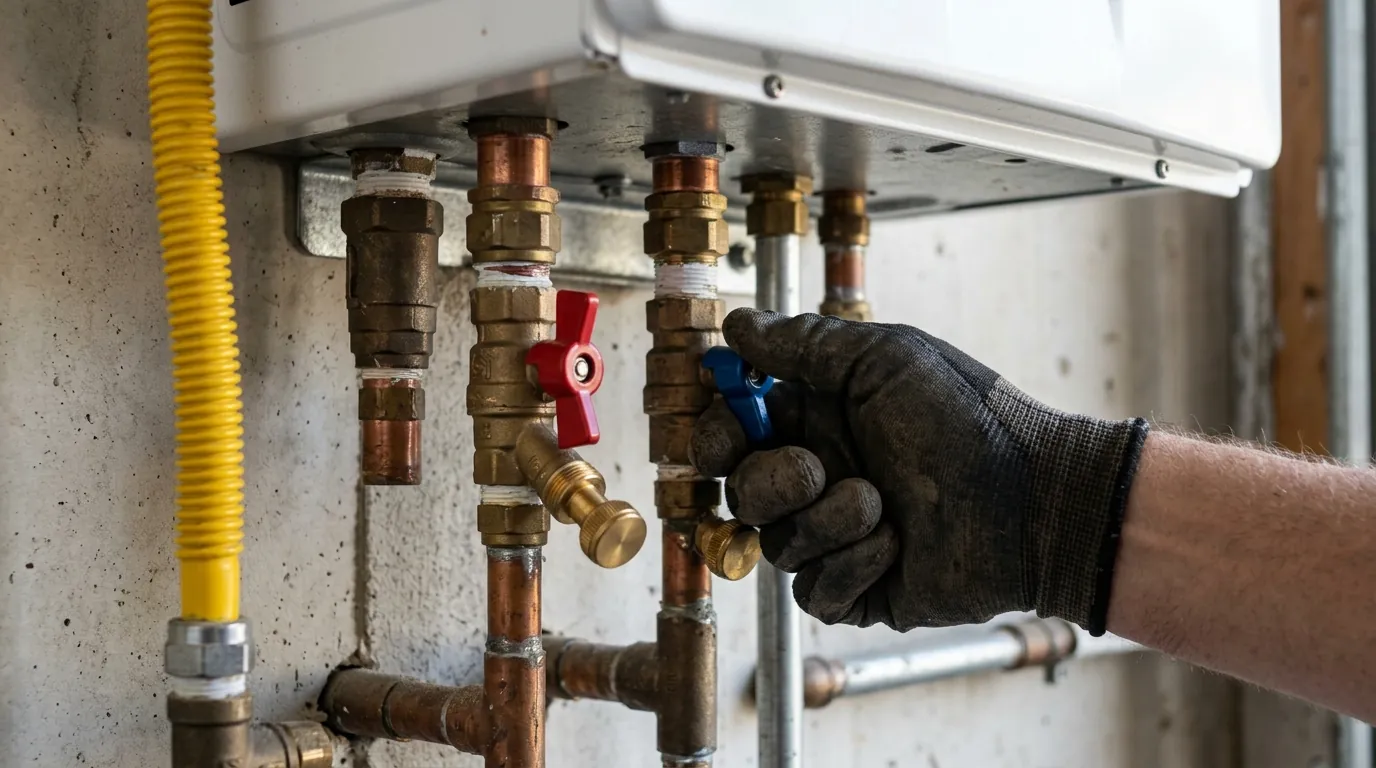
Every tankless unit needs periodic flushing to clear mineral and grit from the heat exchanger. We install isolation valves with hose ports on the hot and cold lines so a pump and bucket can circulate cleaning solution without cutting into the pipes. An inlet filter screen catches sediment before it reaches the exchanger.
Warning signs
On the visit
We count fixtures, check the incoming water temperature, and measure the gas line run from the meter.
We choose a wall location with good access and a vent path that meets clearances from openings.
We drain and disconnect the existing water heater and haul it away from your property.
The unit goes on the wall with service valves, gas line, vent, condensate drain and power connected.
We purge air from the lines, test gas pressure under full fire, check the vent, and set the temperature.
| What is included | Typical range |
|---|---|
| Tankless water heater installed | $3,890 to $7,450 |
| Gas line upsized from the meter | $590 to $1,680 |
| Condensate neutralizer and drain line | $165 to $340 |
Unit size, gas line work and vent routing set the final number. We check your gas supply first and give you a price before the old tank comes out.
Around Salem
Tankless conversions are most common in the South Salem hills, Sunnyslope and West Salem, where larger 1980s to 2000s homes with three or more bathrooms and gas service run their old tanks out every morning.
Prices for every service are on one page: the First Choice Rooter price list.
Call (971) 326-9414Questions
It will keep heating as long as water flows, but only up to its rated flow. If you run more hot fixtures at once than the unit can heat, the water cools down. That is why sizing matters. A unit sized for your peak demand on a cold winter morning gives continuous hot water for normal household use.
A tankless unit heats water on demand, so it burns a lot of gas for a short time instead of a little gas over a long time. That high peak draw can drop gas pressure on a small or long line, especially if a furnace or range runs at the same time. Upsizing the line keeps pressure steady at full fire.
Some models are built for outdoor mounting and need no separate vent, which saves on piping. In Salem, the water lines feeding an outdoor unit have to be insulated and protected from hard freezes like the January 2024 ice storm. Many units have freeze protection heaters, but they need power to work, so an outage can still leave them exposed.
Water still has to travel from the heater to the tap, just as with a tank, so the wait depends on distance. The unit itself takes a few seconds to sense flow and fire, which can add a short burst of cooler water. A recirculation setup or locating the unit closer to the main bathrooms can shorten the wait.
The unit is about the size of a small suitcase and mounts on the wall, freeing the floor where a tank stood. It still needs clearance on all sides for service, a vent path, and room below for the valves and a bucket during flushing. We pick a spot where both installing and maintaining it will be easy.
Related work
Tankless water heater service means flushing the heat exchanger with a descaling solution, cleaning the inlet filter, checking the burner, fan, flame sensor and vent, and reading any.
See the serviceGas line service covers running new natural gas piping to appliances, repairing or replacing damaged lines, and fitting appliance connectors and shutoff valves.
See the serviceWater heater installation means draining and removing the old tank, setting a new gas or electric unit, and connecting the water, gas or power, venting and relief valve.
See the serviceA real person answers 24/7. Tell us what the drains are doing and we will send a First Choice Rooter plumber with the right equipment on the truck.