Why old clay laterals invite roots
Many homes in Grant, Highland, Gaiety Hill and Northeast Salem were built between the early 1900s and the 1940s, and their sewer laterals are often clay or concrete. That pipe was laid in short sections, a few feet long, with a joint at every connection. When the house was new, those joints were packed tight. After eighty or a hundred years of settling soil and wet winters, many of them have shifted or opened up a little.
Wastewater is warm, and the air inside a sewer line is humid. Where a joint has a hairline gap, a small amount of that moisture escapes into the cooler soil around it. Tree roots grow toward water and nutrients, so a fine feeder root following that trail ends up pressed against the gap. Once it finds the opening, it slips inside.
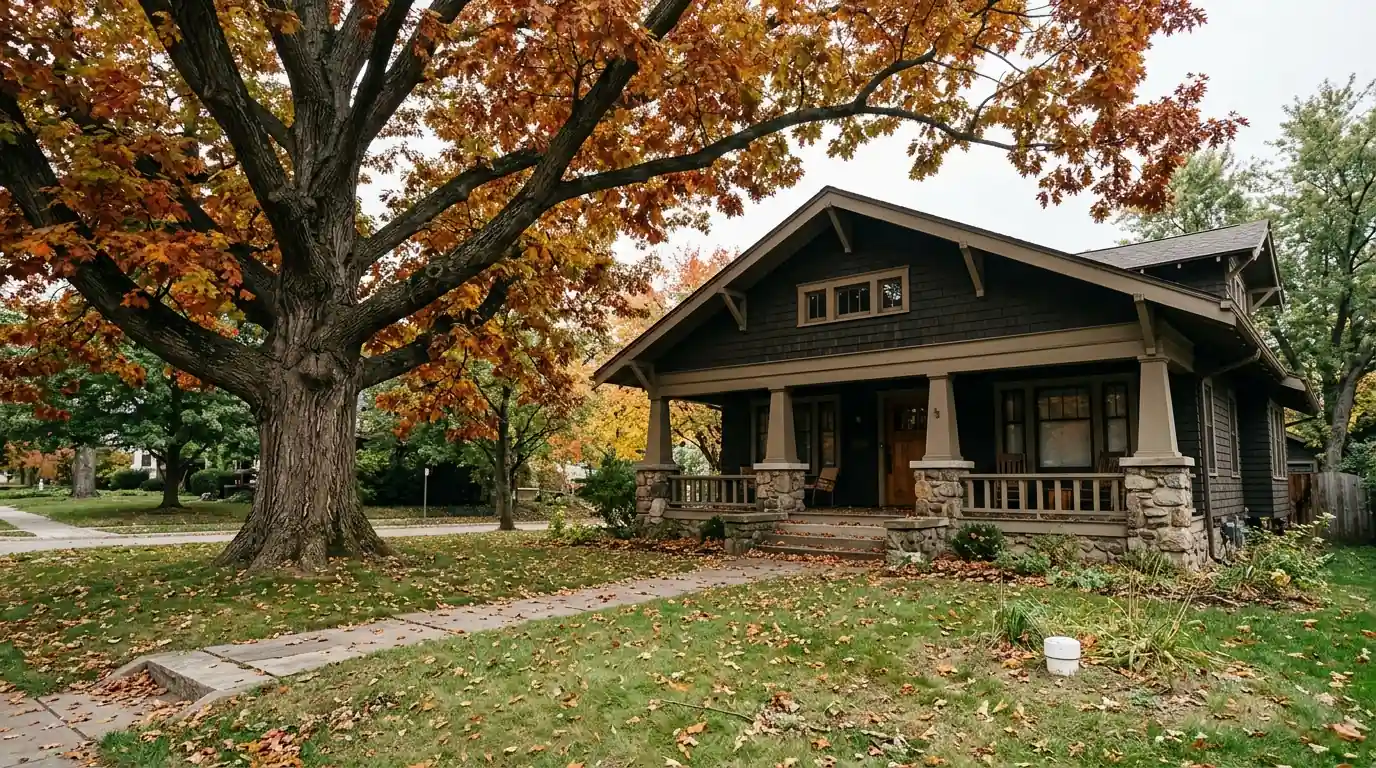
Salem gives roots plenty of chances. Mature maples, oaks, firs, sweetgums and old fruit trees line streets and fill backyards across the older parts of town, and their root systems reach well past the drip line of the branches. The long soaking rains from October to May keep the soil damp, but roots stay active all year, and a dry late summer sends them looking even harder for the steady moisture a sewer line offers.
What a root mass does inside the pipe
Inside the lateral, the root finds steady water and food, so it branches fast. Hair-thin strands spread along the bottom of the pipe and form a mat that looks a lot like a wet brush. Water still passes through it at first, which is why the early symptoms are mild and easy to ignore.
The trouble is what the mat catches. Toilet paper, grease from the kitchen, and the occasional wipe snag on the strands and build up. Over weeks or months, the opening shrinks until a heavy load, like a load of laundry plus a shower, is more than the line can carry. That is when water comes back up somewhere in the house.
Roots also thicken as they age. A root that entered through a hairline gap can widen it, crack the bell of the pipe, or push a joint out of line, which makes the next intrusion easier. Over the years, a line can go from one small entry point to several, and a clay section that was merely loose can break into pieces. That is why the same house can need a quick cutting one year and a real repair a few years later.
Early signs you will notice in the house
Root problems tend to announce themselves slowly, and they often repeat on a pattern. If you have had the main line cleared before and the same symptoms return around the same time of year, roots are the first suspect. Watch for these clues, especially in an older home with big trees out front or in the backyard.
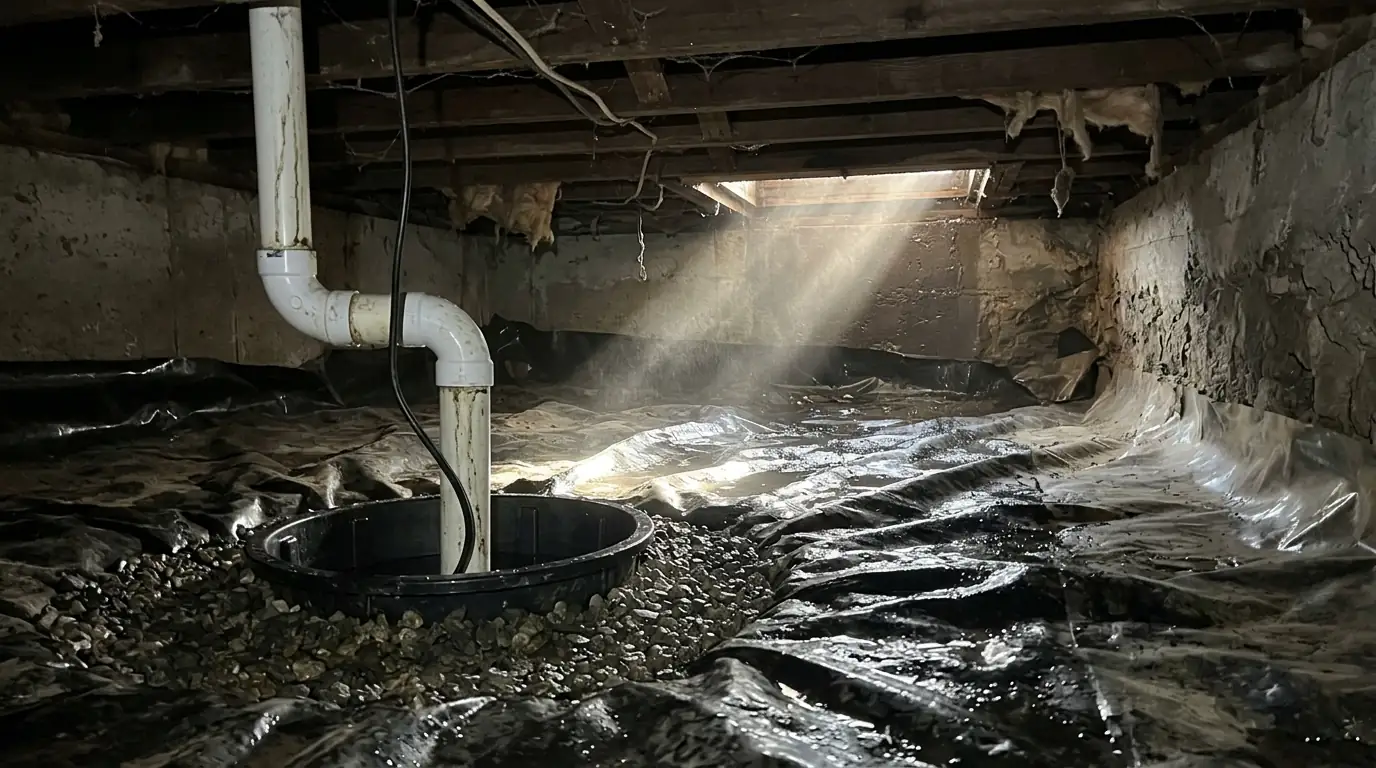
The lowest drains in the house are usually the first to complain, because water backs up to the lowest opening it can find. In a Salem crawlspace home, that is often a basement-level shower, a laundry standpipe, or a floor drain in the garage. A slow sink on the second floor is rarely a root problem by itself, but a slow ground-floor tub plus a gurgling toilet points straight at the main line.
- The lowest tub or shower drains slowly even after you clean the strainer
- A toilet gurgles or the water level drops when the washing machine empties
- Water rises in a floor or laundry drain after heavy water use
- Several fixtures slow down at the same time rather than one at a time
- A sewer smell near the cleanout or in the crawlspace
- A strip of greener, faster-growing grass along the path of the sewer line
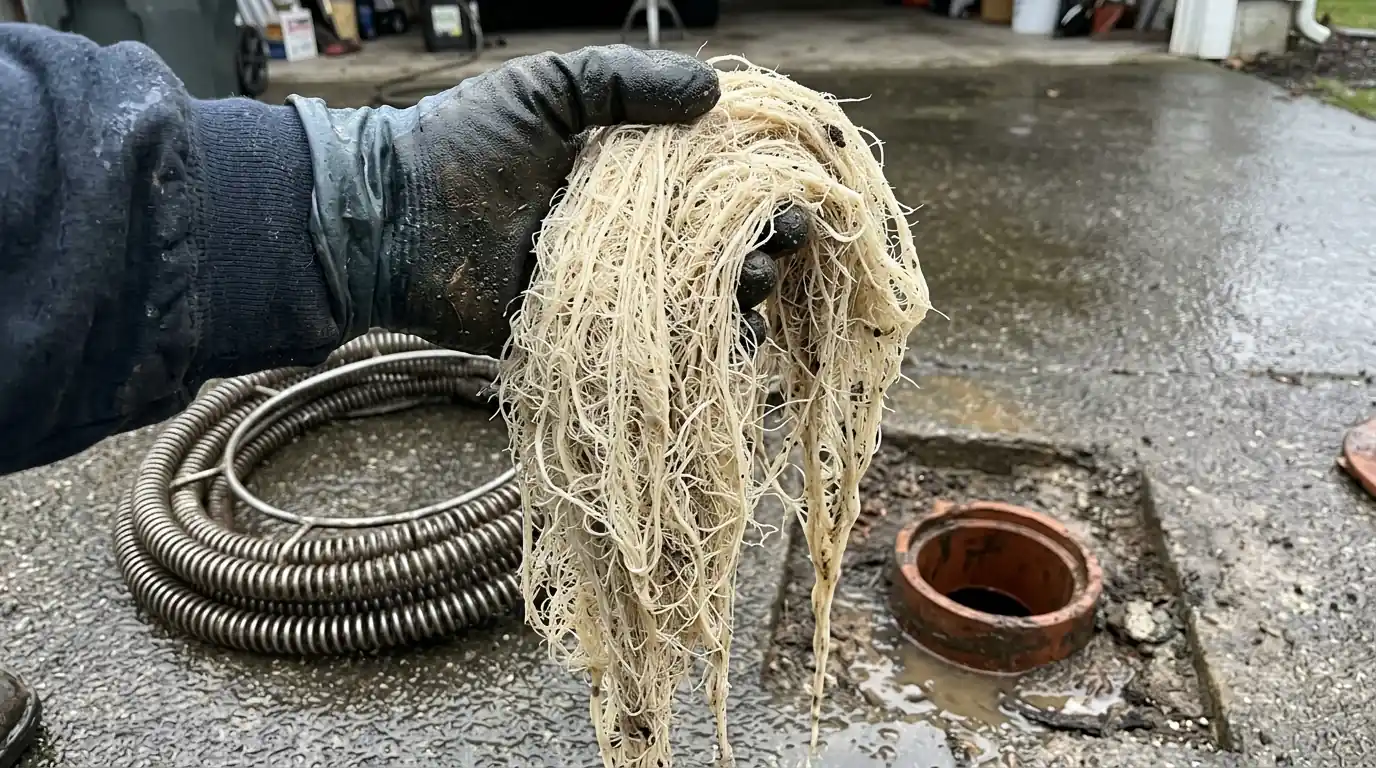
How we cut roots out of a sewer lateral
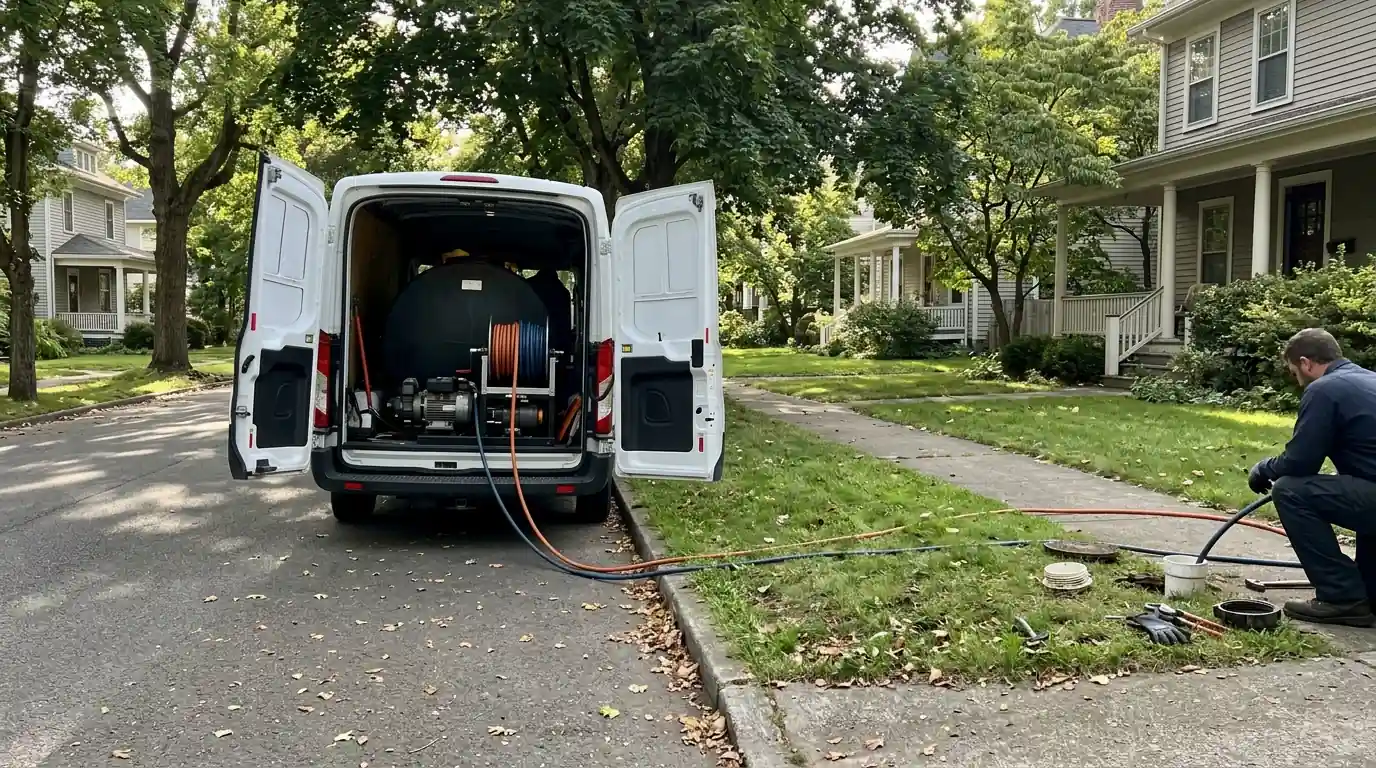
Our plumber starts at the cleanout, the capped pipe that gives straight access to the main line, usually near the foundation. If a house has no cleanout, we can work through a toilet flange or a roof vent, though that is slower. We run a cable machine with a cutting head sized to the pipe, feeding it out toward the street and working back and forth through the root mass until water drains freely.
After the line is open, we run a camera through it. The footage shows which joints the roots came through, how far from the house they sit, and whether the pipe is cracked, offset or sagging. Fine roots and the sludge they leave behind sometimes call for hydro jetting after the cut.
In Salem, root cutting typically runs $329 to $649, a camera inspection runs $219 to $389, and hydro jetting runs $389 to $795. The final price is given before work starts, after the plumber sees the job. Many homeowners find the camera step the most useful part of the visit, because it turns a guess about the yard into a clear picture of the pipe, with a distance and depth for every problem joint.
Cutting is a reset, not a permanent fix
Cutting clears the pipe, but the joint the roots came through is still open, and the tree is still there. New growth usually returns to the same spots. For some homeowners, a scheduled cutting before the problem season is a reasonable, budget-friendly way to live with an older line for a while.
When the camera shows one bad joint or a single cracked section, a spot repair seals the entry point. That typically runs $1,890 to $5,400 in Salem. When roots are coming through joint after joint along the whole run, replacing the lateral, from $6,900 to $18,500, or using trenchless lining or bursting, from $8,400 to $21,000, removes the joints roots exploit. When a permit is required, we pull it.
There is no single right answer for every house. A line with one rooty joint near a big street tree is a different decision from a crumbling clay lateral that roots have broken in several places. We walk you through the footage, show you where the trouble sits, and lay out the options side by side, so you can weigh the cost of repeat cutting against the cost of fixing the pipe once.
Practical steps for Salem homes with big trees
Start by finding your cleanout and keeping it clear of bark dust, soil and shrubs, because easy access shortens any future visit. If you are planting, keep new trees and large shrubs well away from the line between your house and the street. Ask for the camera footage after any root cutting and save it, so you can compare the joints the next time.
Keep grease out of the kitchen drain and wipes out of the toilet, since both bind to roots and turn a slow line into a backup. If you notice the warning signs coming back, call First Choice Rooter before the line closes completely. A planned visit on a dry afternoon is a lot easier than sewage in the tub on a rainy night.
- Roots enter through tired joints in old clay and concrete laterals, drawn by the moisture escaping from the pipe.
- Slow low drains, gurgling toilets and repeat clogs on a yearly pattern are classic root symptoms.
- Cutting reopens the line, and a camera check shows whether the joints need a repair to stop the roots for good.
- Keeping the cleanout clear and planting away from the lateral makes future problems smaller and easier to fix.