Sewer Camera Inspection
A sewer camera inspection is a video trip through the pipe that carries waste from your house to the public main.
See the serviceDrain cleaning and rooter
When toilets, tubs and the washer all back up together, the clog is in the main line that carries everything to the street. We open a cleanout and rod the full lateral clear.
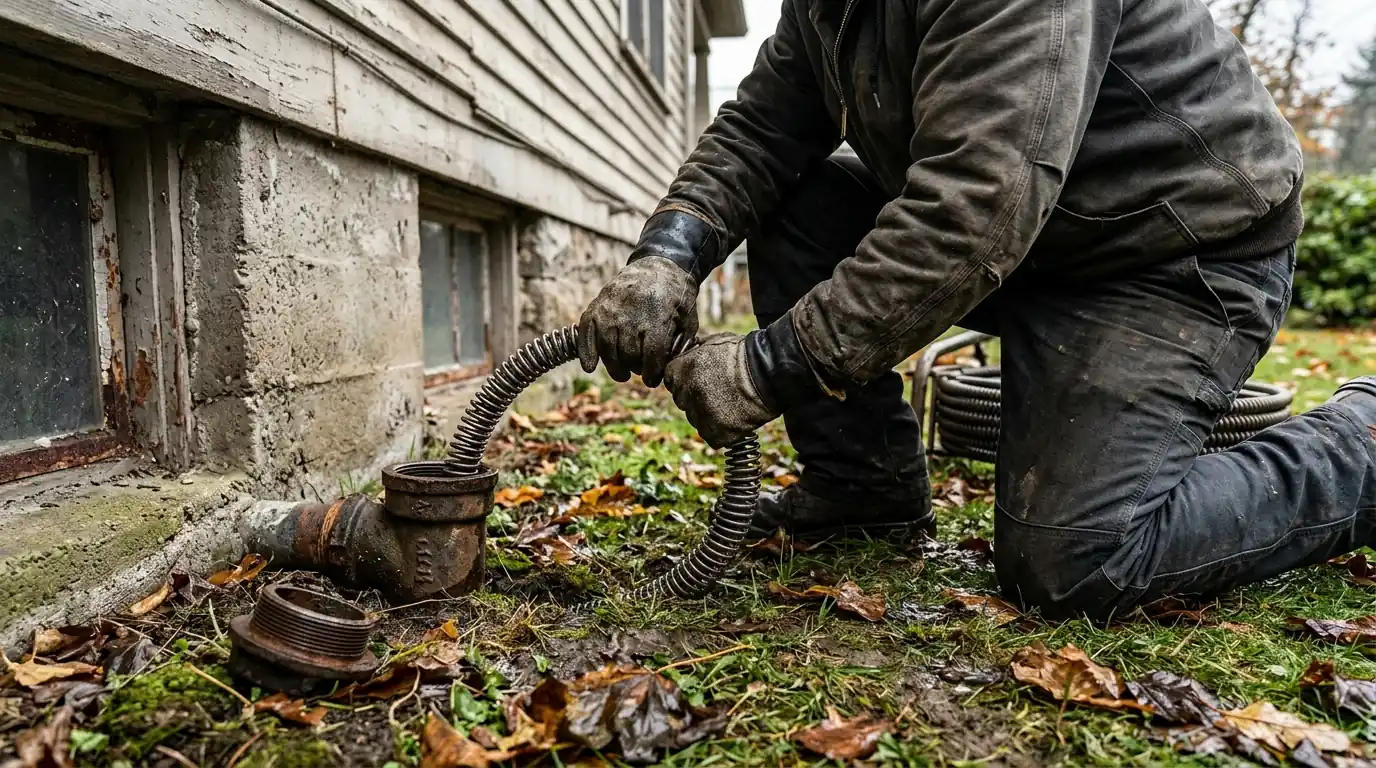
Main line rooter service clears the single pipe, called the lateral, that carries all household waste from the foundation to the city sewer. We run a heavy sectional or drum machine through an outside cleanout and cut through the blockage. You need it when several fixtures back up at once, the lowest drain overflows, or flushing makes the tub gurgle.
Every drain in the house eventually feeds one pipe, usually four inches across, that leaves the foundation and runs under the yard to the public sewer. When something stops that pipe, every fixture upstream starts competing for the little space left, and the lowest opening in the house is where the water shows up first. In a crawlspace home that is often a basement floor drain, a laundry tub, or the shower.
Rodding the main is heavier work than clearing a sink. We bring a machine with a stiffer cable, larger cutting blades and enough length to reach the street, then work it in through a cleanout so nothing has to be pulled up through a toilet flange inside your living space.
A main line rarely closes in one day. Paper and waste catch on a root tip or the lip of a shifted joint, and grease from the kitchen coats that snag until it builds into a dam. Each flush adds a little more until the flow finally drops below what the household sends down.
In older Salem neighborhoods the lateral may be clay tile laid in short sections, or concrete pipe from the postwar years. Both materials have a joint every few feet, and each joint is a place for the line to settle, offset or let roots in.
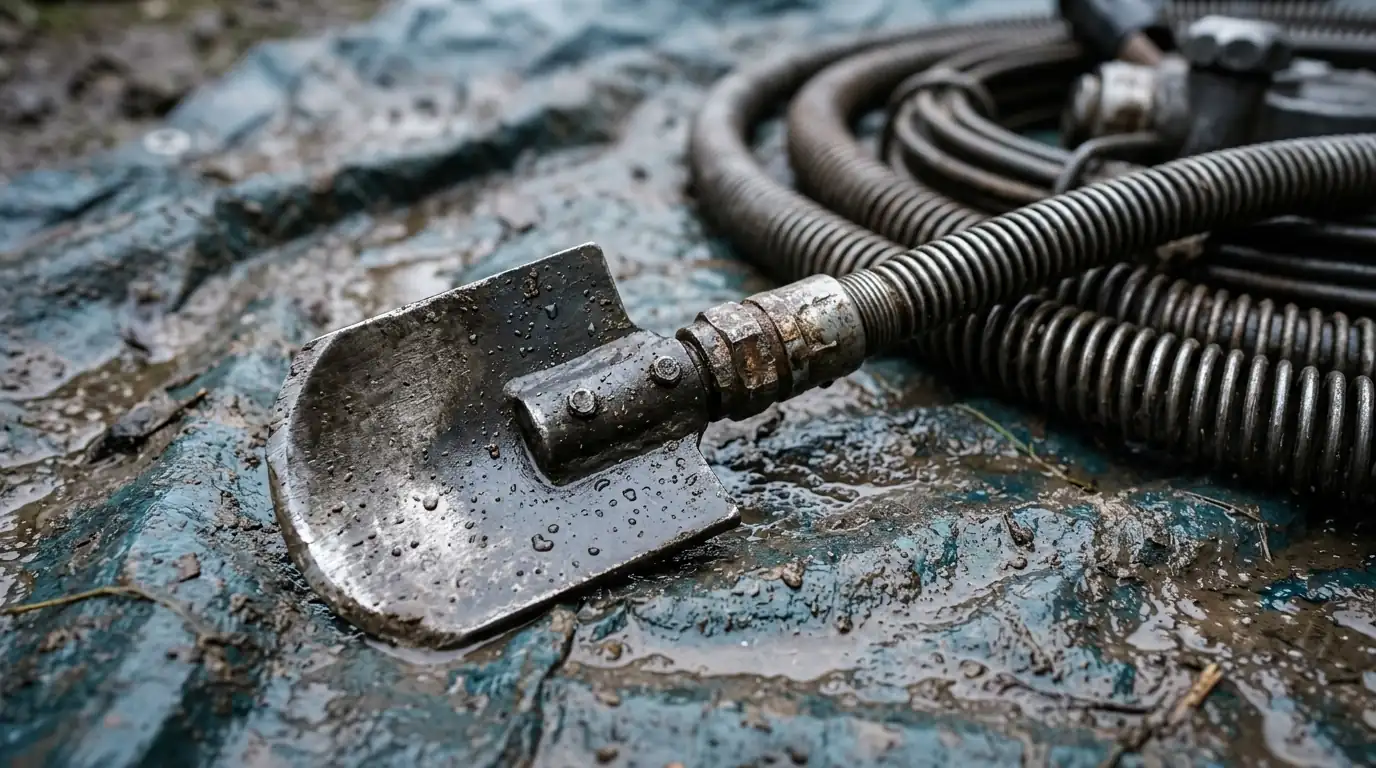
A drum machine stores its cable coiled inside a spinning drum and suits most residential mains up to about a hundred feet. A sectional machine uses short lengths of heavy cable we couple together as we go, which gives more torque on long runs and stubborn blockages. We choose the machine after seeing where the cleanout is and how far the line runs.
The best entry point is an outside cleanout, a capped pipe near the foundation or in the yard that goes straight into the lateral. Many older Salem homes never had one installed, or it is buried under a planting bed. In that case we may enter through a crawlspace cleanout or by pulling a toilet as a last resort.
If your home has no usable cleanout and the main backs up more than once, a proper two-way cleanout outside the foundation pays for itself. Every later visit gets faster and cleaner, and nobody has to pull a toilet or crawl under the house just to reach the lateral.
Cutting through a blockage tells us something stopped the pipe, but not why. A camera pass after clearing shows whether we pushed through paper and grease in a sound pipe, or whether roots, a sag holding water, or a broken section caused it. That difference decides whether you can simply keep an eye on it or need repair.
We recommend a camera look whenever a main backs up a second time within a year, or whenever the cable brings back clay shards, concrete grit or a mat of fine roots. Those pieces mean the pipe itself has an opening, and guessing at its size rarely works out well.
Warning signs
On the visit
We find the outside or crawlspace cleanout, open it slowly to release any standing water, and check which direction the line runs.
The drum or sectional machine is staged on a tarp, and we choose a starting head based on what the first look tells us.
We feed the cable to the street, working through the clog and noting the footage where resistance changes.
A second pass with a wider blade scrapes the pipe close to its full width so the flow stays steady.
We run several fixtures at once to load the line, then tell you whether a camera look is worth doing.
| What is included | Typical range |
|---|---|
| Main line cleared through an existing cleanout | $289 to $549 |
| Access by pulling and resetting a toilet | $119 to $189 |
| Camera pass right after clearing | $169 to $279 |
Most Salem main lines fall inside these ranges, though lot depth and cleanout access move the number. You hear the final price on site, after the cleanout and lateral are checked, before any rodding begins.
Around Salem
Main line calls cluster in the older grids around Gaiety Hill, Grant and Fairmount Hill, where clay laterals laid generations ago run under yards shaded by mature maples, oaks and sweetgums.
Prices for every service are on one page: the First Choice Rooter price list.
Call (971) 326-9414Questions
In most Salem homes the run from the foundation to the city sewer falls somewhere between forty and a hundred feet, depending on the lot depth and where the house sits. We carry enough cable to reach the public main from a typical cleanout, and we mark the footage where the blockage was so you know roughly where in the yard it sat.
Usually because the clearing removed the blockage but not its cause. Roots return to the same open joints, a sag keeps holding standing water and solids, and an offset joint keeps snagging paper. A camera pass after clearing shows which of these is happening so you can decide between scheduled maintenance and a lasting repair.
Yes. We can often use a crawlspace cleanout fitting on the main stack, or pull a toilet and run the cable from the flange. Pulling a toilet takes more time and means resetting it with a new wax ring afterward. If the home backs up repeatedly, installing a cleanout outside the foundation is the cleaner long-term answer.
Stop running water anywhere in the house, including the dishwasher and washer, because every gallon has to go somewhere and the lowest drain will take it. Do not flush toilets to test them. Keep children and pets away from any standing water, and leave the cleanout cap closed until we get there to relieve the pressure safely.
No. Rodding clears what is blocking the pipe, but it cannot rejoin a separated joint, lift a sag or seal a crack. If the cable brings back clay pieces or soil, the line has an opening. We will tell you what we felt and suggest a camera look so you have a clear picture before choosing any repair.
Related work
A sewer camera inspection is a video trip through the pipe that carries waste from your house to the public main.
See the serviceRoot removal means running a sewer machine fitted with a toothed cutting blade through the lateral to shear off roots that have grown in through the pipe joints.
See the serviceA sewer cleanout is a capped pipe that rises from your main sewer line to ground level, giving plumbers a straight entry for cable machines, jetters and cameras.
See the serviceA real person answers 24/7. Tell us what the drains are doing and we will send a First Choice Rooter plumber with the right equipment on the truck.