Sump Pump Repair and Installation
Sump pump service covers repairing or replacing the pump that removes groundwater collected in a pit below your crawlspace or basement floor.
See the serviceDrain cleaning and rooter
A laundry standpipe that overflows during the spin cycle, or a basement floor drain that pools instead of draining, is usually packed with lint, soap sludge or silt. We clear it and restore the trap seal.
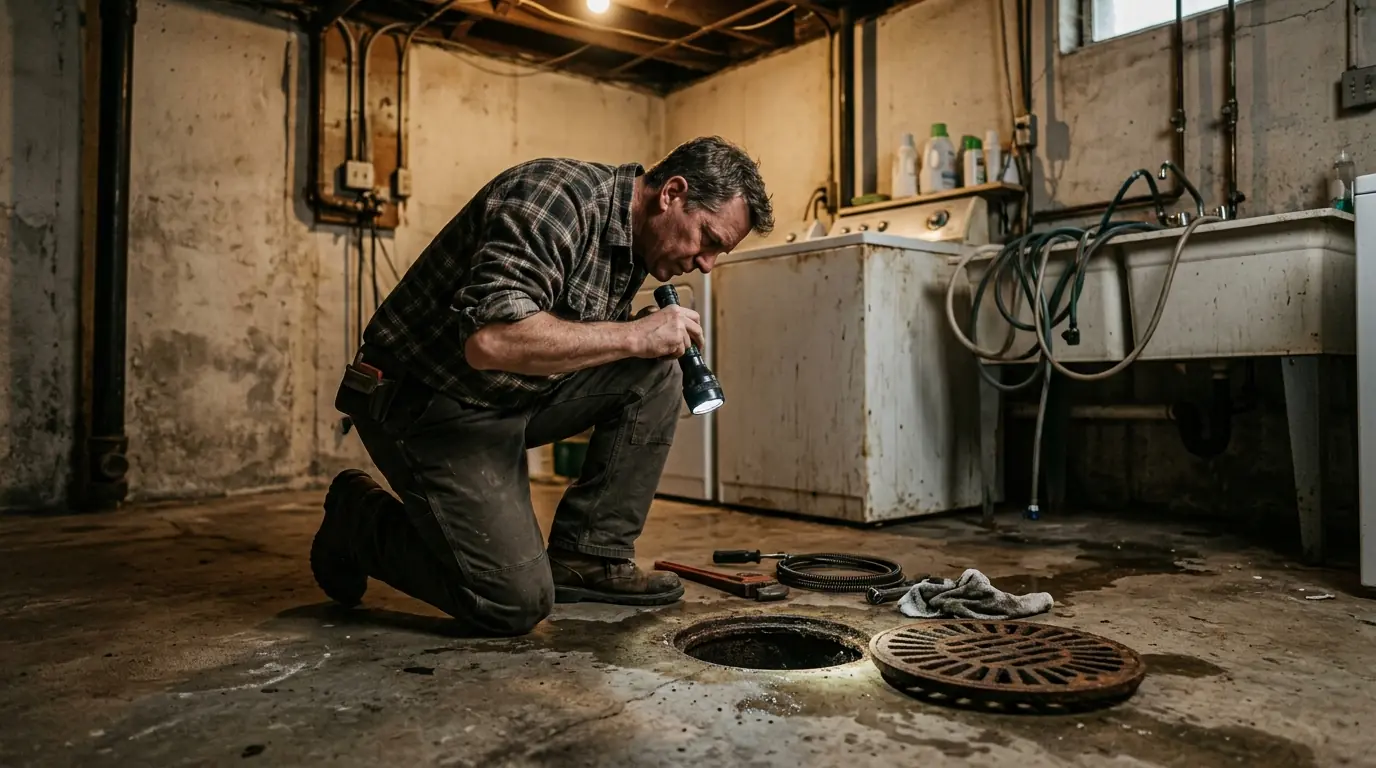
Floor and laundry drain cleaning clears basement and garage floor drains, laundry standpipes and utility sink lines of lint, detergent sludge, silt and debris. We open the drain, cable the trap and line, and refill the trap so sewer gas stays out. You need it when the washer overflows the standpipe, a floor drain pools water, or a dry drain gives off a sewer smell.
Washing machines push a lot of water out quickly, often fifteen gallons or more in a couple of minutes, and that water carries lint, pet hair and undissolved detergent. All of it settles where the flow slows down, which is usually in the trap below the standpipe or in a long horizontal laundry line. Overflows tend to start during the drain cycle, when the pump is pushing hardest.
Floor drains face a different problem. They sit at the lowest point of a basement or garage and catch silt, sand, leaves and floor-washing grit. Some only get water a few times a year, so their trap seal evaporates and sewer air drifts into the room. We clear both kinds and leave them ready to work.
A washer pump discharges water much faster than a sink, and the standpipe has to accept it all without backing up. When lint and soap sludge narrow the trap below it, water rises inside the standpipe faster than it can drain away and spills out over the top onto the floor.
Older homes often have standpipes that are shorter or narrower than current practice, or that tie into a long, nearly flat line running through the crawlspace. Both conditions make overflows more likely, especially with large-capacity washers that move a lot of water in one burst.
Basement and garage floor drains collect whatever washes across the floor, including dirt tracked in on boots, sand from a wet winter, and the occasional lost bolt or screw. That material sinks into the trap and hardens into a gritty plug.
In some older Salem homes a basement floor drain ties into the sewer, while in others it connects to a foundation drain or a sump. We trace which way your drain runs before cleaning it, since the right method depends on where the water is going.
Every floor drain has a water-filled trap that blocks sewer air from coming back up. If no water reaches it for weeks, the water evaporates and the seal disappears, letting a sewer smell drift into the basement or garage even though nothing is clogged.
Pouring a bucket of water into the drain every month or so keeps the seal intact. For drains that sit dry for long stretches, we can talk through a trap primer or a drain seal insert that holds the barrier without regular refilling.
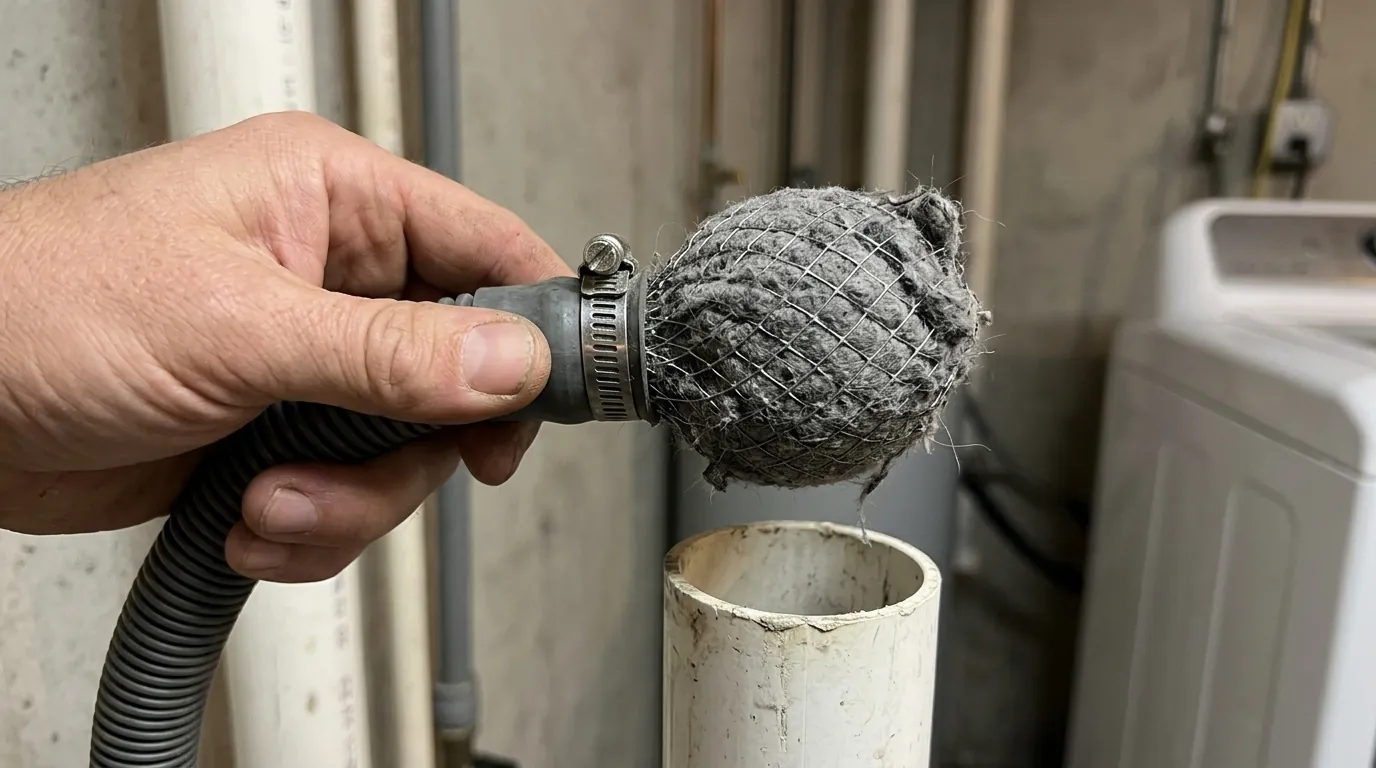
Most laundry drain clogs come from lint that washers send out with every load. Catching it before it reaches the pipe is simple and saves repeated cleaning visits, especially in homes that wash a lot of towels or pet bedding.
Warning signs
On the visit
We look at where the floor drain or standpipe connects, whether to the sewer, a sump or a foundation drain.
We lift the grate or open the standpipe trap and remove loose lint, silt and debris by hand.
A cable with a head suited to lint and grit clears the trap and the horizontal line beyond it.
On laundry drains, we run the washer through a drain cycle to confirm the standpipe keeps up without rising.
Each floor drain gets water poured in to restore its seal, and we explain how often to repeat it.
| What is included | Typical range |
|---|---|
| Floor or laundry drain cleared | $179 to $349 |
| Lint trap fitted to the washer drain hose | $29 to $59 |
| Drain seal insert for a seldom-used floor drain | $89 to $169 |
Where the floor drain connects and how much silt it holds affect the cost, so these figures are a guide. Your plumber traces the line and states the final price before clearing it.
Around Salem
Floor and laundry drain calls come up most in Fairmount Hill, Grant and Highland homes with partial basements and old cast-iron lines, and anywhere winter groundwater pushes silt into low drains.
Prices for every service are on one page: the First Choice Rooter price list.
Call (971) 326-9414Questions
The washer pushes water out faster than any other fixture, so a laundry line that is only partly blocked can keep up with a sink but not a spin cycle. Lint and soap sludge in the standpipe trap are the usual cause. A standpipe that is too short or a long, flat laundry line can make it worse, and we check for both.
It depends on the house. In many older homes it ties into the sewer, so anything poured in ends up in the city system. In others it connects to a foundation drain, a sump pit or a dry well. Before cleaning, we trace which way it goes, because that tells us what kind of clog to expect and how to clear it.
Most floor drain odors come from a dry trap, not a clog. Pour a gallon or two of water into the drain to refill the seal and the smell usually fades within a day. If it returns quickly, a cracked trap or a missing cleanout plug may be the cause, and a drain seal insert can help on drains that rarely get water.
Yes. In many basements the laundry sink, washer standpipe and floor drain all connect to one line before it reaches the main. A clog downstream of where they meet makes all three slow together, and water may back up through the floor drain when the washer drains. Clearing that shared line fixes all three at once.
Garage floor drains catch more sand, gravel, leaves and car fluids than basement drains, and some feed a sediment basin or a dry well rather than the sewer. We clear out the basin first, then cable the line. Oil or antifreeze spills should be wiped up rather than washed into the drain.
Related work
Sump pump service covers repairing or replacing the pump that removes groundwater collected in a pit below your crawlspace or basement floor.
See the serviceAppliance hookup service covers connecting dishwashers, washing machines and refrigerator ice makers to water supply and drain.
See the serviceDrain cleaning means running a cable machine, sized to the pipe, through a single branch drain until the head breaks up and pulls back whatever is narrowing it.
See the serviceA real person answers 24/7. Tell us what the drains are doing and we will send a First Choice Rooter plumber with the right equipment on the truck.