Sewer Camera Inspection
A sewer camera inspection is a video trip through the pipe that carries waste from your house to the public main.
See the serviceDrain cleaning and rooter
When a line keeps clogging because the pipe walls are coated in grease, scale or fine silt, a cable only cuts a hole through it. Hydro jetting washes the whole pipe wall back to bare material.
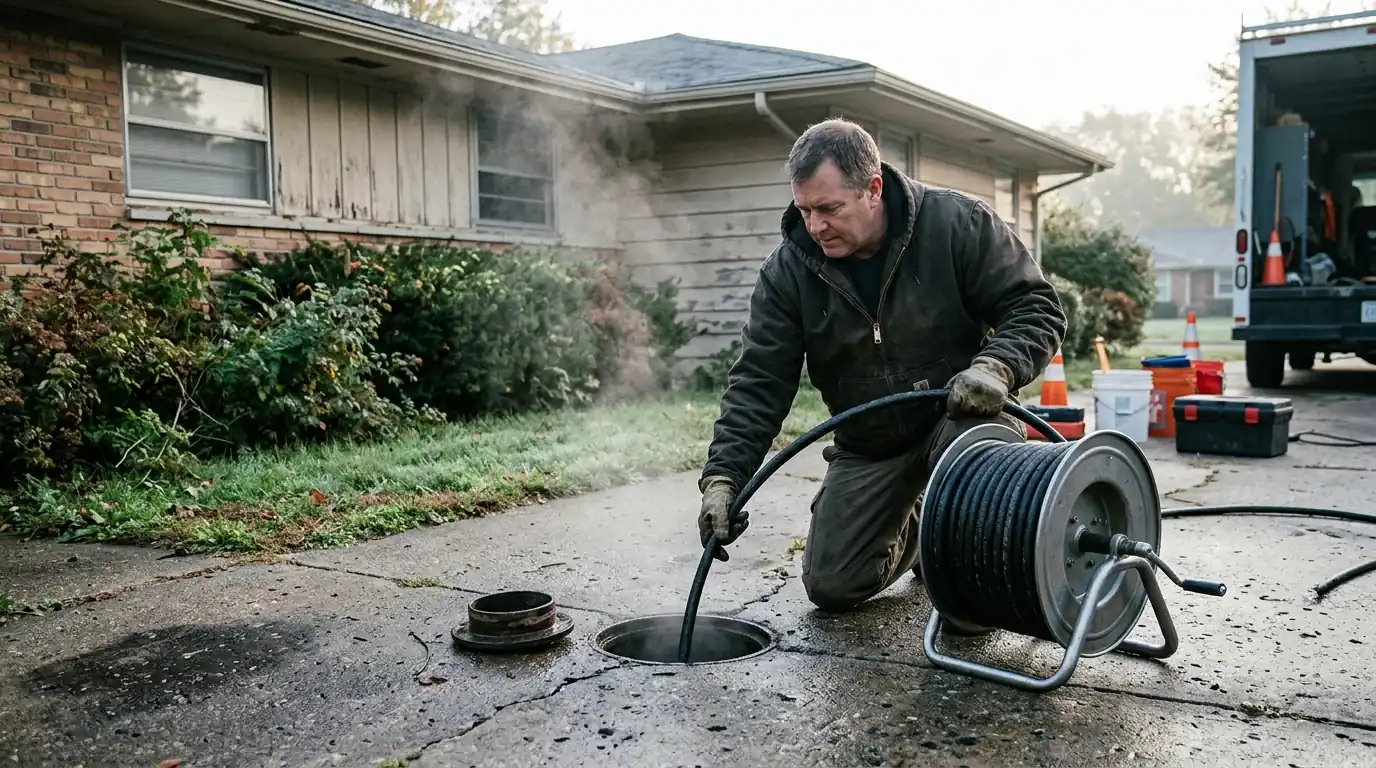
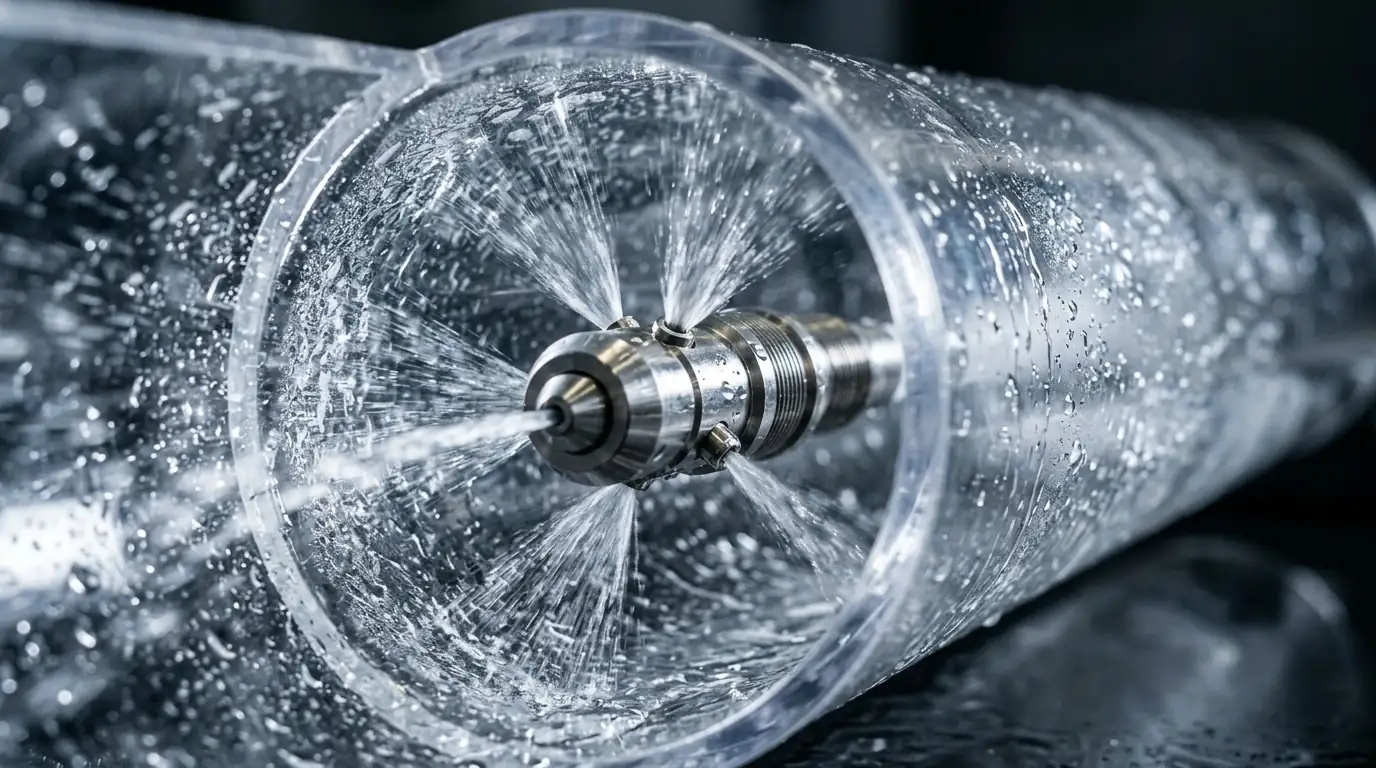
Hydro jetting sends water at very high pressure through a hose with a nozzle that has rear-facing jets. The jets pull the hose up the line and blast grease, sludge, scale and soft roots off the pipe wall, then flush it all downstream. You need it when a line clogs repeatedly, when grease has built up over years, or when a camera shows a coated pipe.
A cable machine is a cutting tool. It opens a channel through a clog, but whatever was stuck to the pipe wall around that channel stays put, and it starts catching debris again right away. That is why some lines need rodding every few months. The pipe is not blocked by one thing; it is lined with years of buildup.
Jetting attacks the lining itself. Water leaving the nozzle at high pressure scrapes the full circumference of the pipe and carries the loosened material out to the city sewer. The result is a line that flows close to the way it did when it was new, as long as the pipe itself is still sound.
The nozzle has one or more small jets facing forward to break into a blockage and several angled backward. The rear jets do most of the work. Their thrust drives the hose forward against the flow, and their spray hits the pipe wall at an angle that peels buildup away and pushes it back toward the street.
We pick nozzles for the job. A penetrating nozzle opens a fully stopped line. A spinning nozzle scours grease off the crown and sides. A heavier root nozzle handles fine root hair, though large woody roots still call for a mechanical cutter first.
Some deposits are too soft or too spread out for blades to deal with well. A cutter slices a path and slides past the rest. Water handles these deposits better because it reaches the whole surface of the pipe at once instead of cutting a single path down the middle.
High-pressure water is gentle on sound pipe but hard on pipe that is already failing. Clay with cracked bells, Orangeburg fiber pipe that has blistered and flattened, or cast iron with a rotted bottom can lose pieces when jetted. That is why we often run a camera before jetting an old Salem lateral.
If the camera shows a collapsed section or heavy deformation, we tell you plainly and talk through repair choices instead of pushing more water into a pipe that cannot handle it. Sometimes a gentle cable pass buys time while you plan a spot repair or a new lateral.
Lines with a known slow spot, such as a long, flat run in a crawlspace or a lateral with a minor belly, can stay open for years with jetting every so often. The interval depends on household use and what the camera showed.
Kitchens that cook a lot, homes with a basement laundry on a long horizontal drain, and rentals with frequent turnover are the usual candidates. We can suggest a sensible schedule after we see the pipe, and adjust it once we learn how fast the buildup actually returns.
Warning signs
On the visit
On older lines we run a camera first, or review recent footage, to confirm the pipe can take high-pressure water.
We set the pressure and flow for the pipe size and material, then pick the nozzle for the buildup we expect.
The hose goes in through the cleanout and works upstream and down in slow passes along the full run.
Repeated rear-jet passes carry the loosened grease, scale and silt out of your line toward the city sewer.
We look at the cleaned pipe so you can see bare walls and any defects the buildup was hiding.
| What is included | Typical range |
|---|---|
| Hydro jetting of a residential line | $389 to $795 |
| Pre-jetting camera look on older pipe | $169 to $279 |
| Second branch jetted on the same visit | $189 to $339 |
Pipe length, buildup and access decide where a jetting job lands in this band. Once the line and its condition are clear, the plumber confirms the exact figure with you before the hose goes in.
Around Salem
Jetting is common in postwar Lansing, Morningside and East Lancaster, where decades of kitchen grease line long crawlspace runs, and in older laterals that soak up silt during Salem's long winter rains.
Prices for every service are on one page: the First Choice Rooter price list.
Call (971) 326-9414Questions
Usually, if the clay is intact. Sound clay tile handles jetting pressure well, and jetting is often the best way to clear silt from it. The risk is clay that already has cracked bells or missing pieces. That is why we like to camera an older lateral first, so we know what we are working with before turning up the pressure.
Most residential jetting jobs take one to three hours on site, including setup, the jetting passes and a camera check. Long laterals, heavy grease or a line that needs cabling first can stretch that. You can usually keep using the house afterward, though we ask you to hold off on water use while the hose is in the pipe.
Jetting removes fine feeder roots and the mat that forms around them well, and it washes the debris out instead of leaving it in the pipe. Thick woody roots that fill a joint need a mechanical root cutter first. Neither method seals the joint, so roots will eventually grow back through any opening that remains.
It depends on how much cooking the household does and how the line is laid out. A home kitchen that clogs every year or two may be fine with jetting on that schedule. A long, flat crawlspace run with heavy use may need it more often. After we see the pipe on camera, we can suggest an interval that fits.
The jetter typically draws from an outside hose bib and uses a few gallons per minute while it runs, so a normal job uses a modest amount compared with a load of laundry over the same time. In winter we watch for frozen hose bibs and use another connection point if the outside one is shut down.
Related work
A sewer camera inspection is a video trip through the pipe that carries waste from your house to the public main.
See the serviceKitchen sink drain cleaning clears the trap, drain arm and branch line behind the sink of grease, food solids and disposal sludge.
See the serviceCommercial plumbing covers drain, sewer, water and fixture work for businesses and multi-unit buildings: restaurant grease line jetting, main line clearing, restroom fixture repair, water heater service, backflow.
See the serviceA real person answers 24/7. Tell us what the drains are doing and we will send a First Choice Rooter plumber with the right equipment on the truck.