Tankless Water Heater Installation
Tankless water heater installation replaces a storage tank with a wall-mounted unit that heats water as it flows through a heat exchanger.
See the serviceWater heaters
A tankless heater that cuts out mid-shower, shows an error code, or takes longer to heat needs attention. We flush the heat exchanger, clean the screens, and check the burner and vent so it runs right again.
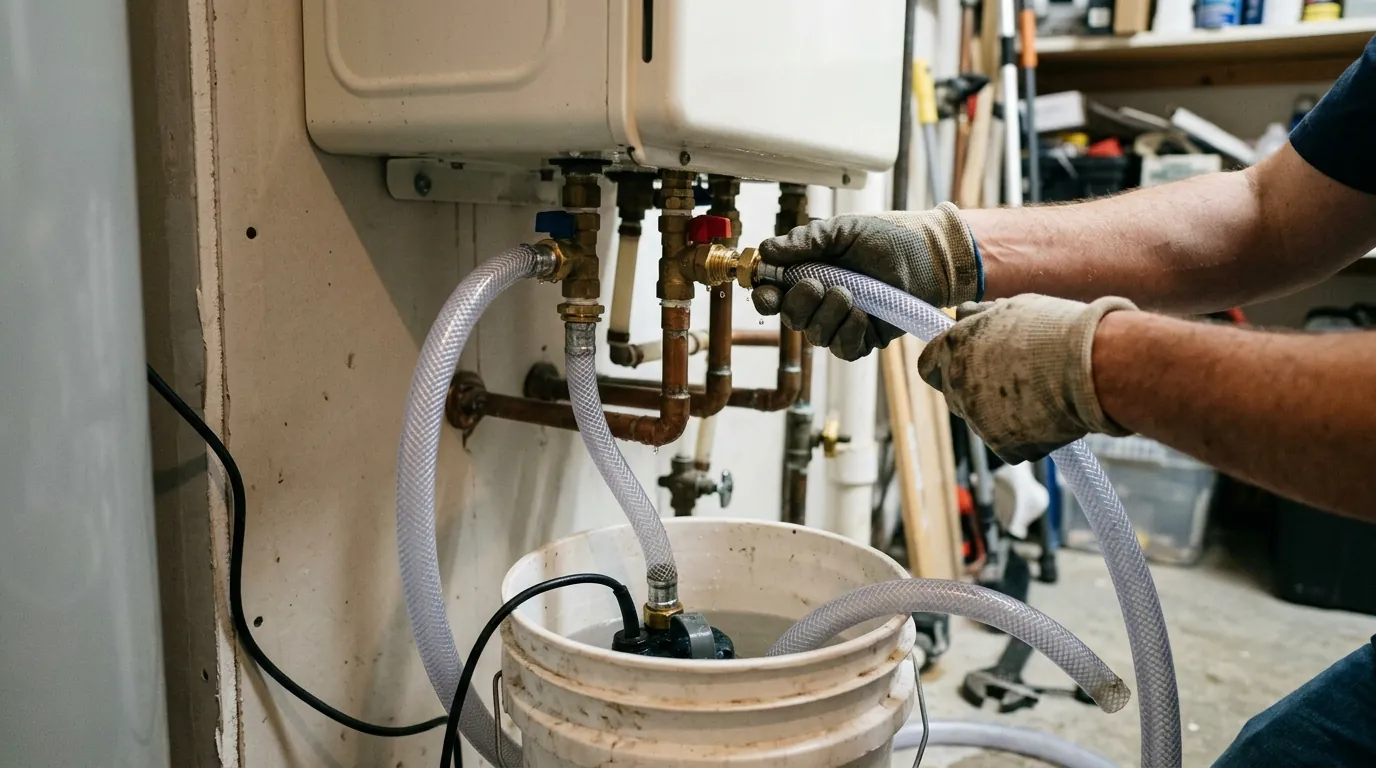
Tankless water heater service means flushing the heat exchanger with a descaling solution, cleaning the inlet filter, checking the burner, fan, flame sensor and vent, and reading any stored error codes. Most manufacturers call for this on a regular schedule even where water is soft. Book it yearly or when the unit starts throwing codes or giving uneven temperatures.
Salem's city water comes from the North Santiam River and is naturally soft, so homeowners sometimes assume their tankless unit never needs descaling. Soft water does slow mineral buildup, but the narrow passages in a heat exchanger still collect fine sediment and grit, and some scale forms over time with heavy use. Left alone, that debris slowly chokes the flow.
Manufacturers also set a service schedule in the owner's manual, and keeping to it keeps the unit running the way it was designed to, with a clean exchanger and a burner that lights on the first try. A yearly visit that flushes the exchanger and checks the burner and vent catches small problems before a cold morning shower turns into a no-heat call.
Soft water carries fewer of the hard minerals that leave white crust on fixtures, but it is not clean of everything. Fine sediment, bits of pipe scale and grit from main work in the street all travel to the heater. In a tank, that debris settles to the bottom. In a tankless unit, it catches in the inlet screen and the small tubes of the heat exchanger, where it restricts flow and makes the unit work harder.
We close the isolation valves, connect a small pump and hoses to the service ports, and circulate a descaling solution through the heat exchanger for a set period. The solution loosens scale and sediment, which flushes out into the bucket. Then we rinse with clean water until it runs clear and reopen the valves.
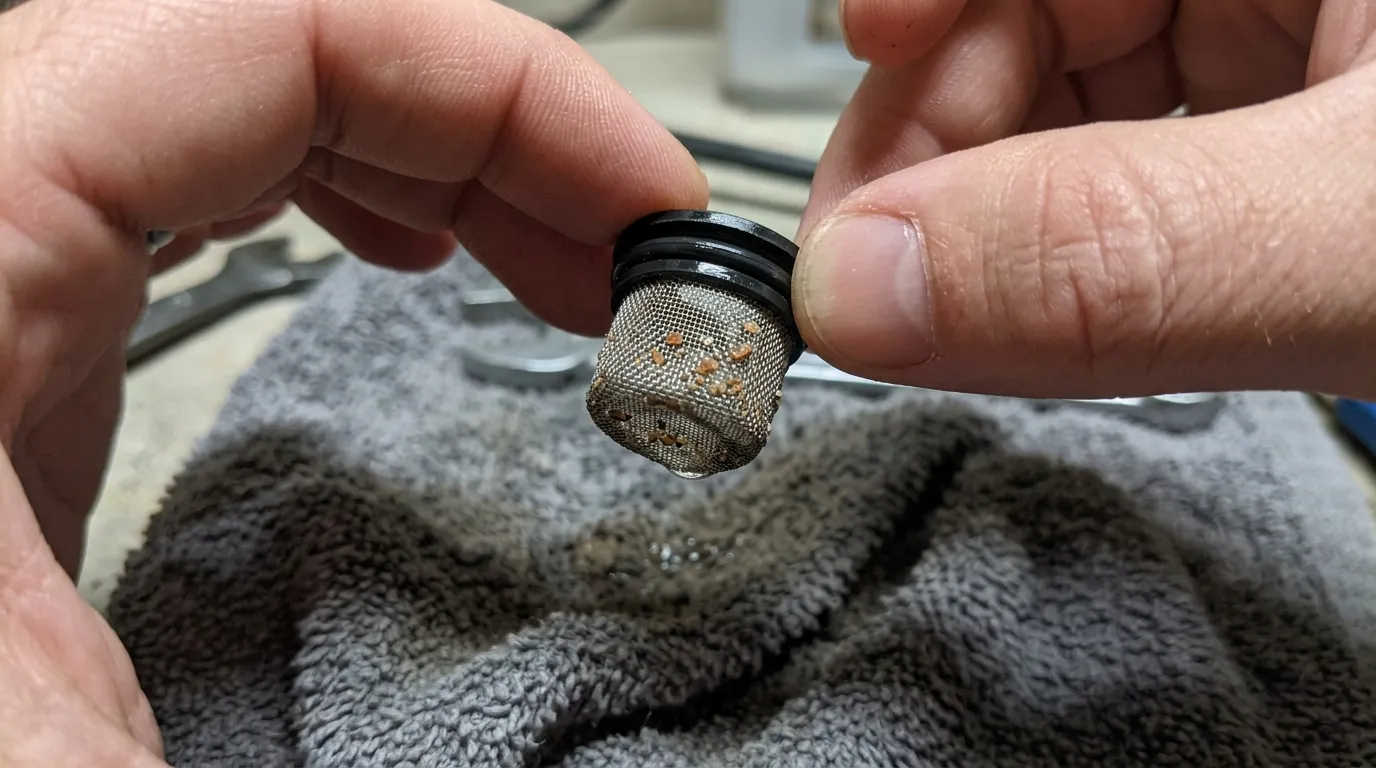
Beyond the water side, a tankless unit has a combustion side that needs attention. We inspect the burner for even flame, clean the flame rod so the control can sense the burner reliably, and check that the fan spins freely without noise. We look at the vent for blockages from nests or debris and confirm every joint is sealed. On condensing models, we flush the condensate trap and check the neutralizer, since a clogged trap can shut the unit down.
Most units store recent error codes, which point to ignition failures, flame loss, overheating, low flow or a blocked vent. We read the history and compare it with what we see on the unit. A unit that cuts out during long showers may have a dirty flow sensor or a restricted exchanger.
Repeated ignition errors can trace back to low gas pressure, a loose gas connector or a worn igniter. We fix the cause rather than clearing the code and hoping it stays gone, then run the unit through a full heating cycle to confirm.
Warning signs
On the visit
We check stored error codes and ask how the unit has been acting, from cutouts to temperature swings.
We shut down gas or power, close the isolation valves, and hook up the flushing pump and hoses.
Descaling solution circulates through the heat exchanger, then fresh water rinses it until it runs clean.
We clean the inlet screen and flame rod, check the fan and burner, and inspect the vent and condensate trap.
We reopen the valves, purge air, fire the unit through a full cycle, and confirm steady temperature at a tap.
| What is included | Typical range |
|---|---|
| Tankless descale and full service | $219 to $389 |
| Isolation valve kit added for future flushing | $179 to $329 |
| Flame rod or igniter replaced during service | $145 to $310 |
Unit type and condition set the final cost, and we confirm the price on arrival before starting. Units with no service valves need the kit fitted first, which we quote separately.
Around Salem
We service the most tankless units in Sunnyslope, South Gateway and the West Salem hills, where many larger homes switched to tankless and the owners count on the unit through winter mornings with several showers running.
Prices for every service are on one page: the First Choice Rooter price list.
Call (971) 326-9414Questions
Follow the manufacturer's service schedule, which is often once a year for typical household use. Salem's soft water means scale builds slowly, but sediment and grit still collect in the exchanger and inlet screen. Large households or units serving many fixtures may need it more often. We note how much comes out during each flush to fine-tune your interval.
If your unit has isolation valves with service ports, flushing is a job some handy owners take on with a small pump and descaler. The water side is only part of a service visit, though. The burner, flame rod, fan, vent and condensate system also need checking, and gas work is best left to a plumber.
Sediment and scale gradually narrow the passages in the heat exchanger, so the unit has to run harder for the same heat. Flow drops, temperature swings get worse, and the exchanger can overheat and trip safety limits. Over time this shortens the life of the most expensive part in the unit. Regular flushing keeps the exchanger clear and the burner working efficiently.
Common causes include a clogged inlet screen or exchanger that drops flow below the activation point, a dirty flame rod that loses track of the burner, low gas pressure when other appliances run, or a partly blocked vent. The stored error code usually narrows it down. A service visit cleans the likely culprits and tests gas pressure under full fire.
They should have them. Isolation valves with hose ports let us close off the unit and circulate descaler without cutting pipes. Some older installs were done without them, which makes every service slower and more expensive. If yours has none, we can add a valve kit during the first visit, so later flushes are quicker.
Related work
Tankless water heater installation replaces a storage tank with a wall-mounted unit that heats water as it flows through a heat exchanger.
See the serviceWater heater repair means finding why a tank has stopped heating properly and fixing that part instead of replacing the whole heater.
See the serviceWater filtration means installing filters that remove what you do not want from your tap water.
See the serviceA real person answers 24/7. Tell us what the drains are doing and we will send a First Choice Rooter plumber with the right equipment on the truck.