Sewer Camera Inspection
A sewer camera inspection is a video trip through the pipe that carries waste from your house to the public main.
See the serviceSewer lines
When one joint, crack or sag is causing your backups, replacing the whole sewer line can be more than you need. We find the damaged section, dig at that spot, and replace just that stretch of pipe.
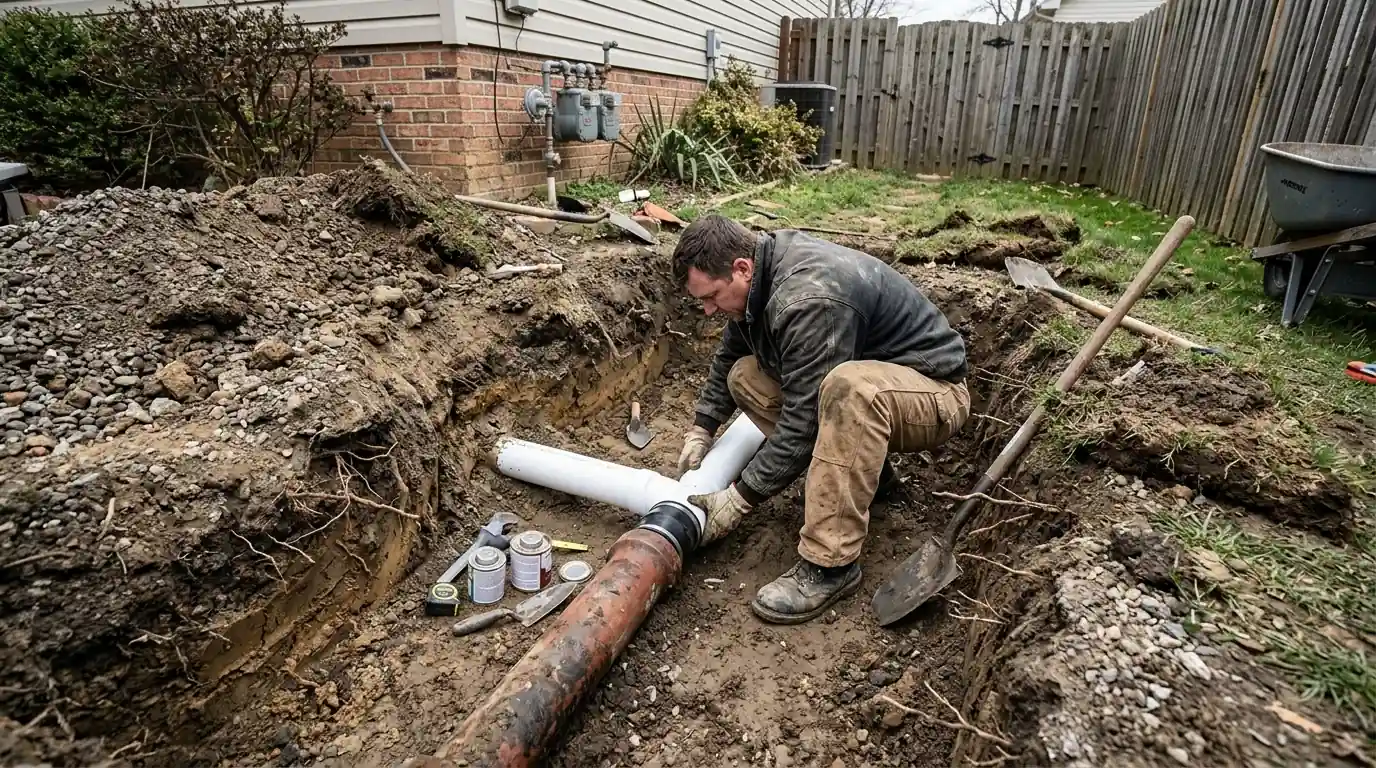
Sewer line repair, often called a spot or point repair, replaces a short damaged section of your lateral instead of the entire run. We locate the defect with a camera, excavate a single pit, cut out the bad pipe, and splice in new pipe with shielded couplings. It fits when the rest of the line is sound and the trouble sits in one or two places.
A lateral can be in decent shape for most of its length and still fail at one point. A tree root may have cracked a single clay bell, a heavy truck may have pushed one joint out of line, or an old patch may have slipped. Fixing that one spot stops the backups without trenching across the whole yard.
The decision rests on the camera video. If we see one or two isolated defects with solid pipe on both sides, a spot repair makes sense. If the footage shows cracks every few feet, Orangeburg going oval, or roots at every joint, patching one place just moves the failure down the line, and we will say so plainly.
We count and grade the defects on the video, then weigh their spacing against the age and material of the pipe. Two problems forty feet apart on otherwise clean PVC are a clear repair job. A clay line with offset joints on every section is not, because the next joint becomes the next call. Depth matters too, since a spot deep under a driveway costs more to reach than the same spot under lawn.
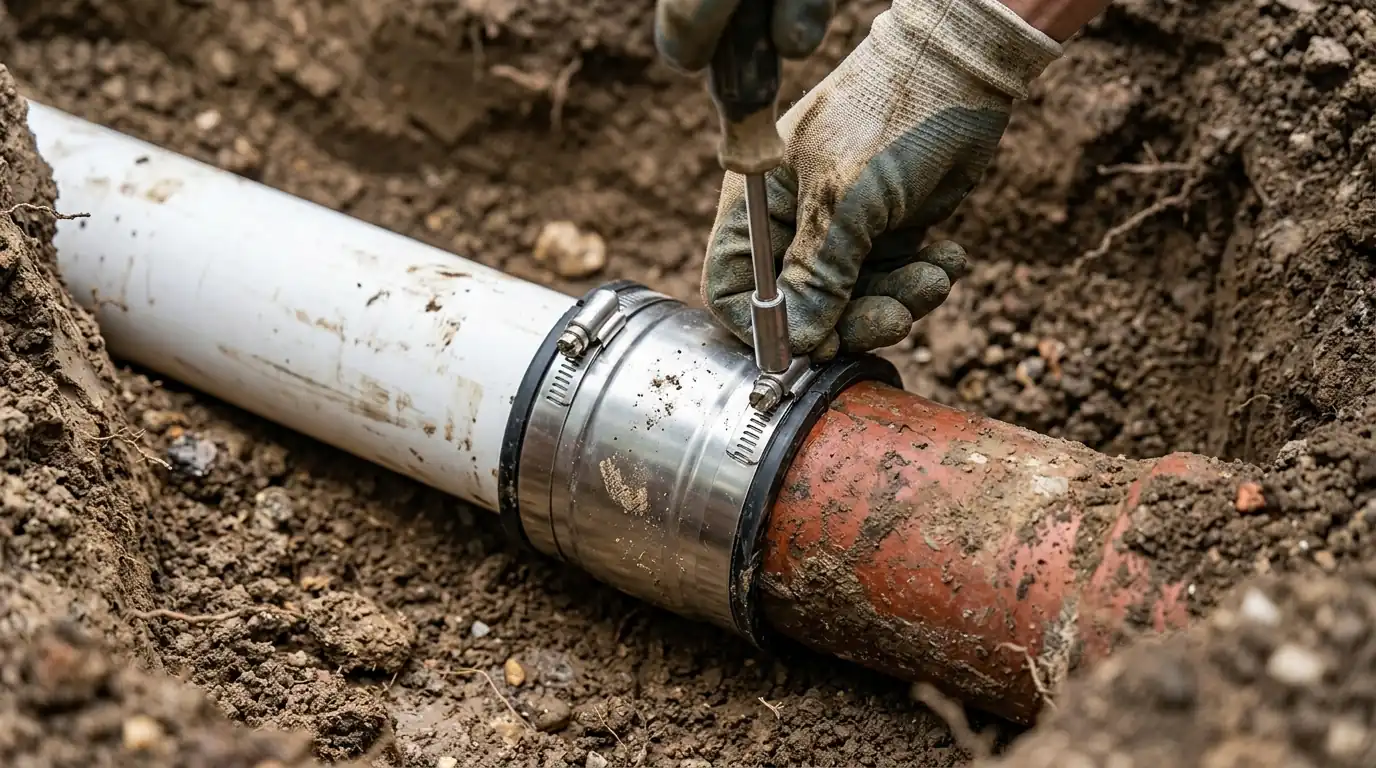
After marking the defect from the surface, we dig a pit with enough room to work around the pipe. We cut out the broken piece and any cracked pipe beside it, then set a new length of PVC at the same slope. Shielded couplings, a rubber gasket wrapped in a stainless steel band, join the new pipe to the old clay or cast iron so the transition cannot shear.
Before we backfill, we run water and push the camera through the new section to check the flow and joints. The pipe sits on gravel or firmly compacted soil so it does not settle into a fresh sag, and the pit is filled in layers.
A belly is a section that sank after the soil under it washed out or was never compacted. Waste slows down in the dip, solids settle, and the line clogs in the same place over and over. Repairing it means digging out the sagging length, rebuilding firm bedding underneath, and relaying the pipe on a steady downhill grade. A long belly can stretch beyond what a spot repair covers, and then the talk turns to replacing that run.
Roots are the most common reason we dig in Salem, and cutting a large root away from the pipe can affect the tree. We expose the line carefully and cut only what the repair needs. A defect close to the foundation can sometimes be reached from the crawlspace side. Work at the street end may need a permit and coordination around the public main, and if one is required we pull it and book the inspection.
Warning signs
On the visit
We scope the line, mark the defect on the ground, and note its depth so the dig is sized correctly.
Before any digging, we have the underground utilities marked so gas, power and water lines stay out of harm's way.
We dig by hand or with a small machine, protecting nearby roots, lawn and walkways as much as the job allows.
The broken section comes out and new PVC goes in at the correct slope, joined with shielded couplings.
We flow water, run the camera through the repair, get any required inspection, then compact the soil back in layers.
| What is included | Typical range |
|---|---|
| Spot repair of one damaged section | $1,890 to $5,400 |
| Second defect fixed during the same dig | $1,140 to $2,780 |
| Repair under concrete, including cut and patch | $2,690 to $6,350 |
Depth, soil and what sits above the pipe drive the price. The plumber reviews the video and the site, then gives you a firm number before any digging starts.
Around Salem
Spot repairs come up most in Northeast Salem, Grant and the Gaiety Hill area, where one big tree beside an older clay lateral has broken a single joint while the rest of the pipe still holds its shape.
Prices for every service are on one page: the First Choice Rooter price list.
Call (971) 326-9414Questions
Most spot repairs are finished in one day, from opening the pit to backfilling it. A deep repair, a section under concrete, or a job that needs an inspection before backfill can stretch into a second day. Your drains are only out of service while the pipe is cut open, and we restore flow as soon as the new section is joined.
We can, but it rarely holds for long. Orangeburg is wood fiber soaked in tar, and once one section starts deforming, the rest is usually aging the same way. If the camera finds Orangeburg anywhere, we show you the condition of the other sections and usually recommend replacing that material rather than patching a single spot.
No. A spot repair needs one pit at the marked defect, often only a few feet across. We set sod and topsoil aside where we can and put them back when the pit is filled. Shrubs or beds right beside the pit may be disturbed, and we talk through what has to move before the first shovel goes in.
We use PVC sewer pipe, joined to the existing clay, concrete or cast iron with shielded couplings sized for each material. PVC is smooth inside, so waste moves through it easily, and its long lengths mean fewer joints for roots to find. The couplings hold the old and new pipe in line so the transition does not create a new ledge.
Cutting clears the roots inside the pipe, but the open joint they came through is still there, so they grow back toward the water. A repair removes that joint and replaces it with tightly sealed pipe and couplings that roots cannot enter. If roots come back at the same joint every time, fixing that joint ends the cycle.
Related work
A sewer camera inspection is a video trip through the pipe that carries waste from your house to the public main.
See the serviceRoot removal means running a sewer machine fitted with a toothed cutting blade through the lateral to shear off roots that have grown in through the pipe joints.
See the serviceSewer line replacement means removing or abandoning the old lateral and installing new pipe from your foundation to the public sewer main.
See the serviceA real person answers 24/7. Tell us what the drains are doing and we will send a First Choice Rooter plumber with the right equipment on the truck.