Water Heater Installation
Water heater installation means draining and removing the old tank, setting a new gas or electric unit, and connecting the water, gas or power, venting and relief valve.
See the servicePipes, leaks and water lines
Adding a gas range, moving a dryer or replacing a corroded line means piping that has to be sized, supported and tested correctly. We run new gas lines, repair old ones and leak test every joint.
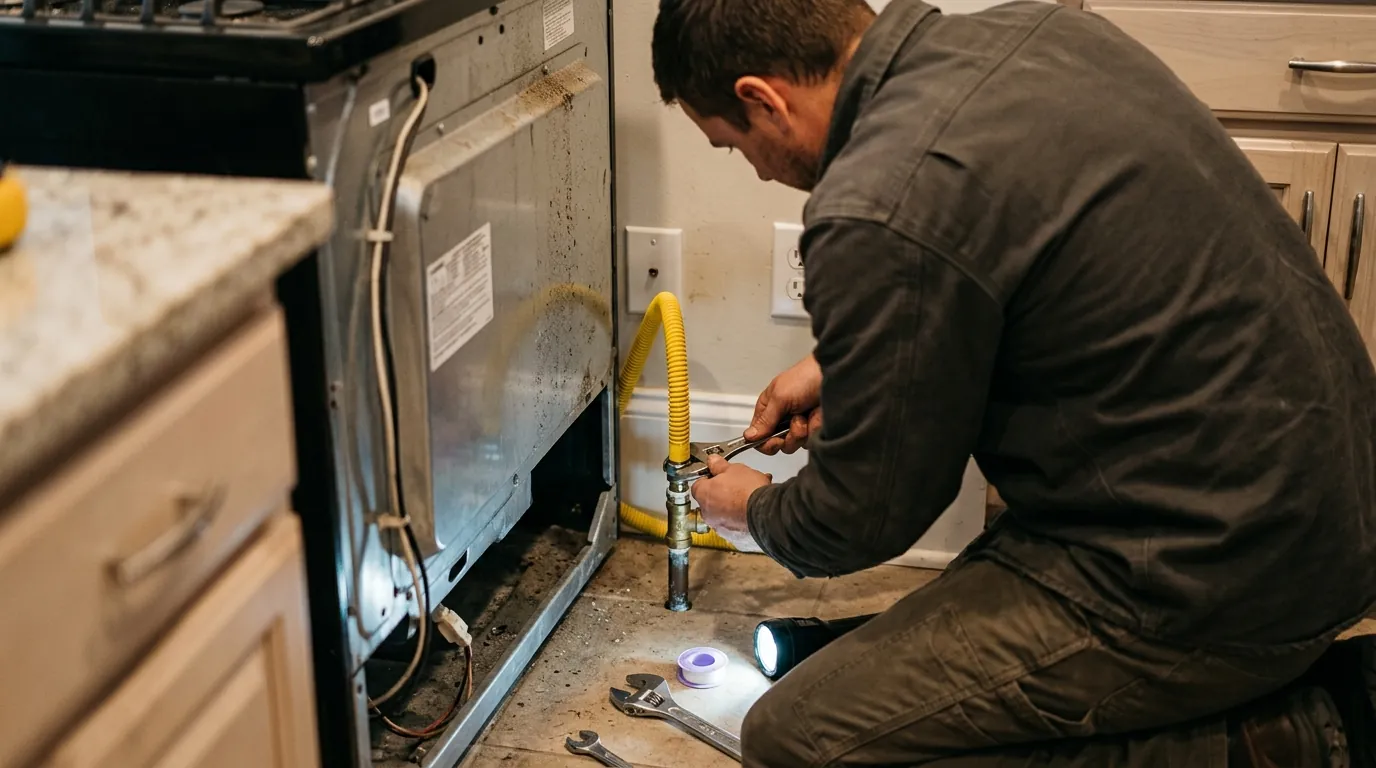
Gas line service covers running new natural gas piping to appliances, repairing or replacing damaged lines, and fitting appliance connectors and shutoff valves. We size the pipe to the total appliance load, install sediment traps where required, pressure test the system and check every joint for leaks. Call when adding or moving a gas appliance, or when an inspection finds old or corroded piping.
If you smell gas, leave the house first. Do not flip switches, start a car in the garage or use a phone indoors. Once you are outside and away from the building, call the gas utility's emergency line, and then call us for the repair once the utility has made the area safe.
Most gas line work is planned, not an emergency. Homeowners add a gas range when remodeling a kitchen, switch from an electric dryer, or install a tankless water heater that needs more gas than the old tank. Each change affects how much gas the piping has to carry, so we look at the whole system, not just the new run.
Gas piping is sized by the total demand of every appliance on it and the length of the run from the meter. A pipe that was fine for a furnace and a water heater may starve a new range or tankless unit, which shows up as weak flames, appliances that lock out, or burners that sputter when others turn on.
We add up the input ratings of all the appliances, measure the developed length, and choose pipe sizes from the sizing tables in the code. Sometimes the fix is a larger trunk line from the meter rather than a single new branch.
Each gas appliance needs its own shutoff valve within easy reach. Many also need a sediment trap, a short capped pipe below the appliance connection where moisture or debris in the line can settle instead of reaching the burner controls. Water heaters and furnaces are the usual places for one.
The final hookup to a range or dryer is normally a flexible appliance connector. These connectors are made for one installation and should not be reused when an appliance is moved or replaced. Old uncoated brass connectors are a known risk and we replace them when we find them.
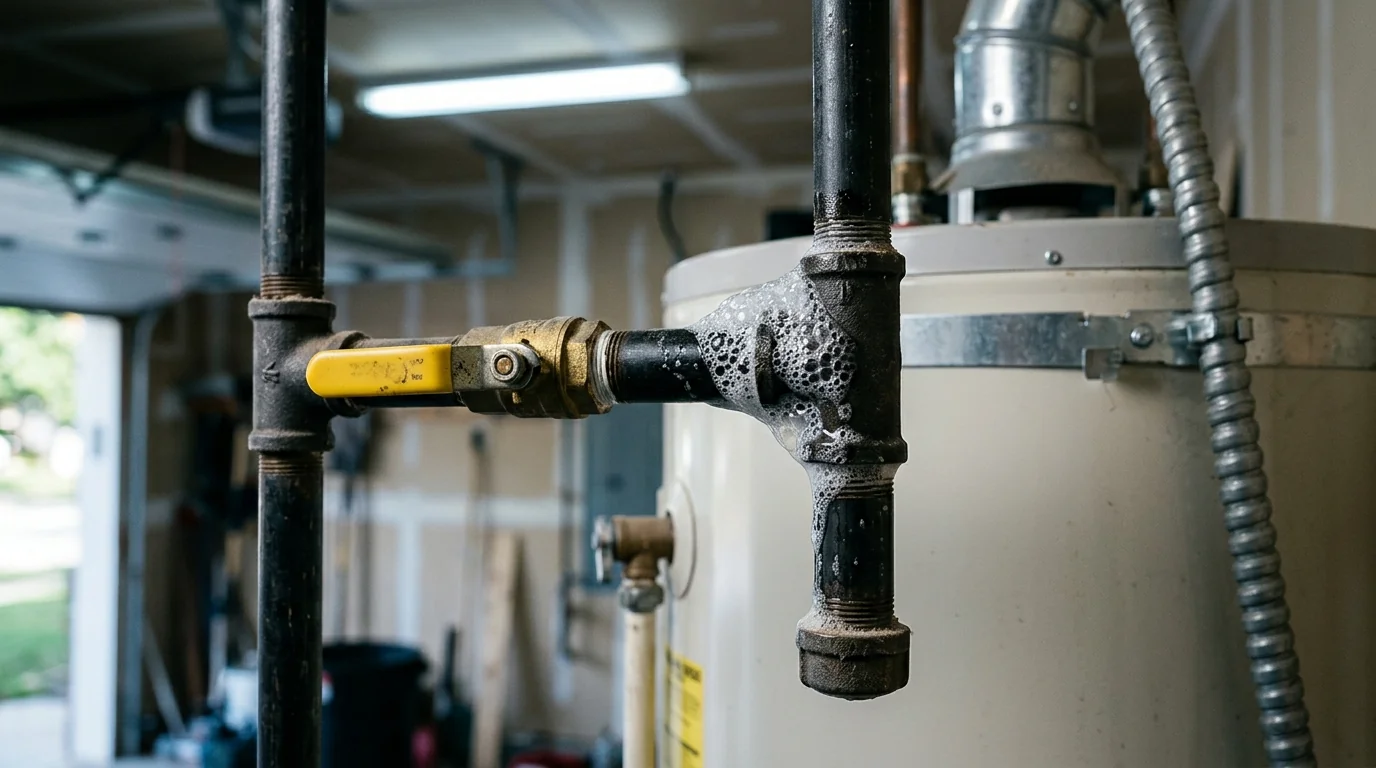
New piping is capped and pressurized with air, then watched on a gauge for a set time. If pressure holds, the joints are tight. When a permit is required, we pull it, and the inspector may want to see that test before the system is put into service.
After gas is restored, we check every new joint and connector with leak detection solution or an electronic detector, purge air from the lines, and light each appliance to confirm a steady, blue flame.
Black steel gas pipe in crawlspaces can rust where it rests on damp soil or passes through a wet foundation vent. Lines get hit during remodels, and older homes sometimes carry pipe that was capped and abandoned without being removed properly. We replace damaged sections and remove or properly cap dead ends.
Outdoor gas lines to patio heaters, barbecues and generators are another common request. Buried runs use pipe rated for burial and are installed at proper depth with a tracer wire so they can be located later.
Warning signs
On the visit
We trace the gas piping from the meter, list each appliance and its input rating, and look for corrosion or old connectors.
The plumber calculates the load and length, chooses pipe sizes and gives you a price before any work begins.
New pipe, shutoff valves, sediment traps and supports go in, routed through crawlspace, attic or walls as planned.
The new piping is capped and held under test pressure on a gauge, and inspected when a permit is required.
We turn the gas on, leak check every joint, purge the lines, light each appliance and confirm a clean, steady flame.
| What is included | Typical range |
|---|---|
| Gas line repair or new appliance line | $389 to $1,890 |
| New coated flexible connector and shutoff at a range or dryer | $139 to $279 |
| Sediment trap added at a water heater or furnace | $95 to $210 |
Run length, pipe size, access and the number of appliances drive the price. The final price is given before work starts, after the plumber has traced your gas piping.
Around Salem
Gas line work comes up most during kitchen remodels and water heater swaps in Fairmount Hill and Candalaria homes, and in South Salem and West Salem houses from the 1970s onward adding tankless units or outdoor kitchens.
Prices for every service are on one page: the First Choice Rooter price list.
Call (971) 326-9414Questions
Get everyone out of the house right away and leave the door open behind you. Do not operate switches, appliances or a phone inside. From outside, well away from the building, call the gas utility's emergency number. Once the utility has checked the leak and made it safe, we can make the repair on the piping or connector.
Often it cannot without changes. A tankless unit needs far more gas while running than a standard tank heater, and the line that fed the old tank is frequently too small. We add up every appliance's load, measure the run from the meter and tell you whether the existing pipe works or what needs upsizing.
We do not reuse flexible gas connectors. They are designed to be bent into place once, and moving them again can weaken the corrugated metal or loosen the fittings. When a range or dryer is moved or replaced, a new coated connector and a check of the shutoff valve are the right approach.
New gas piping and appliance additions in Oregon generally require a permit and an inspection. When a permit is required, we pull it and schedule the inspection, and the pressure test is often part of what the inspector checks. Replacing a connector on the same appliance in the same spot is usually simpler.
Yes. Outdoor gas lines are a common job. Above-ground runs are supported along the wall, and buried runs use pipe rated for burial with a tracer wire so the line can be located later. We add a shutoff near the appliance and leak test the whole run before you light it for the first time.
Related work
Water heater installation means draining and removing the old tank, setting a new gas or electric unit, and connecting the water, gas or power, venting and relief valve.
See the serviceTankless water heater installation replaces a storage tank with a wall-mounted unit that heats water as it flows through a heat exchanger.
See the serviceAppliance hookup service covers connecting dishwashers, washing machines and refrigerator ice makers to water supply and drain.
See the serviceA real person answers 24/7. Tell us what the drains are doing and we will send a First Choice Rooter plumber with the right equipment on the truck.