Sewer Line Repair
Sewer line repair, often called a spot or point repair, replaces a short damaged section of your lateral instead of the entire run.
See the serviceSewer lines
Slow drains, a backup that keeps coming back, or a house you are about to buy can all hide a sewer problem. We push a camera through the line, find what is wrong, and show you exactly where it sits.
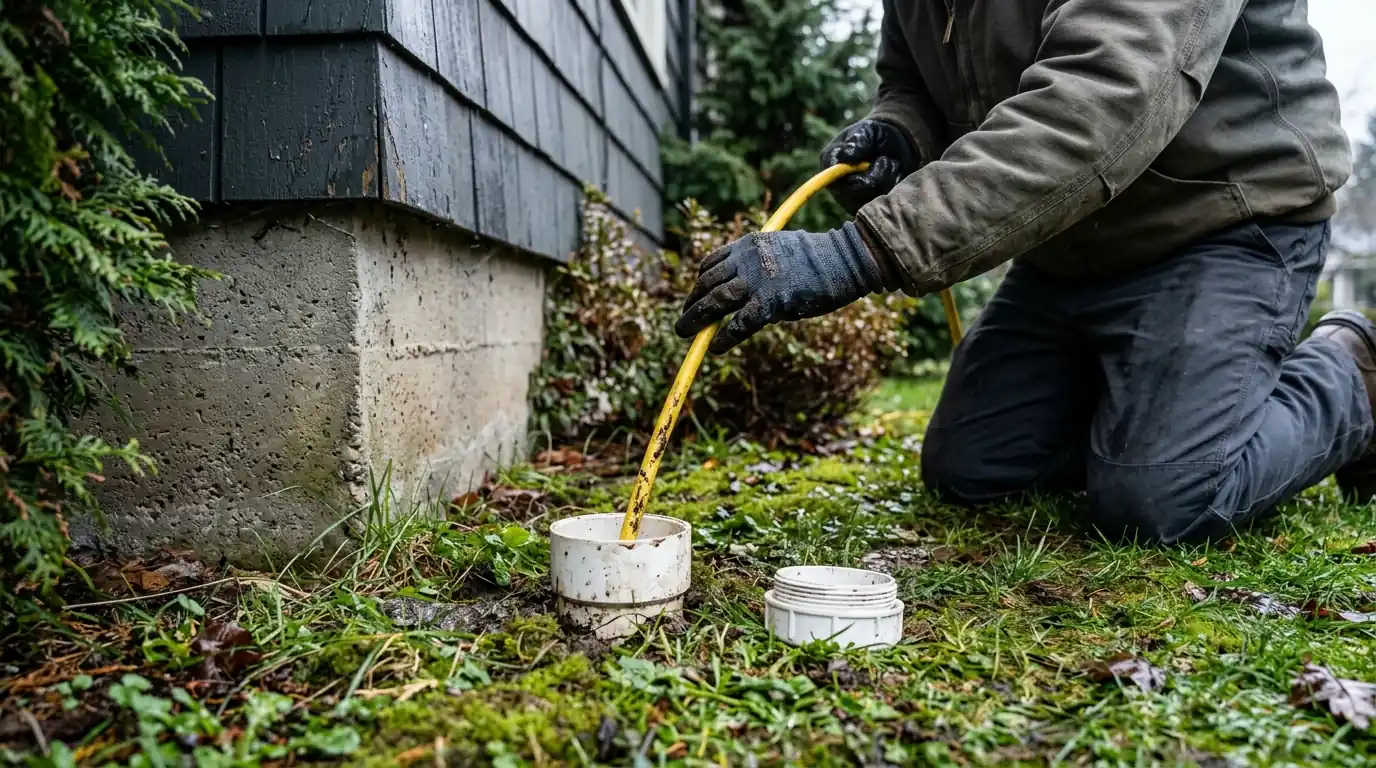
A sewer camera inspection is a video trip through the pipe that carries waste from your house to the public main. A plumber feeds a waterproof camera on a flexible push rod through a cleanout, records the line, and marks the location and depth of any problem from the surface. You need one after repeat clogs, before a sewer repair, or before you buy an older home.
Most sewer trouble in Salem starts out of sight, under a lawn or a driveway, in a pipe that may be as old as the house. A camera is the only way to see it without digging. We record the full run, from the cleanout or house drain out to the connection at the street, and talk you through each joint as it rolls by on the monitor.
The point of the video is a decision. Some lines just need roots cut and a follow-up look in a year or two. Others show a crushed section, a sag or a failing joint that needs real repair. You get the recording, a plain written summary, and a mark on the ground, so any repair plan starts from facts instead of guesses.
The camera rides on a stiff fiberglass push rod coiled on a reel, with a counter that reads footage as the head moves. Built into the head is a small transmitter called a sonde. When we stop at a defect, a handheld locator above ground picks up the sonde signal, finds the spot directly overhead, and estimates depth from the strength of the signal. We paint or flag that spot, so a repair crew digs one hole instead of several.
Each defect looks different on the screen. A belly is a low spot where the pipe has settled, and the camera dips into standing water that never drains away. An offset joint shows as a ledge where one section has shifted up or sideways from the next. Roots appear as hairlike strands or a solid mat pushing through a joint. Orangeburg, a tar-and-wood-fiber pipe laid in many postwar homes, sags into an oval and blisters before it collapses.
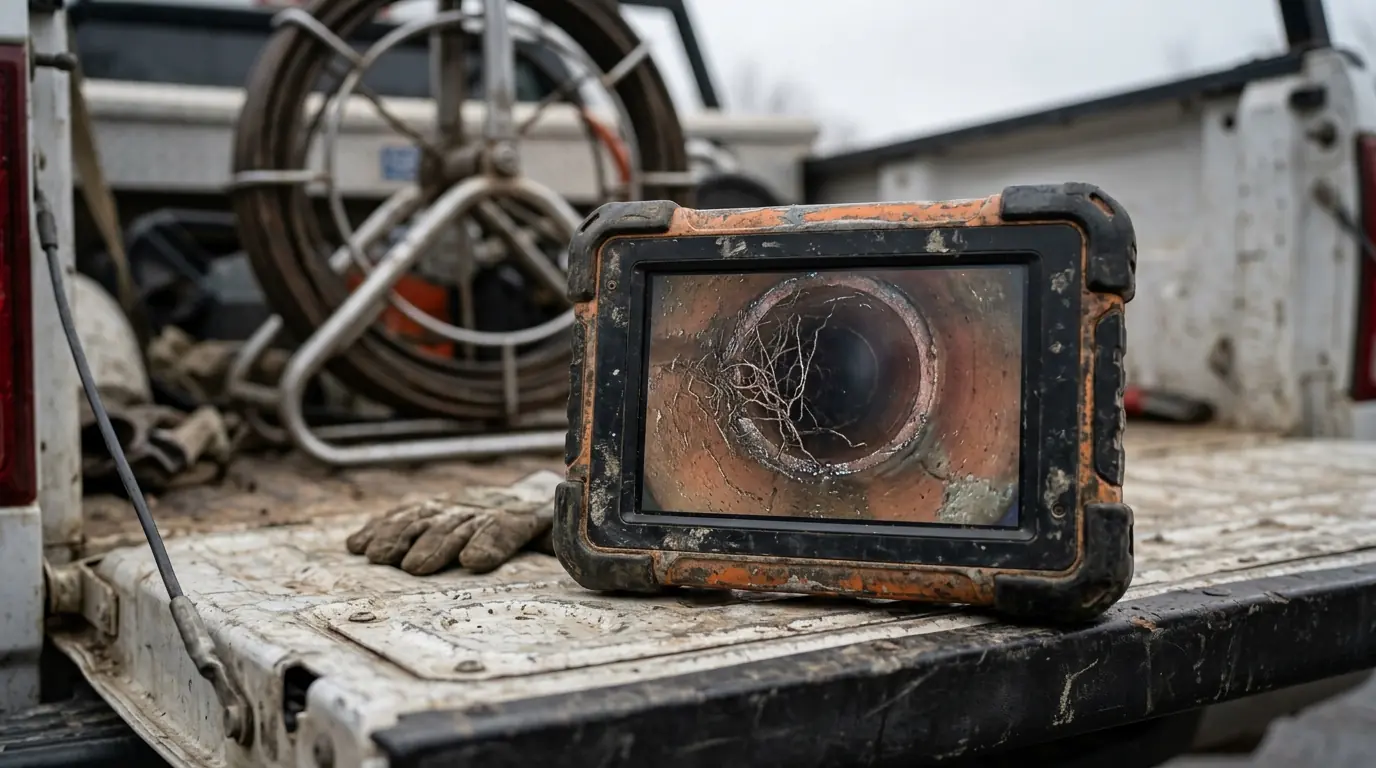
A standard home inspection usually stops at the drains you can see, so the sewer lateral gets missed. A pre-purchase sewer scope fills that gap. We run the camera during the inspection window, record the full line, and give the buyer a copy of the video and a short summary to share with the agent and seller. If the line needs work, you know before closing, which leaves room to ask for a repair or a price adjustment.
We push hardest for a scope on older homes in Grant, Highland, Fairmount Hill and around Bush's Pasture Park, where clay and concrete laterals from that era often show root intrusion at the joints by now. We need the seller's permission and an accessible cleanout or a toilet we can pull.
The easiest entry is a cleanout, a capped pipe near the foundation or in the crawlspace. Without one, we can pull a toilet and go in through the closet flange, or work from a roof vent on a single-story house. A badly clogged line has to be opened first, because the lens cannot see through standing sewage, so we clear it with a cable machine and scope it on the same visit.
Warning signs
On the visit
We locate a cleanout, toilet or vent we can use, then set up the reel, monitor and recorder beside it.
If sewage is standing in the pipe, we open the blockage first so the lens has a clear view.
We feed the head slowly toward the public main, pausing at every joint, fitting and change in direction.
At each defect we find the sonde from the surface, read the depth, and mark the spot on the ground.
You watch the key clips with us, get the recording, and hear plain options ranging from monitoring to repair.
| What is included | Typical range |
|---|---|
| Sewer camera inspection with recording | $219 to $389 |
| Pre-purchase sewer scope with buyer summary | $249 to $389 |
| Line clearing before the scope, if blocked | $289 to $549 |
Access and line length set the final number, and you hear the price before the camera goes in. Pairing a scope with a rooter visit costs less than booking two separate trips.
Around Salem
We scope the most lines in Grant, Highland, Northeast Salem and Fairmount Hill, where early 1900s homes still drain through clay or concrete laterals that big street maples and oaks have been working into for decades.
Prices for every service are on one page: the First Choice Rooter price list.
Call (971) 326-9414Questions
A locator reads the sonde reliably at the depths residential laterals usually sit, a few feet below grade. Deep lines under a hillside yard or a raised driveway still read, though the signal is weaker, so we confirm the spot from two directions. You get the depth at each marked defect, which tells a repair crew how big a hole to plan for.
Usually, yes. Clay shows as short sections with bell joints every few feet, cast iron looks dark and scaly, Orangeburg has a soft black interior that often sags, and PVC or ABS is smooth and bright. Many Salem laterals are a mix, because a past owner replaced one stretch and left the rest. The video shows where each material begins and ends.
Buyers usually order the scope as part of their inspection, since they want an independent look at the line. Sellers sometimes scope first so nothing surprises them during negotiation. Whoever orders it receives the video and summary. We only need access to the house and the cleanout during the appointment window the agents set up.
No. The camera head is smaller than the pipe and rides on a smooth push rod, so it does not cut or scrape the way a cable machine can. If a section has already collapsed, the camera simply stops there and we mark it. That stopping point is useful information, because it pins down exactly where the collapse sits.
For a clay or concrete lateral with known root intrusion, a scope right after each root cutting confirms the blades cleared the joint fully. After that, many owners rescope every year or two, especially with big maples, sweetgums or firs near the line. If roots keep returning at the same joint, a spot repair there usually costs less over a few years.
Related work
Sewer line repair, often called a spot or point repair, replaces a short damaged section of your lateral instead of the entire run.
See the serviceRoot removal means running a sewer machine fitted with a toothed cutting blade through the lateral to shear off roots that have grown in through the pipe joints.
See the serviceMain line rooter service clears the single pipe, called the lateral, that carries all household waste from the foundation to the city sewer.
See the serviceA real person answers 24/7. Tell us what the drains are doing and we will send a First Choice Rooter plumber with the right equipment on the truck.