Bathroom Remodel Plumbing
Bathroom remodel plumbing has two stages.
See the serviceFixtures and hookups
When your shower drips all day, turns scalding when someone flushes, or will not get hot, the valve behind the wall is wearing out. We repair the cartridge or replace the valve body.
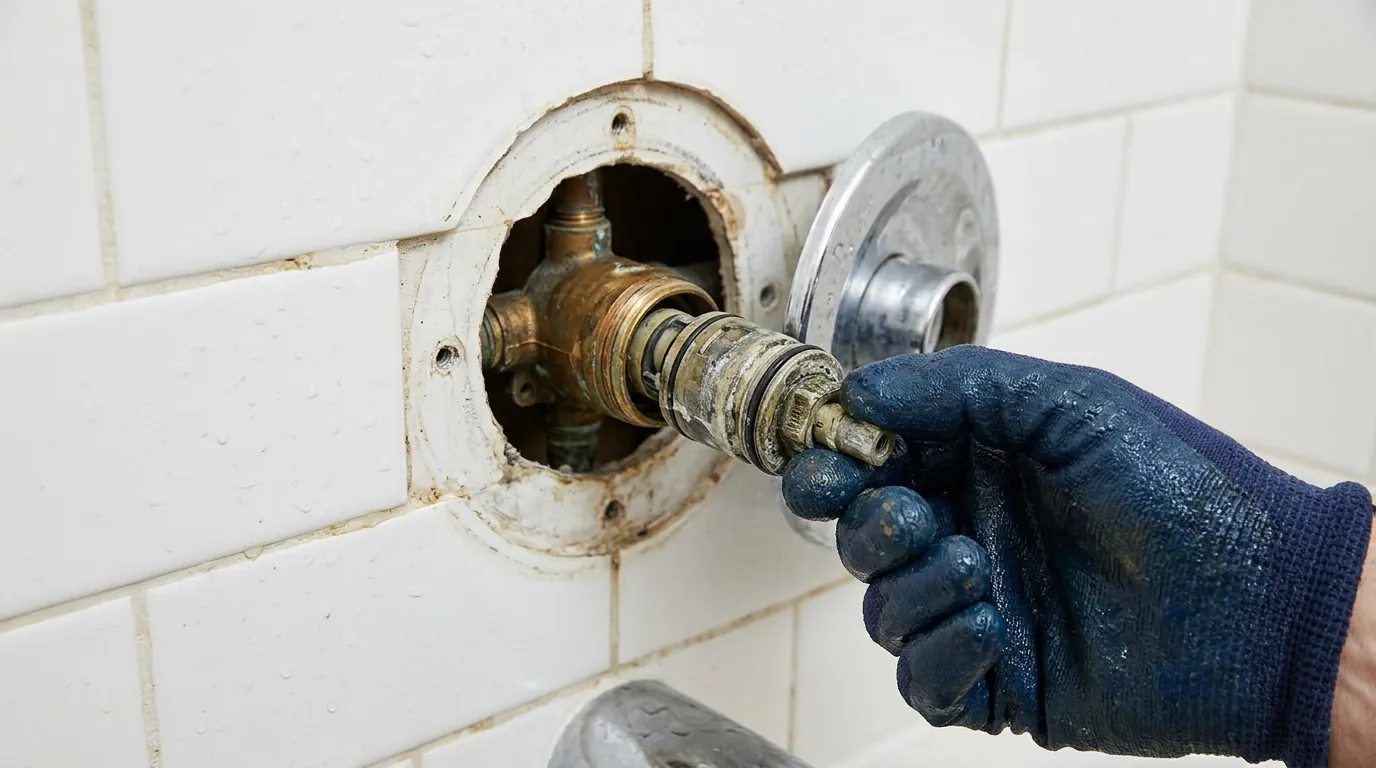
Shower valve repair means fixing the mixing valve inside the wall that controls water temperature and flow to the showerhead and tub spout. Most jobs replace a worn cartridge, stems or seals through the trim opening. You need it when the shower drips, the handle is stiff, the temperature swings, the water never gets hot, or water leaks from the handle into the wall.
The handle you turn is only a cover. Behind it sits a brass valve body soldered or crimped to the hot and cold lines, with a cartridge or stems inside that meter how much of each water mixes. Most problems live in those replaceable parts, so a good repair rarely means opening up the tile.
We work through the trim opening whenever possible. If a valve body is cracked, leaking at a joint inside the wall, or too old for parts, we explain what replacement involves, including how we get to it from behind a closet wall or from the crawlspace rather than through your tile when the layout allows.
A pressure-balance valve senses the pressure on the hot and cold sides. When someone flushes a toilet and cold pressure drops, a spool inside shifts and cuts the hot side to match, so you are not suddenly scalded. This is the most common single-handle valve in Salem homes built or remodeled in recent decades.
A thermostatic valve senses the actual mixed temperature with a wax or bimetal element and adjusts to hold it steady. It usually has a separate volume control, so you set the temperature once and change only the flow. It costs more and holds temperature more precisely, which suits larger showers with body sprays.
Every modern single-handle valve has a limit stop, a small adjustable piece that keeps the handle from turning past a set hot point. When a new water heater is installed or the thermostat is turned up, the shower can suddenly run hotter than before, because the stop was set for the old temperature.
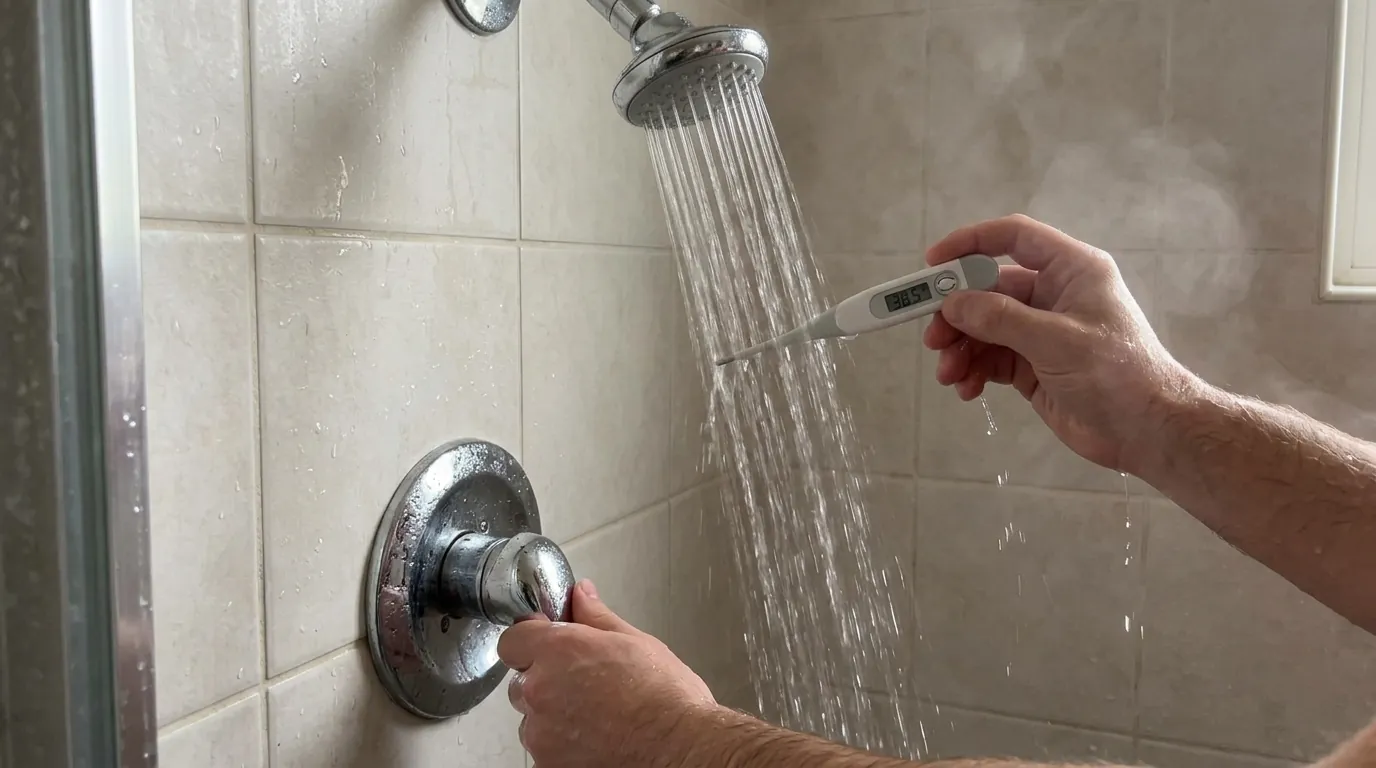
We set the stop with a thermometer at the showerhead so the hottest position is still comfortable. That matters most in homes with small children or older adults. If your old two-handle valve has no protection, replacing it with a pressure-balance valve is one of the most useful safety upgrades a bathroom can get.
Cartridges have rubber O-rings and seals that dry, swell and tear over time, and hot water speeds that along. Salem water is soft, so mineral scale is less of a cause here than in hard-water cities. Grit and rust from aging galvanized pipe are more common culprits in older homes, scoring the cartridge and jamming the pressure-balance spool.
A cartridge that is starting to fail shows it gradually. The handle gets stiff, the temperature takes longer to settle, or a drip appears after you shut it off. Replacing it early costs less than waiting for it to fail completely, because a seized cartridge can be hard to pull without damaging the valve body.
Sometimes the brass body itself is the problem. Old valves can crack after a freeze in an exterior wall, joints can start seeping inside the wall, and some discontinued models no longer have parts. Water stains on the ceiling below or soft drywall next to the shower are signs the leak is behind the trim.
Replacing a valve body means cutting into the wall. We look first for an access route from a closet, hallway or the crawlspace below, which keeps your tile intact. When the shower wall is the only way in, we cut the smallest opening we can and talk through trim plates that cover it.
Warning signs
On the visit
We remove the handle and trim to see the valve type and whether a matching cartridge or stem set is available.
We close the main or the valve stops, open the shower to drain the lines, and check the valve body for seepage.
We explain whether a cartridge, seals or a full valve replacement is needed and give you the price before starting.
We replace the worn parts, lube the new seals, and set the limit stop with a thermometer at the showerhead.
We run hot, cold and mixed water, flush a toilet to test balance, and reinstall the trim with a fresh seal.
| What is included | Typical range |
|---|---|
| Shower valve repair, typical | $229 to $689 |
| Cartridge replaced through the trim | $229 to $349 |
| Valve body replaced with access from behind | $489 to $689 |
Valve work varies with the valve brand, age and access behind the wall. Wall or tile repair is not included, and the final price comes once the trim is off.
Around Salem
We replace the most two-handle shower valves without scald protection in Candalaria, Fairmount Hill and Northeast Salem, where many bathrooms still have mid-century fixtures in walls that were never opened.
Prices for every service are on one page: the First Choice Rooter price list.
Call (971) 326-9414Questions
Most of the time, yes. Cartridges, stems, seats and seals are reached through the opening behind the handle trim, so tile stays put. Shower valve replacement is different, because the valve body is soldered or crimped to the pipes. Even then we look for access from a closet, hallway or crawlspace first.
A flush pulls cold water away from the shower, and a valve without working pressure balance lets the hot side take over. Old two-handle valves have no protection at all, and a worn pressure-balance spool may stop reacting. A new cartridge or a pressure-balance valve fixes that temperature jump.
It depends on the shower. For a standard tub and shower, a pressure-balance valve controls scalding well and costs less. A thermostatic shower valve holds a set temperature more precisely and has separate volume control, which makes sense in larger showers, with multiple outlets, or for households where steady temperature matters a lot.
If sinks get properly hot but the shower does not, the shower valve is the likely cause, often a limit stop set too low or a cartridge installed wrong. If every faucet runs lukewarm, look at the water heater first. We can check both and tell you which one is actually at fault.
There is no fixed number, since it depends on use, water temperature and what travels through the pipes. Many shower valve cartridges run for years before showing stiffness or a drip. In older Salem homes with galvanized pipe, rust flakes can wear them faster. Replace a cartridge once it starts to drip or stick.
Related work
Bathroom remodel plumbing has two stages.
See the serviceWater heater repair means finding why a tank has stopped heating properly and fixing that part instead of replacing the whole heater.
See the serviceLeak detection is a step-by-step search for water escaping from your pipes where you cannot see it.
See the serviceA real person answers 24/7. Tell us what the drains are doing and we will send a First Choice Rooter plumber with the right equipment on the truck.