Sink Installation
Sink installation covers mounting a new kitchen, bathroom, laundry or bar sink, connecting the faucet and supply lines, and building the drain from the tailpiece to the wall.
See the serviceFixtures and hookups
A dripping spout, a stiff handle or water pooling in the sink cabinet all start with a small worn part. We repair the faucet you have or install a new one that fits your sink.
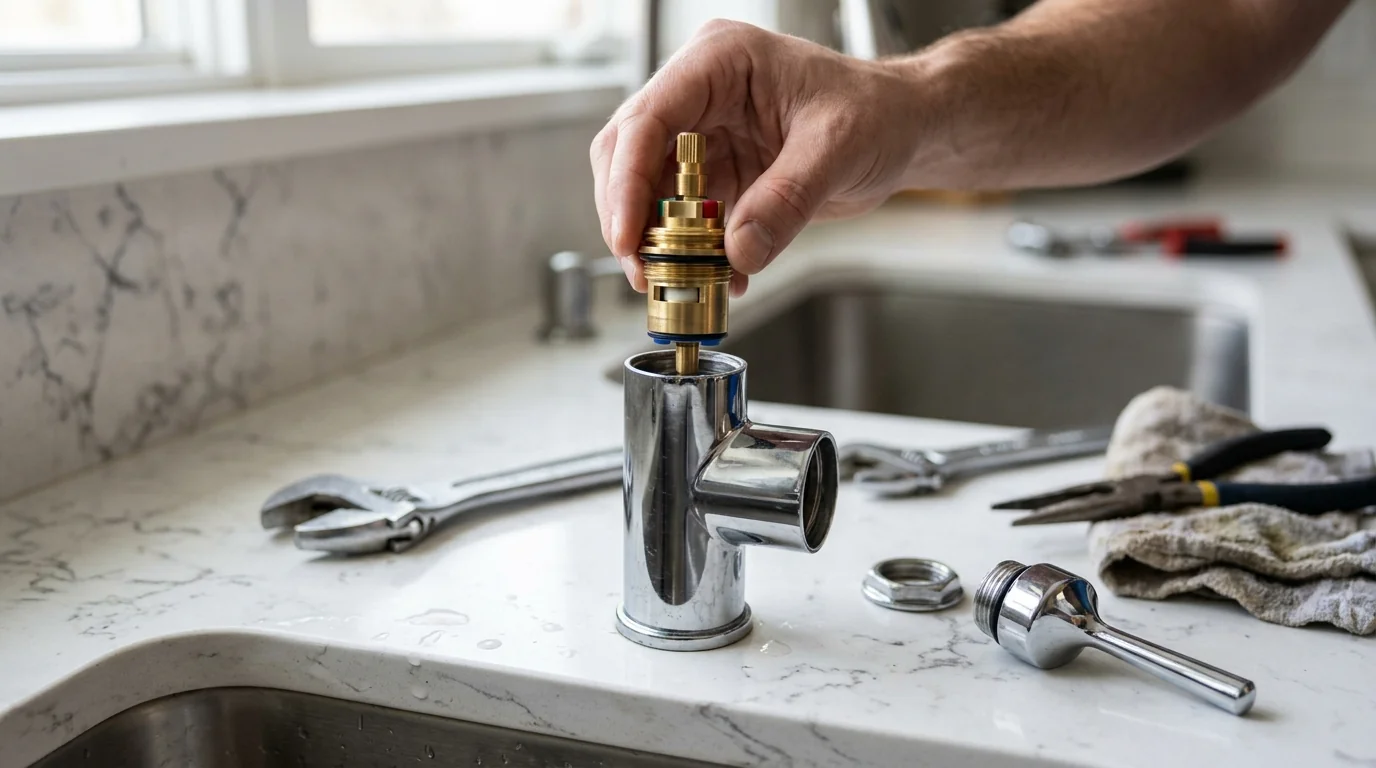
Faucet repair means replacing the cartridge, ceramic disc set, washers, seats or O-rings that control water flow, plus fixing supply connections underneath. Installation means removing the old faucet and mounting a new one with fresh supply lines. You need it when a faucet drips, leaks at the base or handle, sprays unevenly, or simply no longer suits your kitchen or bath.
Every faucet, from a builder-grade bathroom faucet to a pull-down kitchen faucet, does the same job: it mixes hot and cold and opens or closes a passage for water. The part that does that work wears slowly, and a drip is the first thing you notice. Knowing which kind of valve your faucet uses tells us what the repair will be.
We bring common cartridges, washers and seats, and we can identify most faucets on sight. When a faucet is old enough that parts are hard to find, or the body itself is cracked or corroded, installing a new faucet is often the better use of your money. We explain the trade-off before we take anything apart.
Older two-handle faucets are often compression valves: a rubber washer presses down on a brass seat to stop the water. When the washer hardens or the seat gets pitted, the faucet drips no matter how hard you turn it. We replace the washer and dress or replace the seat.
Most single-handle faucets use a cartridge, a plastic or brass cylinder with O-rings that slides and turns to mix the water. Many newer faucets use ceramic discs, two polished plates that rotate against each other. The discs rarely wear out, but the rubber seals under them do, and debris can scratch the plates.
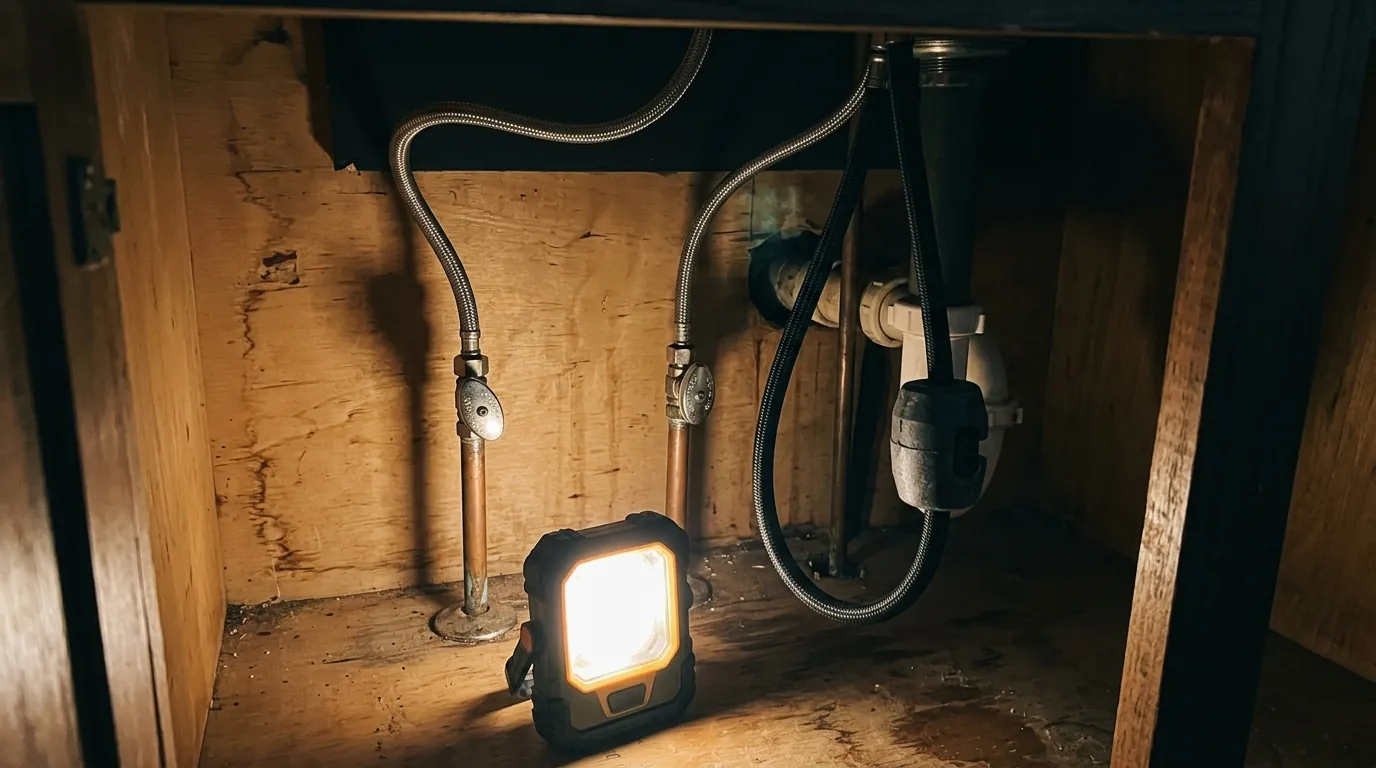
Water in the cabinet does not always come from the faucet. We check the supply line connections, the shutoff valves, the pull-down hose and its quick connector, and the sink drain before blaming the faucet body. A pull-down hose that rubs on the cabinet can wear through and spray only when the faucet is on.
Water around the base on top of the sink usually comes from a worn O-ring under the spout or a loose mounting nut that lets the faucet twist. In kitchens we also look at the counter edge and cabinet floor for swelling, since particleboard soaks up water fast and does not dry back flat.
Before you shop, count the holes in your sink or counter and measure between the outer ones. A centerset bathroom faucet covers holes 4 inches apart, a widespread faucet needs 8 inches, and a single-hole faucet can cover extra holes with a deck plate. Kitchen sinks often have a fourth hole for a sprayer or soap pump.
Spout reach matters too. A tall gooseneck on a shallow bathroom basin splashes, and a short spout on a deep kitchen sink leaves water hitting the back. If your old faucet worked well, we measure it and help you find a replacement with a similar reach and height.
In older Salem homes that still have some galvanized steel supply pipe, rust flakes break loose inside the pipe and travel to the faucet. They clog the aerator screen, scratch cartridges and ceramic discs, and lodge in the small inlet screens of newer faucets. Flow drops slowly until the faucet barely runs.
Cleaning the aerator brings the flow back for a while, but the flakes keep coming as long as the galvanized pipe stays in the wall. When we see that pattern we tell you, and we may suggest a supply line replacement for that fixture or a look at repiping before you spend money on more faucets.
Warning signs
On the visit
We look at the handle type, spout and markings to figure out the valve style and whether parts are available.
We close the stops under the sink, relieve pressure, and remove the handle to inspect the cartridge, discs or washers.
We tell you whether repair or a new faucet makes more sense and give the price before any work starts.
We replace the worn parts, or mount the new faucet with new supply lines and quarter-turn stops when needed.
We run hot and cold, test the sprayer, and check every connection under the sink for drips with a dry paper towel.
| What is included | Typical range |
|---|---|
| Faucet repair or installation, typical | $149 to $389 |
| Cartridge or washer and seat replacement | $149 to $239 |
| New kitchen faucet installed, faucet extra | $219 to $389 |
Faucet prices shift with the valve type and how easy the connections are to reach. The plumber looks at the faucet and sink, then quotes before starting.
Around Salem
We replace the most clogged and scratched faucet cartridges in older homes around Highland, Grant and the Bush's Pasture Park area, where remaining galvanized supply pipe sheds rust into fixtures.
Prices for every service are on one page: the First Choice Rooter price list.
Call (971) 326-9414Questions
If the faucet body is sound and replacement cartridges or washers are available, faucet repair is usually the cheaper choice and restores it fully. Replacement makes more sense when the body is corroded, the finish is flaking, parts are no longer made, or you simply want a different style. We can tell you which applies after a quick look.
When water is shut off and turned back on, sediment and rust flakes in the pipes get stirred up and often land in the faucet aerator. Unscrew the aerator at the tip of the spout, rinse the screen, and put it back. If flow is still weak, the inlet screens inside the faucet may be clogged.
Yes. We install faucets homeowners buy themselves. Before you order, check that it fits your hole count and spacing and that it comes with mounting hardware. Some faucets ship without supply lines; we bring braided lines that fit. If a faucet arrives damaged or missing parts, we will tell you before we mount it.
Not automatically, but we check them on every faucet installation. Older multi-turn shutoffs under Salem sinks often leak at the stem or fail to close. If yours look tired, we recommend swapping them for quarter-turn valves while the faucet is off, and we give you the price before doing it.
Hot water is harder on rubber, so the O-rings and seals on the hot side of a cartridge often wear first. A dripping hot side usually means the cartridge or its seals need replacing. On ceramic disc faucets, a worn inlet seal on the hot port does the same thing. It is typically a straightforward faucet repair.
Related work
Sink installation covers mounting a new kitchen, bathroom, laundry or bar sink, connecting the faucet and supply lines, and building the drain from the tailpiece to the wall.
See the serviceWhole-house repiping replaces every hot and cold supply line from the main shutoff to each fixture.
See the serviceLeak detection is a step-by-step search for water escaping from your pipes where you cannot see it.
See the serviceA real person answers 24/7. Tell us what the drains are doing and we will send a First Choice Rooter plumber with the right equipment on the truck.