Sewer Camera Inspection
A sewer camera inspection is a video trip through the pipe that carries waste from your house to the public main.
See the serviceSewer lines
If your sewer lateral is cracked, sagging or failing along its whole length, repairs only buy time. We replace the line from the house to the public connection with new pipe laid at a steady grade.
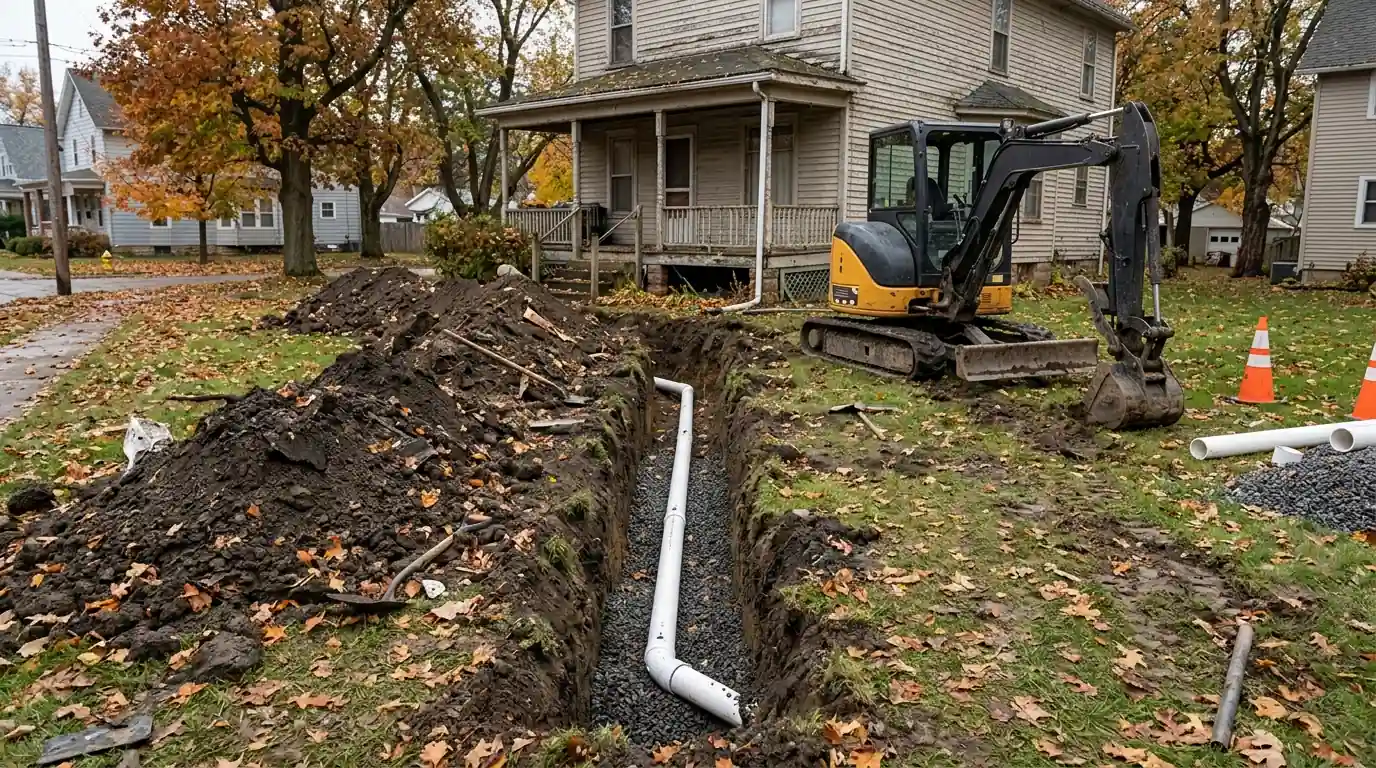
Sewer line replacement means removing or abandoning the old lateral and installing new pipe from your foundation to the public sewer main. It is the right call when the camera shows damage spread along the run, a collapsing Orangeburg line, or failure after failure. We usually dig an open trench, bed new PVC at the correct slope, add a cleanout, and have the work inspected.
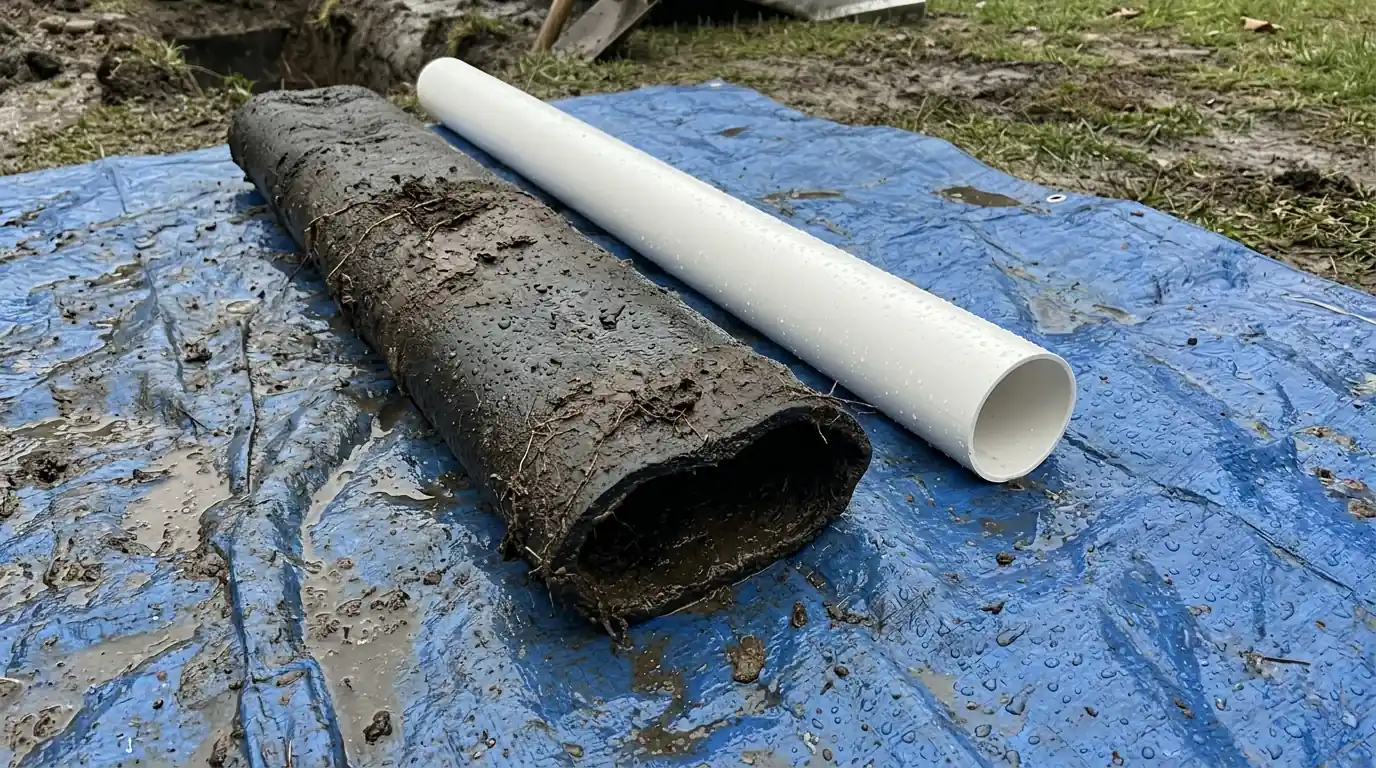
Many older Salem homes still drain through the pipe they were built with: short clay sections, poured concrete, or postwar Orangeburg. Each of those materials ages out in its own way. Clay joints open up and admit roots, concrete erodes from the inside, and Orangeburg slowly flattens until waste cannot pass. Once the damage runs the full length, a new line is the lasting fix.
A replacement is a bigger project than a rooter call, and you should see why it is needed. We start from the camera video, show you the defects along the run, and walk the path the new line will take. You get a price before work starts and a clear plan for the trench, the yard and the hours your plumbing will be offline.
Clay pipe is strong, but it came in short sections with mortar or early rubber joints, and every joint is a weak point for roots and settling. Concrete laterals soften and pit as sewer gases attack the inner wall. Orangeburg, made from tar-soaked fiber, was a cheap postwar material that deforms under the weight of the soil. In each case the pipe walls are tired long before anyone notices trouble inside the house.
After utility locates, we open a trench along the route, usually following the old line to the connection point. The old pipe comes out where we can reach it or stays in place where it is abandoned. New PVC is laid on a compacted bed with a steady fall toward the main, with a quarter inch per foot as the usual target on a house lateral.
At the street end, the new pipe joins the existing connection or a new tap, depending on what we find when we expose it. We confirm where your private line ends before planning the work. In Oregon, a sewer line replacement generally needs a plumbing permit, so we pull it and schedule the inspection while the trench is still open and the inspector can see the new pipe.
Most replacements take one to three days, depending on length, depth and what sits above the line. Toilets and drains are offline while the old pipe is disconnected, so we plan that window with you and keep it as short as the work allows.
The trench is backfilled in compacted lifts and the topsoil put back on top. Lawn usually needs reseeding once the soil settles through a wet season, so we leave the fill mounded slightly and it sinks close to level by spring.
Warning signs
On the visit
We review the camera footage with you, mark the line and its depth, and decide where the trench will run.
When the job needs a plumbing permit, we pull it and order utility locates before any digging begins.
We open the trench, take out or abandon the old pipe, and prepare a firm, even bed for the new line.
New PVC goes in at a steady fall with a cleanout near the house, and every joint is checked.
The inspector sees the open trench, we run water and a camera through, then backfill in compacted layers.
| What is included | Typical range |
|---|---|
| Full lateral replaced, house to connection | $6,900 to $18,500 |
| Two-way cleanout added during replacement | $540 to $1,180 |
| Driveway or walkway cut and patched over the trench | $1,260 to $3,940 |
Length, depth, soil and surface cover set the final cost. After walking the route and reviewing the video, the plumber puts the price in writing before work starts.
Around Salem
Full replacements are most common in Highland, Grant and Fairmount Hill, where early 1900s clay laterals are worn out, and in Morningside and Lansing, where some postwar homes may still drain through Orangeburg that is flattening.
Prices for every service are on one page: the First Choice Rooter price list.
Call (971) 326-9414Questions
For a residential lateral, yes in most cases. PVC comes in long sections, so a typical run has far fewer joints for roots to find, and those joints are glued or gasketed tight. It is smooth inside and light enough to lay accurately at a steady grade. Clay is durable, but its short sections and many joints are exactly why so many old laterals fail.
Usually not. Drains are out of service while the old line is disconnected and the new one is tied in, which is often part of one day. We tell you ahead of time when that window starts, so you can plan showers, laundry and dishes around it. Water still runs to the faucets the whole time, but nothing you drain has anywhere to go until we reconnect.
Yes. We replace lines through the wet season, since a failing sewer cannot always wait for summer. Rain means wetter soil, so the trench may need pumping and the bedding has to be compacted with extra care. Restoring the lawn is better left to spring, once the backfill has had time to settle.
It depends on the route. If the new line runs in the same trench, the old pipe comes out as we dig. If a better path exists alongside, the old pipe can be capped and abandoned in place, which saves digging. Either way, it is disconnected at both ends so it cannot carry anything again.
We cut roots that sit in the trench path and keep each cut as small as the work allows. Large roots near a big trunk may push us to shift the route a few feet or to use a trenchless method for that stretch. New PVC with tight joints gives roots nothing to enter, but we still avoid laying it right against a large root flare.
Related work
A sewer camera inspection is a video trip through the pipe that carries waste from your house to the public main.
See the serviceTrenchless sewer repair renews a failing lateral without digging along its whole length.
See the serviceA sewer cleanout is a capped pipe that rises from your main sewer line to ground level, giving plumbers a straight entry for cable machines, jetters and cameras.
See the serviceA real person answers 24/7. Tell us what the drains are doing and we will send a First Choice Rooter plumber with the right equipment on the truck.