Kitchen Sink Drain Cleaning
Kitchen sink drain cleaning clears the trap, drain arm and branch line behind the sink of grease, food solids and disposal sludge.
See the serviceFixtures and hookups
A disposal that hums without spinning, leaks into the cabinet, or keeps tripping off is close to failing. We clear the jam or fix the leak, and replace the unit when that is the better call.
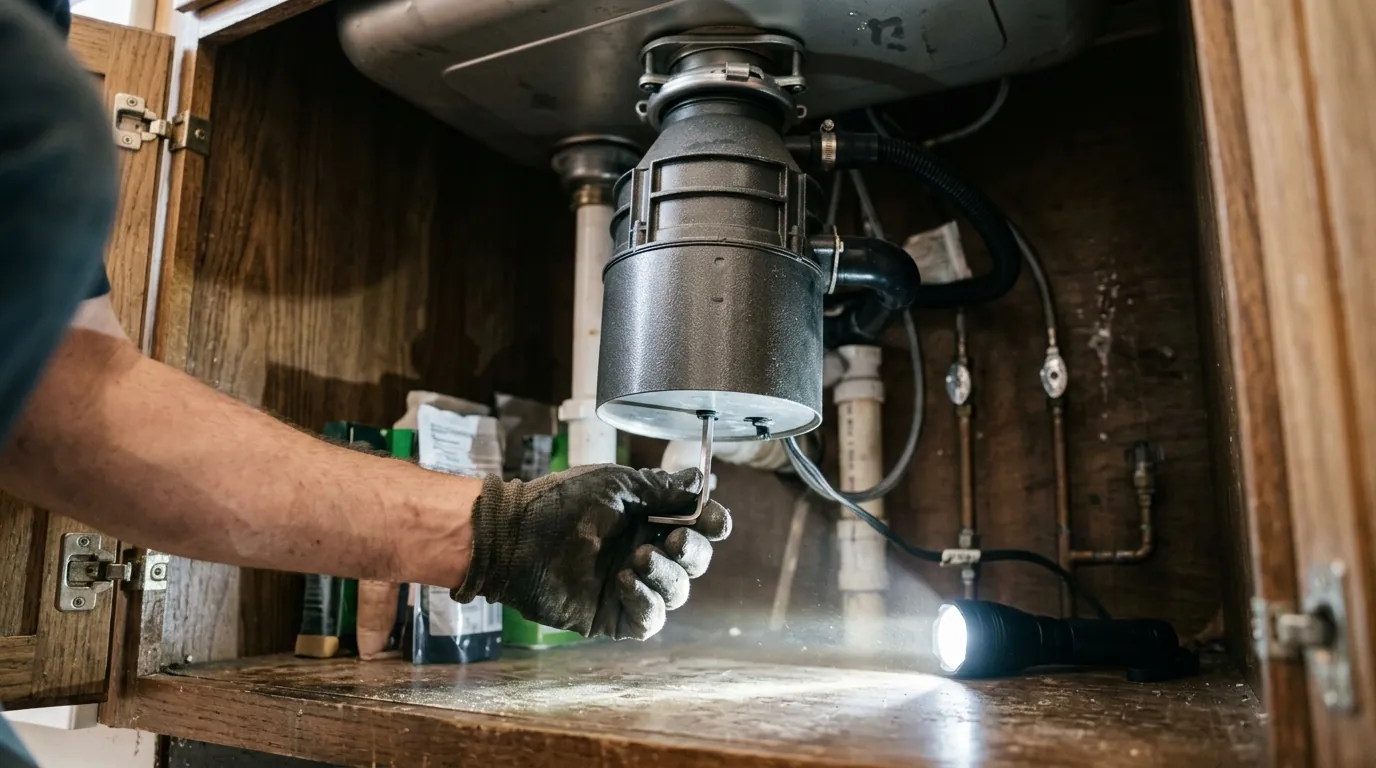
Garbage disposal service covers freeing jammed flywheels, resetting tripped motors, fixing leaks at the sink flange, dishwasher inlet and discharge tube, and replacing worn-out units. You need it when the disposal hums but will not turn, shuts off mid-grind, leaks under the sink, drains slowly, or rattles with something lodged inside. New installs include wiring the unit to the existing switch circuit and setting the drain correctly.
A disposal is a motor under the sink that spins a flywheel with two swinging lugs. The lugs throw food against a stationary grind ring, and water carries the bits down the drain. There are no sharp blades, so most jams come from something hard wedged between the flywheel and the ring.
We see disposals that only need a jam cleared, and others rusted through at the bottom after years of service. Our plumbers can tell which is which in minutes. When a unit is past saving, we can install a new one on the same visit, sized to how your kitchen is used.
A hum with no grinding means the motor is getting power but the flywheel cannot turn. A fruit pit, bottle cap, bone or bit of glass is wedged against the grind ring. Leaving the switch on while it hums overheats the motor, and the thermal overload trips. That is the red reset button on the bottom of the unit.
Turn the switch off first. Most disposals have a hex socket in the center of the bottom, and a small hex key turned back and forth there frees the flywheel. Remove the object with tongs, never fingers, wait a few minutes for the motor to cool, press the reset button, and run cold water before switching it on.
Water in the cabinet can come from three spots. A leak at the top usually means the plumber's putty under the sink flange has dried out or the mounting ring has loosened. A leak at the side comes from the dishwasher inlet hose or the discharge tube gasket. A leak from the bottom means the unit itself is cracked inside.
The first two are repairs. We reseat the flange, replace gaskets and tighten the mount. A leak from the body or the reset button area cannot be fixed, because water has gotten past the internal seals and is reaching the motor. At that point the honest answer is a new disposal.
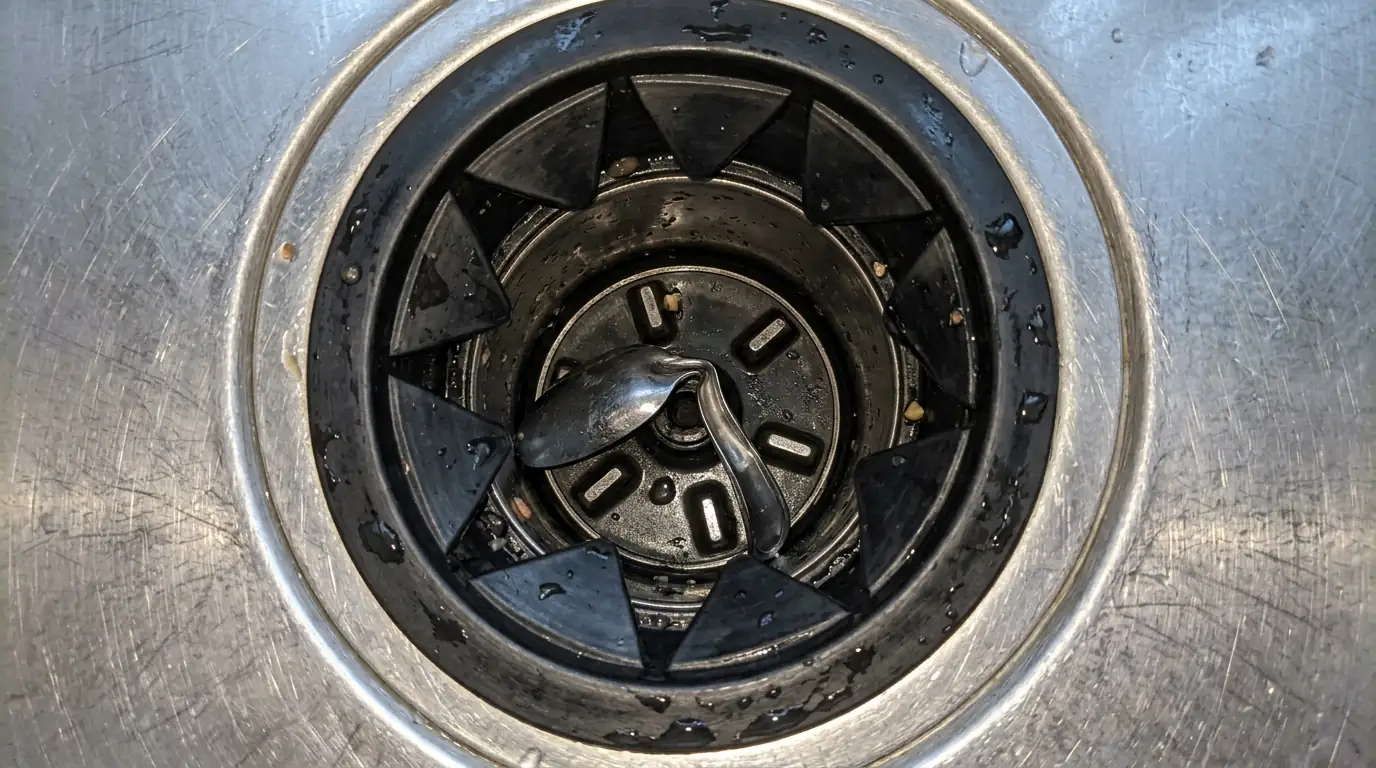
Disposals handle soft scraps and small food bits with plenty of cold water. They struggle with stringy and starchy waste. Celery, corn husks, potato peels and onion skins wrap around the flywheel or turn into paste. Coffee grounds and eggshells settle in the trap arm and the line beyond it like wet sand.
Grease is the bigger problem, because it passes through the disposal as liquid and hardens farther down the kitchen line. Many slow kitchen drains we clear in Salem trace back to years of grease and ground food packed into the horizontal pipe in the crawlspace. Scrape plates into the trash and run the disposal only for the leftovers.
A new disposal is sized for your kitchen. A light-duty motor works for occasional rinsing, while a family that cooks daily is better served by a stronger motor that jams less. We check that the unit fits under the sink with room for the trap and does not crowd the cabinet floor.
We set a fresh sink flange, connect the dishwasher inlet and knock out its plug, and rebuild the trap so the discharge drops cleanly into the trap arm. A disposal mounted too low forces water uphill and leaves standing water in the sink. We test with the dishwasher draining as well as the faucet running.
Warning signs
On the visit
We cut power to the disposal, check under the sink for water, and look into the chamber with a light.
We turn the flywheel from below with a hex key, remove any lodged object, and check the motor for binding.
We dry everything, run water and watch the flange, dishwasher inlet, discharge tube and bottom of the unit.
You get a price for the repair or a new unit before work starts, then we fix it or install the replacement.
We run the faucet, the disposal and the dishwasher drain together to confirm the sink empties fully with no drips.
| What is included | Typical range |
|---|---|
| Disposal repair or new disposal installed | $189 to $549 |
| Jam cleared and motor reset | $189 to $259 |
| Sink flange or discharge gasket resealed | $199 to $289 |
A replacement unit sits toward the top of the first range, while a simple jam is near the bottom. You get the exact figure after the plumber checks the unit and drain.
Around Salem
Disposal calls are common in the 1960s and 1970s ranch homes around Morningside, Lansing and East Lancaster, where original kitchen drains run long and flat through the crawlspace and hold food paste.
Prices for every service are on one page: the First Choice Rooter price list.
Call (971) 326-9414Questions
A humming disposal has power reaching the motor, but the flywheel is stuck. Usually a hard object is jammed against the grind ring, or the bearings have seized after the unit sat unused. Switch it off right away so the motor does not overheat. Freeing the flywheel with a hex key often fixes it.
It depends on where the water comes from. Leaks at the sink flange or the side hose connections are fixable with new putty, gaskets or a tightened mount. A leak from the bottom or around the reset button means the internal seals have failed, and the garbage disposal should be replaced rather than repaired.
We advise against it. Coffee grounds and eggshell bits do not dissolve. They settle in the trap and in the horizontal kitchen drain like sand, and they bind with grease into a stubborn plug. A disposal handles them without complaint, but the pipe after it does not. Put them in the trash or compost.
No. A disposal works fine on its own. If you do have a dishwasher, its drain hose usually connects to the inlet on the side of the disposal, and the small knockout plug inside that inlet must be removed on a new unit. A forgotten plug is a common reason a new dishwasher will not drain.
Turn off the power, then lift the rubber splash guard and scrub its underside with an old toothbrush and dish soap, because that is where rotting food usually hides. Grind a handful of ice cubes with cold water to knock buildup off the chamber walls. If a smell remains, the trap or kitchen drain may be holding sludge.
Related work
Kitchen sink drain cleaning clears the trap, drain arm and branch line behind the sink of grease, food solids and disposal sludge.
See the serviceAppliance hookup service covers connecting dishwashers, washing machines and refrigerator ice makers to water supply and drain.
See the serviceSink installation covers mounting a new kitchen, bathroom, laundry or bar sink, connecting the faucet and supply lines, and building the drain from the tailpiece to the wall.
See the serviceA real person answers 24/7. Tell us what the drains are doing and we will send a First Choice Rooter plumber with the right equipment on the truck.