Water Service Line Replacement
Water service line replacement means installing a new buried pipe between the water meter and the house, then connecting it to your main shutoff.
See the servicePipes, leaks and water lines
When galvanized pipe has closed up inside or polybutylene keeps failing at the fittings, patching one leak at a time stops making sense. We replace the supply piping throughout the house in a planned, orderly job.
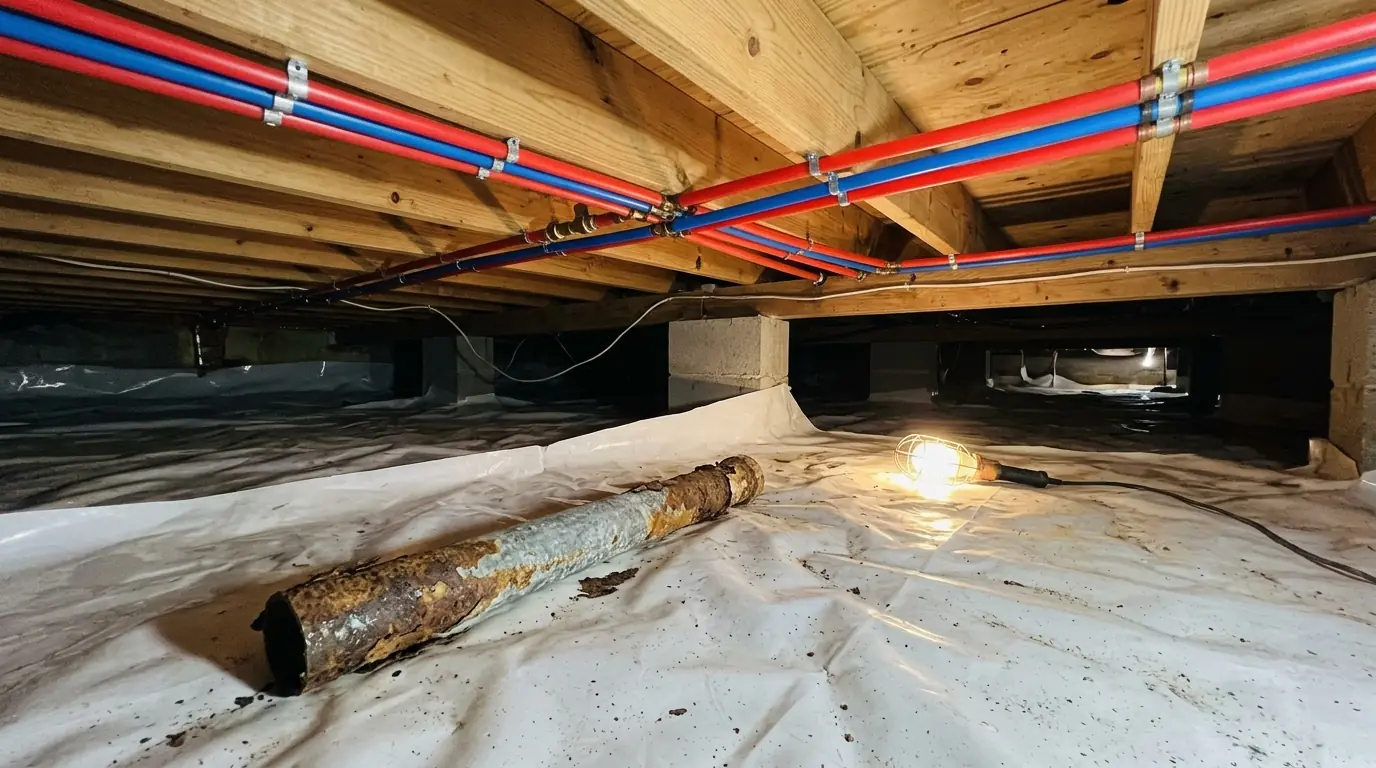
Whole-house repiping replaces every hot and cold supply line from the main shutoff to each fixture. We run new PEX or copper, mostly through the crawlspace and attic, and open walls only where a line must rise to a fixture. Consider it when pressure is weak everywhere, water runs rusty, leaks keep returning, or the home still has polybutylene or galvanized steel supply pipe.
A lot of Salem homes built from the early 1900s through the 1940s still carry some of their original galvanized steel water pipe, and homes from the 1980s and 1990s in the South Salem and West Salem hills sometimes have polybutylene. Both materials were common in their day, and both reach a point where repairs come faster than you can schedule them.
Repiping is a bigger project than a repair, but it is usually less disruptive than people expect. Because most houses here sit over a crawlspace, the main runs can travel under the floor, and new lines rise into walls through small openings at each fixture. We plan the route before anything is cut.
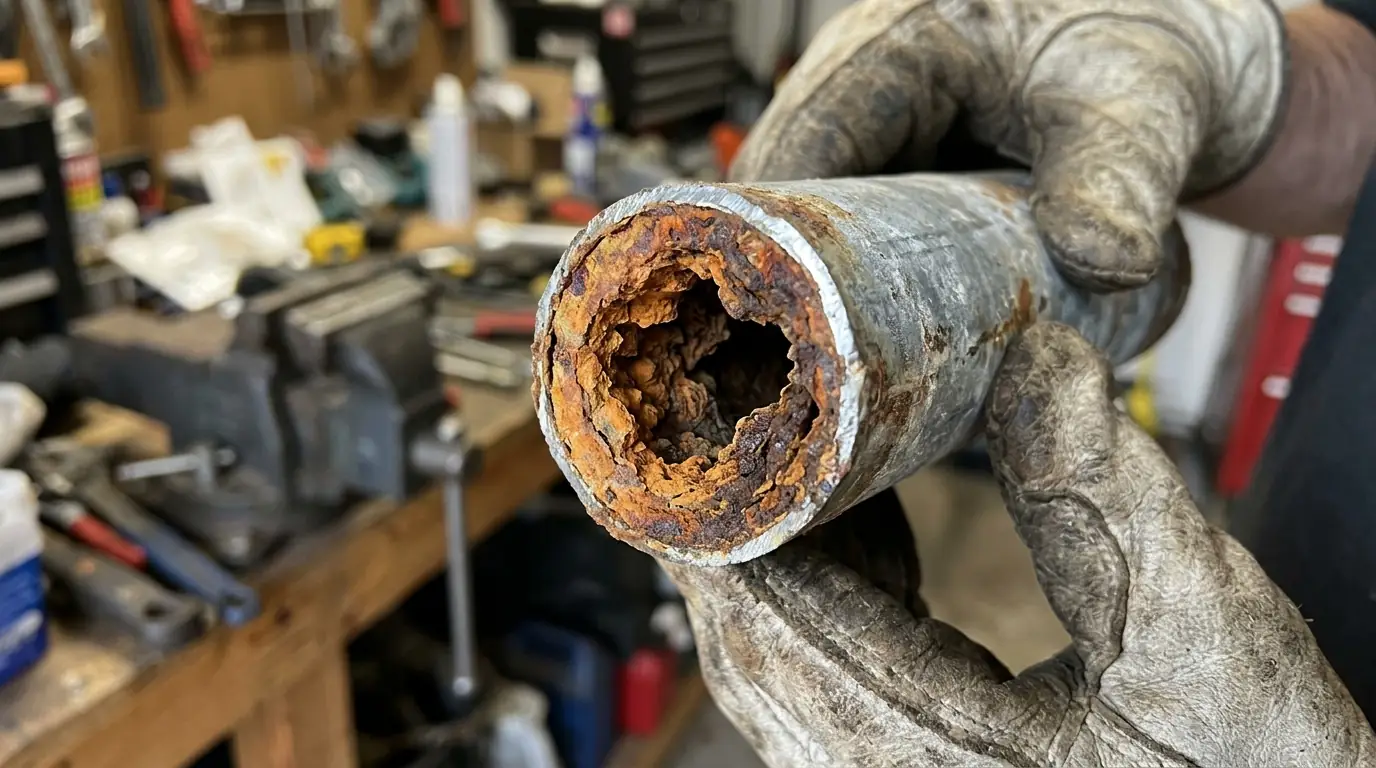
Galvanized pipe is steel coated with zinc. Over decades the zinc wears away and the steel underneath rusts, building up scale on the inside wall of the pipe. The opening slowly shrinks, which is why an old house can have fine pressure at the street and a weak trickle at the upstairs shower.
Scale also breaks loose and shows up as brown water after the supply has been shut off, or as grit in faucet screens. The threaded joints are the thinnest part of the pipe, so leaks usually start there. Once several joints are weeping, the rest are rarely far behind.
Polybutylene is a gray or blue plastic supply pipe installed in many homes during the 1980s and early 1990s. It tends to fail without warning, often at the fittings or where the pipe is crimped, and the failures can be sudden rather than a slow drip.
Because the weak points are spread across the whole system, replacing one failed section does little to lower the risk elsewhere. If you see gray plastic tubing stamped with a PB code at your water heater or under sinks, it is worth having us confirm what you have.
Both are sound choices for a Salem house, and we install either. The difference is mostly in cost, labor and how the pipe gets through an existing home. Many repipes end up mostly PEX, with copper kept at the water heater or other exposed spots where a homeowner prefers it.
Most homes are repiped over a few working days, and we restore water to the house at the end of each day whenever the layout allows it. We protect floors and furniture near each work area and keep the openings to what is needed to reach a fixture.
When the new system is in, we pressure test it before any wall is closed, then flush the lines and check every fixture for flow. When a permit is required, we pull it and schedule the inspection. Drywall patching at the openings can be included in the plan if you want it.
Warning signs
On the visit
We trace the existing supply system, note pipe materials and plan the route for each new line through crawlspace, attic or walls.
You get the pipe material, the access openings needed, the expected schedule and a price before any work begins.
Main hot and cold lines go in first, usually under the floor, with a new main shutoff where it makes sense.
Branches rise to each sink, toilet, shower and appliance through small openings, and each gets a new stop valve.
The system is pressure tested, flushed and checked at every fixture, and any required permit inspection is scheduled.
| What is included | Typical range |
|---|---|
| Whole-house repipe, typical Salem home | $5,800 to $14,900 |
| New main shutoff valve at the house entry | $215 to $460 |
| Drywall patching at fixture openings | $690 to $2,140 |
| Water heater connections redone in copper | $289 to $575 |
Size of the home, number of bathrooms, number of stories and pipe choice set the price. The plumber gives you a final price before work starts, after walking the house.
Around Salem
Repipes are most common in the early 1900s to 1940s homes around Gaiety Hill, Grant and Bush's Pasture Park, where galvanized steel remains, and in South Salem and West Salem hill homes plumbed with polybutylene.
Prices for every service are on one page: the First Choice Rooter price list.
Call (971) 326-9414Questions
A single-story house over a crawlspace with one or two bathrooms is often repiped in about 2 to 4 working days. Two-story homes and houses with plaster walls take longer because getting lines to the upper floor needs more planning. We give you a schedule with the price, and we restore water at the end of each workday whenever we can.
If weak pressure comes from galvanized pipe that has closed up with scale, new pipe usually makes a clear difference, because the full inside diameter is open again. If the low pressure comes from the city supply or a failing pressure regulator, repiping alone will not fix it. We check pressure at the main before recommending a repipe.
Most families stay at home. The water is off while we work and back on in the evening in most layouts. Expect some noise, a few rooms with furniture moved away from walls, and small openings at fixtures until they are patched. We tell you each morning which areas we will be working in.
Yes. Sometimes the main trunk or one bathroom group is in far worse shape than the rest, and replacing that portion is reasonable. The catch with galvanized steel and polybutylene is that the remaining old pipe keeps aging, so partial work often means a second project later. We lay out both options with prices.
No. Repiping usually refers to the pressurized supply lines that carry water to your fixtures. Drain, waste and vent piping is a separate system. If your crawlspace shows cracked cast iron or failing drain sections, we can inspect and price that work at the same visit, but it is quoted on its own.
Related work
Water service line replacement means installing a new buried pipe between the water meter and the house, then connecting it to your main shutoff.
See the serviceLeak detection is a step-by-step search for water escaping from your pipes where you cannot see it.
See the serviceA pressure regulator, or pressure reducing valve, sits on the main water line and lowers street pressure to a level your plumbing can handle.
See the serviceA real person answers 24/7. Tell us what the drains are doing and we will send a First Choice Rooter plumber with the right equipment on the truck.