Leak Detection
Leak detection is a step-by-step search for water escaping from your pipes where you cannot see it.
See the servicePipes, leaks and water lines
The pipe that carries water from the city meter to your house is your responsibility, and when it leaks or chokes down with rust, the fix is a new line. We dig, replace and connect it.
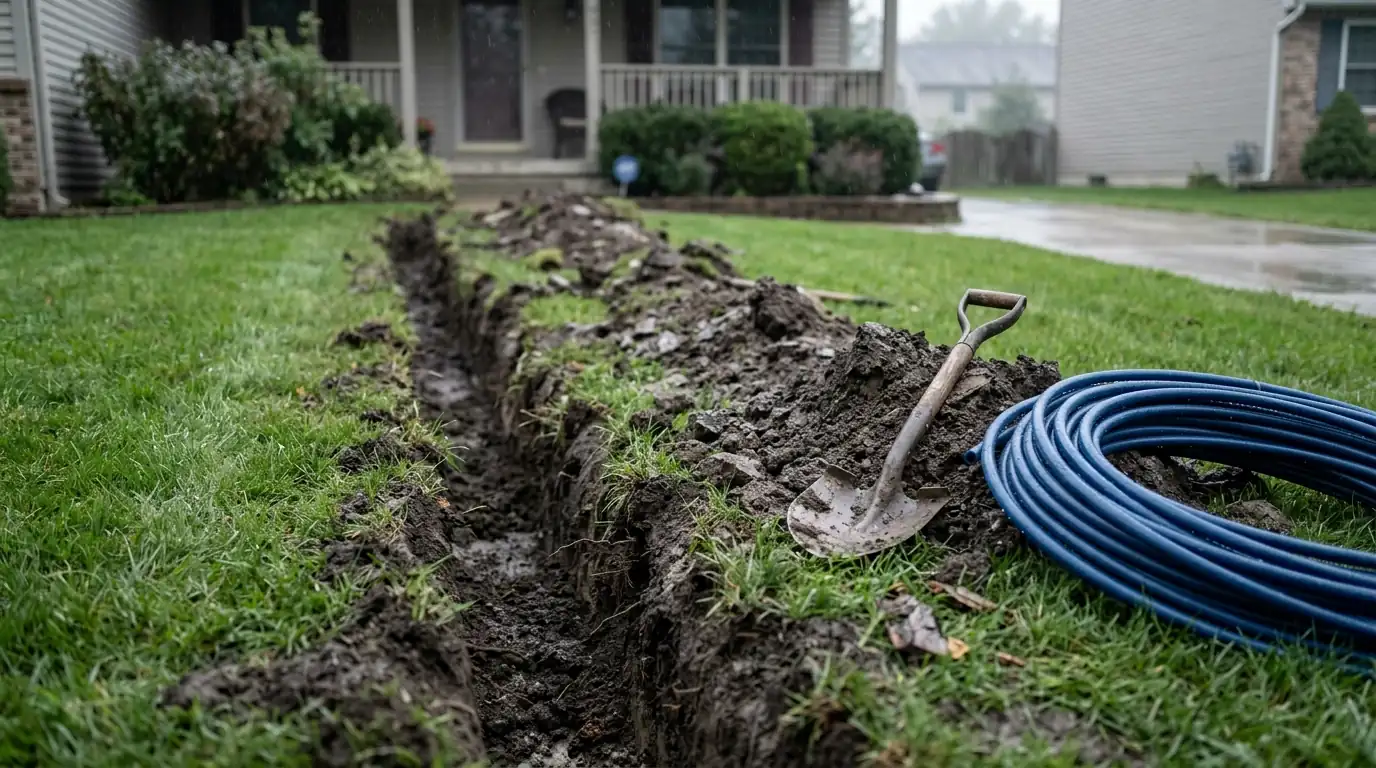
Water service line replacement means installing a new buried pipe between the water meter and the house, then connecting it to your main shutoff. We excavate a trench or bore beneath obstacles, lay new pipe at proper depth, pressure test it and backfill. You need it when the meter shows a leak outside the house, pressure is weak at the main, or the old line is galvanized steel.
In Salem, the city's responsibility for water generally ends at the meter, usually in a concrete box near the curb. The pipe from that meter to your house is a private line, and when it fails, the repair falls on the homeowner. Many older homes still have the original line, often galvanized steel that has rusted inside.
These lines fail in a few predictable ways. Some leak slowly underground for months, raising the bill and softening a strip of lawn. Others never leak but lose so much inside diameter to rust that the whole house runs weak. In both cases, replacing the line usually costs less over time than chasing repeat repairs.
Look for the meter box near the street, often in a parking strip or at the edge of the front yard. The city owns the meter and the pipe on the street side of it. From the outlet of the meter to the house, the pipe belongs to you, and so does any leak along it.
That private line is often longer than people expect, especially on deep lots or hillside homes set well back from the road. Before quoting, we walk the likely route, look for the main shutoff where the line enters, and note sidewalks, driveways and trees in the way.
We start with the meter. With every fixture off, a moving leak indicator says water is escaping. Closing the house shutoff tells us more: if the dial keeps turning with that valve closed, the leak sits between the meter and the foundation.
From there, ground microphones help us hear the leak through soil. Wet strips in the lawn, a sinking patch along the route or water bubbling up near the meter box during dry weather all support the finding. Once we know the line is the problem, we price both a spot repair and full replacement.
Most new service lines go into an open trench dug along the old route or a straighter one. The trench has to reach enough depth to protect the pipe from frost and surface damage, and the line is bedded so rocks do not press against it.
Where the route crosses a driveway, walkway or mature tree roots, we can often bore beneath them and pull the new pipe through instead of cutting concrete. On most jobs the new line is a polyethylene or PEX water service pipe rated for burial, with copper used in some cases.
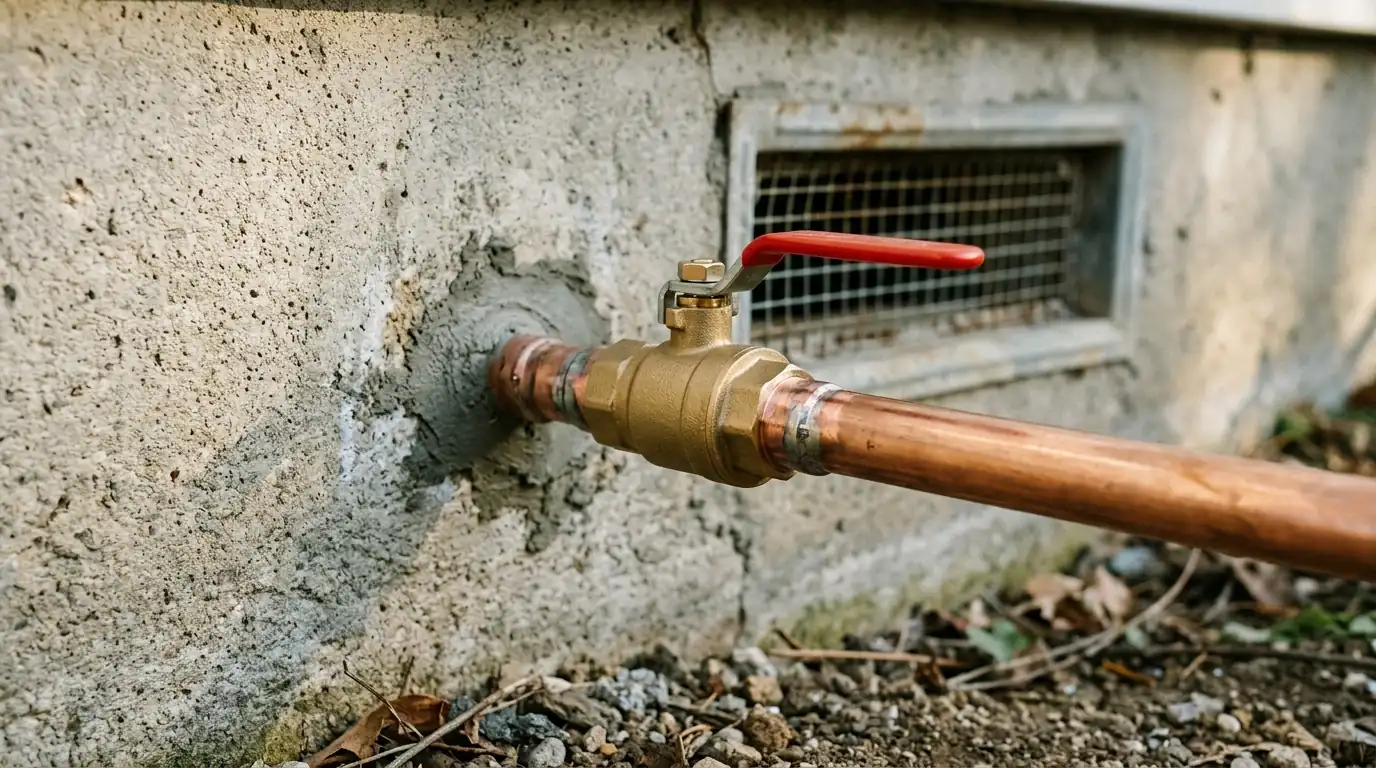
A new service line restores the full flow your house can draw from the city main. On a home that had a choked galvanized line, the difference is usually obvious at every fixture. We install a new main shutoff where the line enters, so you have a valve that turns when you need it.
Higher flow can also expose weak spots that the old line was hiding, such as a pressure regulator that no longer holds or worn fixture valves. We check pressure at the house after the switch and tell you if anything downstream needs attention.
Warning signs
On the visit
We run meter and shutoff tests, listen for the leak, and trace the likely path from the meter to the house.
You get the route, method, expected restoration work and a price before we schedule any digging.
Underground utilities are marked first, then we dig the trench or set up boring for spots under concrete or roots.
New service pipe goes in at proper depth, connects at the meter side, and ties into a new main shutoff at the house.
The line is pressure tested and flushed, the trench is backfilled, and any required permit inspection is arranged.
| What is included | Typical range |
|---|---|
| Water service line replacement, meter to house | $2,390 to $6,800 |
| Boring under a driveway or walkway | $590 to $1,480 |
| New main shutoff valve where the line enters | $190 to $425 |
Line length, depth, soil, and what sits on top of the route set the price. The final price is given before work starts, after the plumber has traced the line on site.
Around Salem
Service line replacements come up most in the early 1900s homes of Highland, Grant and Northeast Salem, where original galvanized lines remain, and on deep hillside lots in the South Salem and West Salem hills with long runs to the meter.
Prices for every service are on one page: the First Choice Rooter price list.
Call (971) 326-9414Questions
In general, the homeowner does. The city maintains the meter and the pipe on the street side of it, and the private line from the meter to your house is yours. If you are unsure where the boundary sits on your property, call the City of Salem utility office to confirm before work starts.
Yes, when the line is in decent shape and the leak is a single failed joint or a puncture. We dig at the leak, cut out the bad section and splice in new pipe. If the line is old galvanized steel that is rusting everywhere, spot repairs tend to be followed by more leaks, and replacement is the better spend.
There will be a trench along the route, usually a narrow one. We set soil aside on tarps, keep the work area tidy and backfill when the line passes its test. Under driveways, walkways or big tree roots, boring often avoids cutting the surface. Lawn will need reseeding or sod over the trench afterward.
It needs enough cover to protect it from freezing and from surface damage such as digging and vehicle loads. In the Willamette Valley that typically means burying the line below the frost-prone top layer of soil and well under any lawn edging or garden beds. When a permit is required, the inspector checks depth and bedding before the trench is closed.
If both lines are old and you are already digging in the front yard, combining them can save on excavation and restoration. Most codes require water and sewer lines to keep a set separation, so they often go in separate trenches or at different levels. We can look at both and price them together.
Related work
Leak detection is a step-by-step search for water escaping from your pipes where you cannot see it.
See the serviceWhole-house repiping replaces every hot and cold supply line from the main shutoff to each fixture.
See the serviceSewer line replacement means removing or abandoning the old lateral and installing new pipe from your foundation to the public sewer main.
See the serviceA real person answers 24/7. Tell us what the drains are doing and we will send a First Choice Rooter plumber with the right equipment on the truck.