Pressure Regulator Replacement
A pressure regulator, or pressure reducing valve, sits on the main water line and lowers street pressure to a level your plumbing can handle.
See the servicePipes, leaks and water lines
If the main shutoff in your crawlspace or garage will not turn, or turns but never fully stops the water, you have no fast way to stop a burst pipe. We replace it with a full-port ball valve.
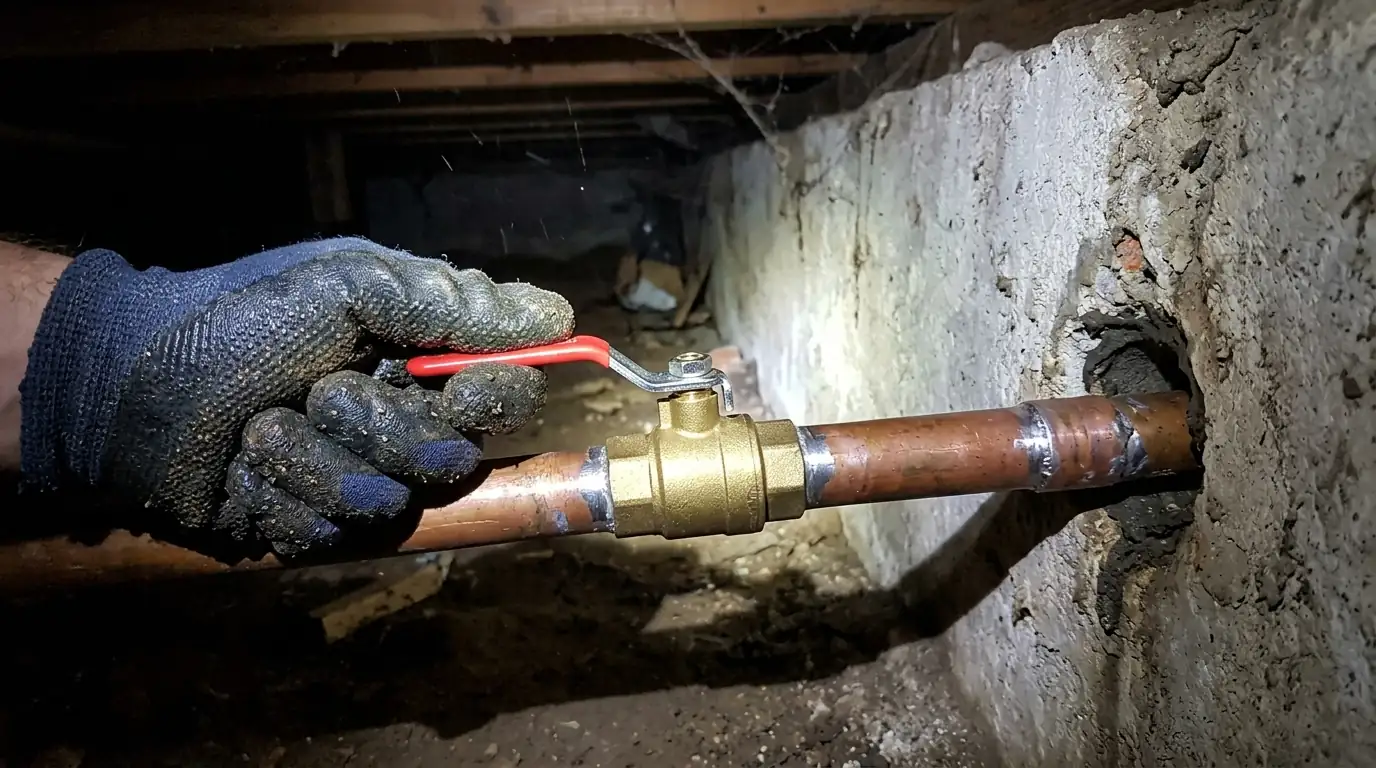
This service replaces the valve where your water supply enters the house, the one you close to stop all water inside. We shut the water off at the meter, cut out the old valve and install a full-port ball valve that closes with a quarter turn. You need it when the handle is seized, the valve drips at the stem, or water keeps flowing after you close it.
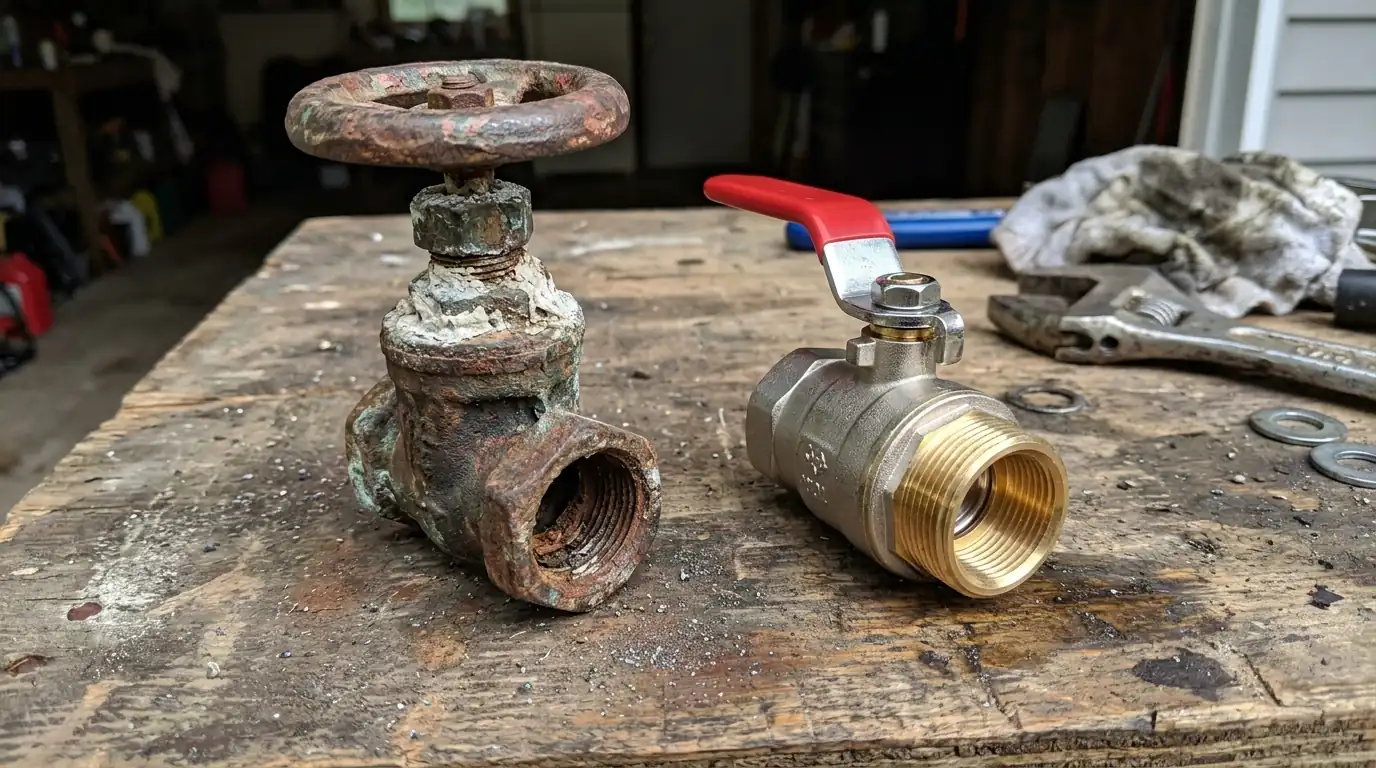
Most older Salem homes have a gate valve on the main line, with a round wheel handle that takes many turns to close. Inside, a brass wedge slides down into a seat. After years of sitting open, mineral deposits and corrosion lock the stem, and the wedge can wear or break loose from the stem so the handle spins without closing anything.
You usually find this out at the worst moment, with water spraying from a split pipe and the wheel refusing to budge. Replacing the valve ahead of time is a short, planned job. The new lever closes in a second, and it lets later plumbing repairs start without anyone touching the meter box.
A gate valve relies on a threaded stem with a packing nut around it. When the valve sits untouched for years, the threads corrode and the packing dries out. Forcing a stuck wheel can snap the stem or crack an old brass body, which is how a simple shutoff attempt turns into an emergency.
Even a valve that turns may not seal. Grit and scale on the seat keep the gate from closing tight, so water trickles past. That slow flow is enough to keep a repair on a faucet or water heater from going smoothly, because the pipe never fully drains.
A ball valve has a drilled ball inside that rotates a quarter turn to open or close. Full-port means the hole through the ball is the same size as the pipe, so the valve does not choke the flow to your fixtures. A lever handle shows at a glance whether the water is on or off.
Ball valves also handle long periods without use far better than gate valves. We still suggest closing and opening yours once or twice a year, which keeps the seals moving and confirms it works before you need it in a hurry.
Because most Salem houses are built over a crawlspace, the main often comes up through the foundation wall near the front of the house, just inside the crawlspace access. In newer homes it is commonly in the garage near the water heater, and in homes with a basement it is usually on the front wall where the line enters.
If you are not sure where yours is, we will find it and show you during the visit. If reaching it means crawling 40 feet under the house, we can talk about moving the shutoff to a more practical spot while the pipe is already open.
Out at the street, the water meter box usually holds a curb stop, a valve on the utility side of the meter. That valve belongs to the water utility. Homeowners should not force it with a wrench or a homemade key, because a broken curb stop becomes a utility repair and can leave the whole line without water.
When we replace your main valve, we shut the water at the meter in the way the utility allows, only for the short time the line is open. If the curb stop is faulty, we tell you so the utility can fix it.
Warning signs
On the visit
We find your main shutoff, check whether it closes, and look at the pipe material and condition on both sides of it.
The plumber explains the replacement and any pipe that also needs work, and gives you the final price before the water goes off.
We close the supply at the meter the way the utility allows and drain the house lines through a low faucet.
The old valve is cut out and a full-port ball valve goes in with new fittings suited to your copper, galvanized or plastic line.
Water comes back on slowly, we bleed air from the faucets, check every new joint for leaks and show you how the lever works.
| What is included | Typical range |
|---|---|
| Main shutoff replaced with a full-port ball valve | $289 to $689 |
| Short run of corroded galvanized pipe replaced at the valve | $145 to $390 |
| Shutoff moved to an easier spot nearby | $215 to $560 |
The range depends on pipe size and material, how easy the valve is to reach and whether nearby pipe also needs work. The plumber gives you the final price before work starts, after seeing the job.
Around Salem
Seized main valves turn up most in older crawlspace homes around Northeast Salem, Grant and Lansing, where original gate valves sit on galvanized lines, and in South Salem hillside homes that pair the main shutoff with a pressure regulator.
Prices for every service are on one page: the First Choice Rooter price list.
Call (971) 326-9414Questions
Close it, then open the kitchen faucet. Water should slow to a stop within a minute or so as the pressure drains off. If the handle will not turn, turns endlessly, or water keeps flowing well after you close the valve, it is not doing its job. Do not force a stiff wheel with a long wrench.
If you have any doubt about it, yes. During a cold snap like the January 2024 ice storm, a burst crawlspace pipe can pour water under the house until someone shuts it off. Before a trip, many people close the main so a failed hose or fitting cannot flood the house while they are away. Both need a valve that closes on the first try.
It is better not to. The curb stop in the meter box belongs to the water utility, and forcing it with the wrong tool can break it or damage the meter. If your house valve fails during an emergency, call us or the utility. Replacing a bad main shutoff valve means you never have to rely on the curb stop at all.
Most replacements take one to two hours from the moment the water goes off. It takes longer if the old valve sits in crumbling galvanized pipe or at the far end of a tight crawlspace. Water is off only while the pipe is open.
For a house main, we almost always recommend a full-port ball valve. It closes with a quarter turn and keeps working after long stretches untouched. A new gate valve would start out fine but has the same weak points as the old one: a threaded stem, packing that dries out and a seat that collects scale.
Related work
A pressure regulator, or pressure reducing valve, sits on the main water line and lowers street pressure to a level your plumbing can handle.
See the serviceThis service covers thawing frozen supply lines safely and repairing pipes that have split or pulled apart from freezing.
See the serviceWater service line replacement means installing a new buried pipe between the water meter and the house, then connecting it to your main shutoff.
See the serviceA real person answers 24/7. Tell us what the drains are doing and we will send a First Choice Rooter plumber with the right equipment on the truck.