Garbage Disposal Repair and Installation
Garbage disposal service covers freeing jammed flywheels, resetting tripped motors, fixing leaks at the sink flange, dishwasher inlet and discharge tube, and replacing worn-out units.
See the serviceFixtures and hookups
A new dishwasher or washing machine is only as reliable as its connections. We hook up the water and drain lines properly so the appliance fills, drains and stays dry underneath.
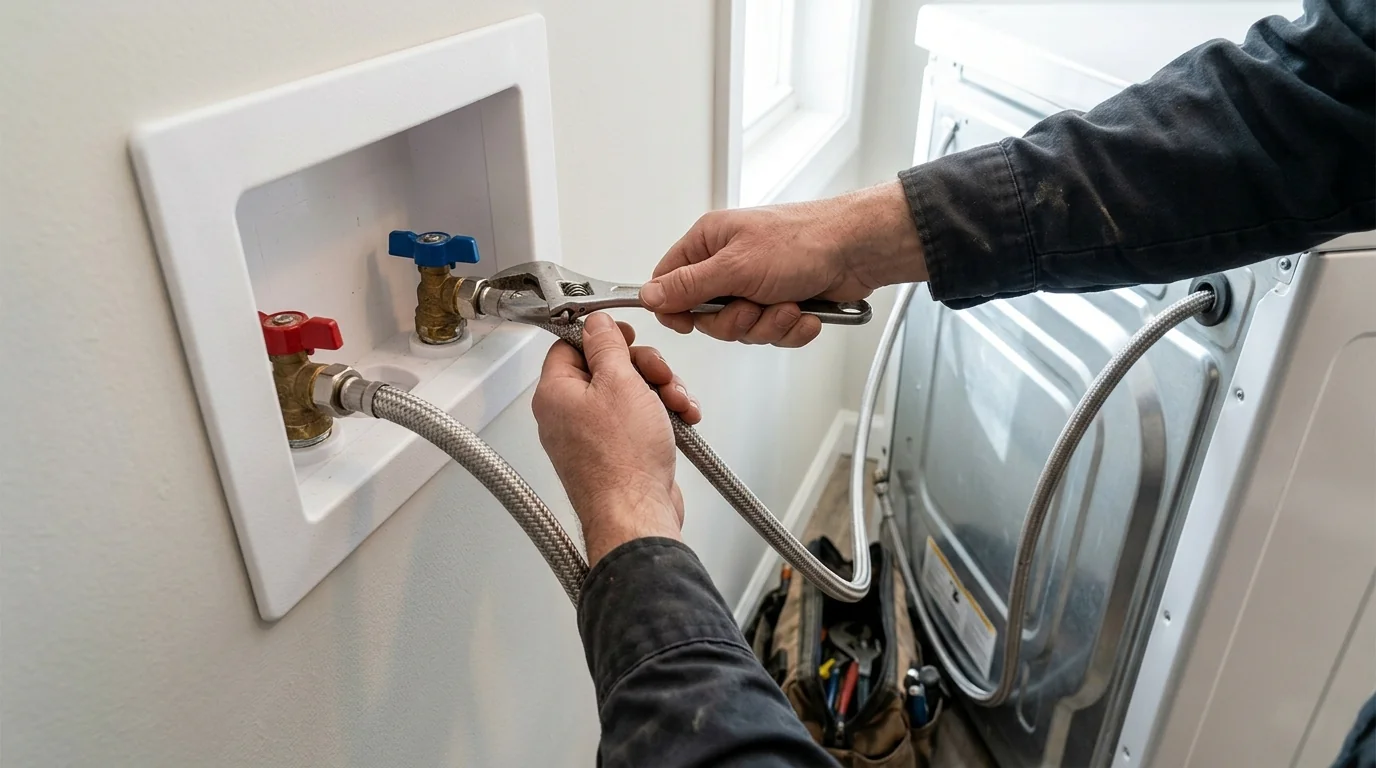
Appliance hookup service covers connecting dishwashers, washing machines and refrigerator ice makers to water supply and drain. That includes shutoff valves, braided supply lines, drain hoses with a high loop or air gap, washer boxes, standpipes and ice maker lines. You need it when installing a new appliance, moving one to a new spot, or fixing a hookup that leaks, backs up or drains poorly.
A dishwasher, washer or ice maker is one appliance with three plumbing parts: a water supply with a shutoff, a drain path that keeps dirty water from flowing back in, and fittings that will not crack or kink. When any of those is done poorly, the appliance leaks, smells or fails to drain, and the damage is often hidden.
Many hookups we see were done quickly at delivery, with an old rubber hose reused or a drain hose shoved too far into a standpipe. Our plumbers connect each appliance to current practice and look at what is behind it. We work with new appliances, existing ones being moved, and older hookups that have started causing problems.
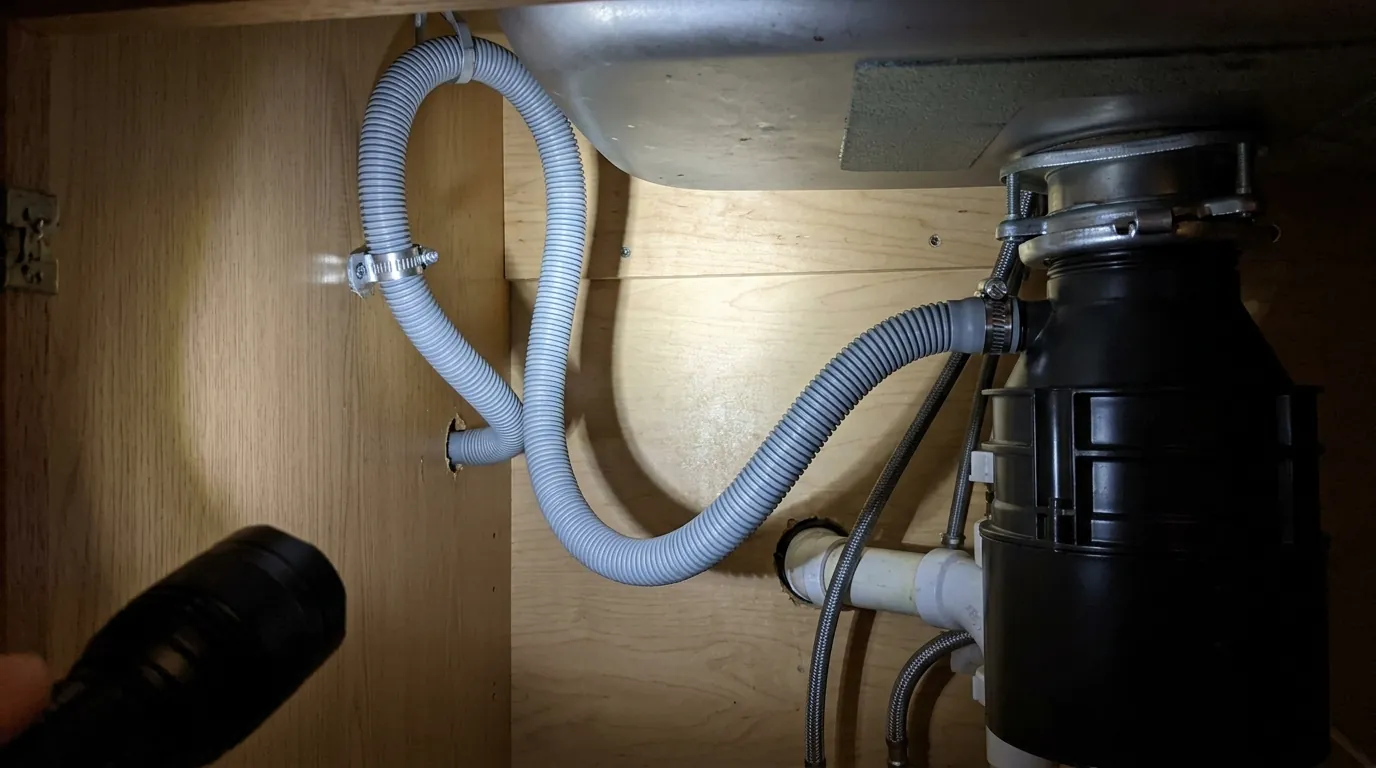
A dishwasher pumps its drain water out through a hose that usually connects to the disposal or to a fitting on the sink tailpiece. If that hose runs low, dirty sink water can siphon back into the dishwasher. A high loop, where the hose is fastened up under the counter before it drops to the drain, stops that.
An air gap is a small fitting mounted on the sink or counter that physically breaks the connection between the drain hose and the sink drain. It is the stronger protection, and some local rules call for one. We install whichever fits your setup and is required, and we make sure the hose is not kinked behind the unit.
A washing machine drains through a hose hooked into a standpipe, a vertical pipe with a trap below it, or into a laundry sink. The standpipe must be tall enough that water does not siphon out of the washer and short enough that the pump can push water over it. The hose should slip in a few inches, not be sealed tight.
Many newer Salem homes have a recessed washer box in the wall with hot and cold valves and the drain opening built in. Older homes may have exposed valves and a standpipe tied into a laundry tub. Washers drain quickly, so if the drain line beyond the trap is partly blocked, the standpipe overflows mid-cycle.
Washer supply lines sit under pressure all the time, whether the machine is running or not. Plain rubber hoses harden, crack and can burst while no one is home, sending water across the floor. Braided stainless lines with crimped ends are far more durable, and we replace old rubber hoses on every washer hookup.
Shutoff valves matter too. Single-lever valves on a washer box let you shut both hot and cold with one motion, which is useful if you are leaving town or replacing a hose. If your old multi-turn valves are stiff or drip at the stem, we can replace them while the washer is pulled out.
An ice maker or refrigerator water dispenser needs a small cold water line, usually run from under the kitchen sink or up through the floor from the crawlspace. Thin plastic tubing kinks and cracks over time and is a common source of slow, hidden leaks under the refrigerator.
We run braided or copper lines with a dedicated shutoff, and leave a coil of slack behind the refrigerator so it can be pulled out for cleaning without straining the fitting. We avoid saddle valves that pierce the pipe, because they often leak once disturbed. A proper tee and shutoff takes a few extra minutes.
Warning signs
On the visit
We look at where the appliance will sit, the shutoff valves, the drain point and whether the floor is level.
We install or replace shutoffs, supply lines and drain fittings, and remove any disposal knockout plug.
We slide the unit in carefully so hoses do not kink, then level and secure it to the counter or floor.
We run the appliance through fill and drain while watching each connection for drips and the drain for backups.
We show you where the shutoffs are and how to close them before leaving the house for a trip.
| What is included | Typical range |
|---|---|
| Dishwasher or washer hookup, typical | $139 to $389 |
| Ice maker line with dedicated shutoff | $149 to $279 |
| Washer supply lines and valves replaced | $159 to $289 |
Hauling away an old appliance and any electrical work are separate. These figures reflect common Salem hookups, and your plumber confirms the price on site.
Around Salem
We replace the most old rubber washer hoses and plastic ice maker tubing in South Gateway, Sunnyslope and West Salem hill homes, where laundry rooms often sit upstairs and a slow leak travels through the ceiling below.
Prices for every service are on one page: the First Choice Rooter price list.
Call (971) 326-9414Questions
Both keep dirty sink water from siphoning back into the dishwasher. An air gap mounted on the sink or counter is the stronger protection, and some local rules call for it. A high loop under the counter works in many setups. We look at your dishwasher, sink and local requirements and install the right one.
Rubber washer hoses should be checked every year and replaced at the first sign of cracking, bulging or stiffness. Braided stainless lines last longer but still need a look now and then. On any washing machine hookup we replace rubber hoses with braided ones, because a burst hose can flood a laundry room fast.
A washer pumps water out quickly, and the standpipe has to carry it away just as fast. If the drain line beyond the trap is partly clogged with lint, soap residue or grease, water rises up the standpipe and spills out. Clearing the laundry drain usually fixes it, and we check standpipe height too.
Yes. In many Salem homes the simplest route for an ice maker line is up through the floor from the crawlspace, tapped off a nearby cold line with its own shutoff. We protect the line where it passes through the floor and insulate it if it runs near a vent where cold air could freeze it.
Usually. A new dishwasher spot needs a cabinet opening, hot water supply, a drain connection to the sink or disposal, and a dedicated electrical circuit. We handle the plumbing side and can tell you what the electrical side will need. Most kitchens can take a dishwasher next to the sink base.
Related work
Garbage disposal service covers freeing jammed flywheels, resetting tripped motors, fixing leaks at the sink flange, dishwasher inlet and discharge tube, and replacing worn-out units.
See the serviceFloor and laundry drain cleaning clears basement and garage floor drains, laundry standpipes and utility sink lines of lint, detergent sludge, silt and debris.
See the serviceLeak detection is a step-by-step search for water escaping from your pipes where you cannot see it.
See the serviceA real person answers 24/7. Tell us what the drains are doing and we will send a First Choice Rooter plumber with the right equipment on the truck.