What a backflow assembly actually does
Water in your home is supposed to flow one way: from the city main, through your meter, and out your taps. Backflow is when it reverses. A sudden pressure drop in the main, from a water main break or firefighters drawing heavily from a hydrant, can pull water backward out of a home system. If that water has been sitting in irrigation lines with fertilizer or lawn chemicals, it can be drawn toward the public supply.
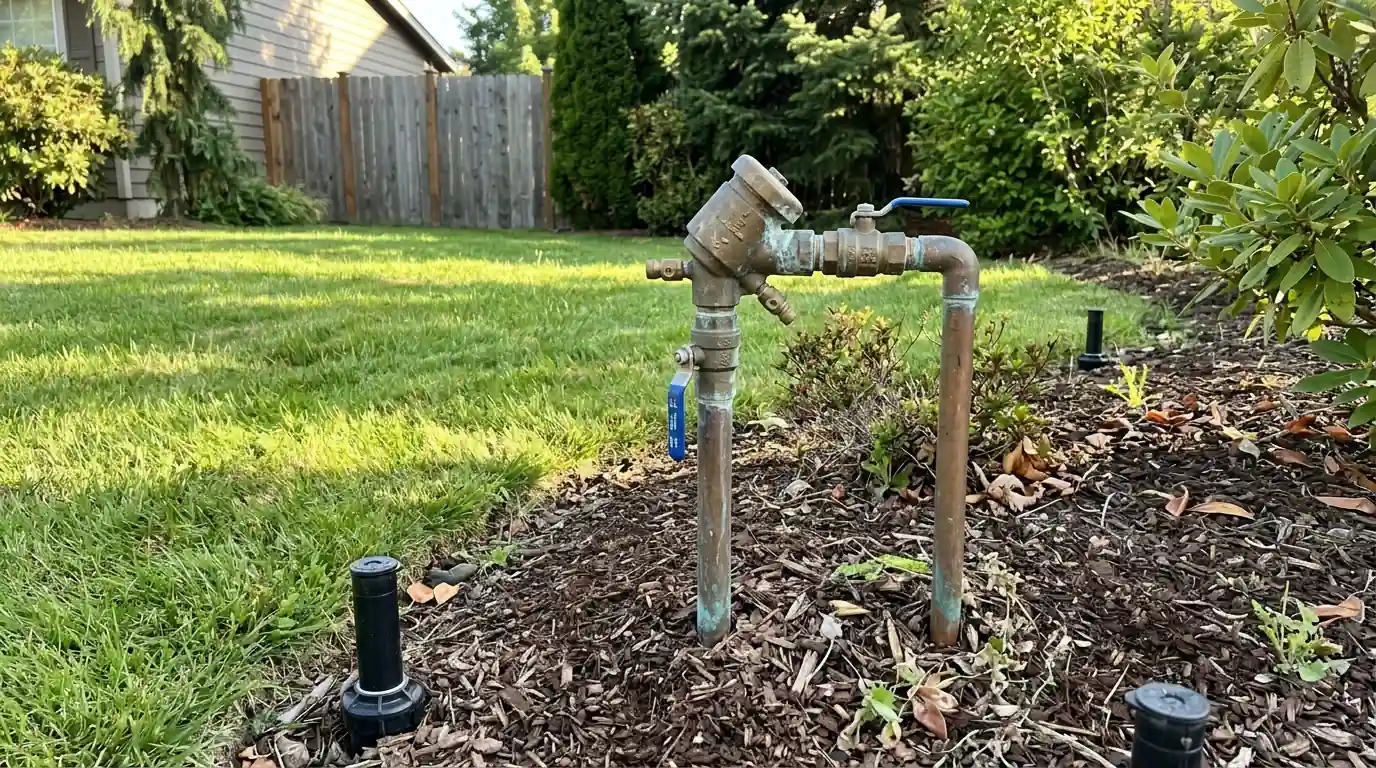
A backflow assembly is a set of check valves and test ports installed on a line that carries that kind of risk. The valves let water pass forward and close against reverse flow. Some designs also have a relief valve that dumps water outside rather than letting it go backward.
Because the internal springs and rubber seals wear, an assembly can look fine from the outside and still fail to close. That is why it gets tested. A sprinkler system that runs every summer evening and sits idle all winter puts real wear on those parts, and a bit of grit from the line can hold a check valve open without any visible leak.
Why the City of Salem sent you a letter
The City of Salem requires backflow assemblies, for example on lawn irrigation systems, pools, wells or boilers, to be tested every year by a tester certified by the Oregon Health Authority. Each customer has a compliance month, and the City sends reminder letters ahead of it. The letter is not a violation notice. It is a heads-up that your yearly test is coming due.
After the test, the tester sends the report to the City, which is how your record stays current. You do not need to mail anything yourself if the tester handles the report. Keep a copy for your own files, though, because it shows the date, results and the assembly details if questions come up later.
- Find the assembly, often near the irrigation shutoff or at the meter side of the yard
- Note your compliance month from the letter
- Arrange the test with a certified tester ahead of that month
- Keep your copy of the test report with your house records
What happens during the yearly test
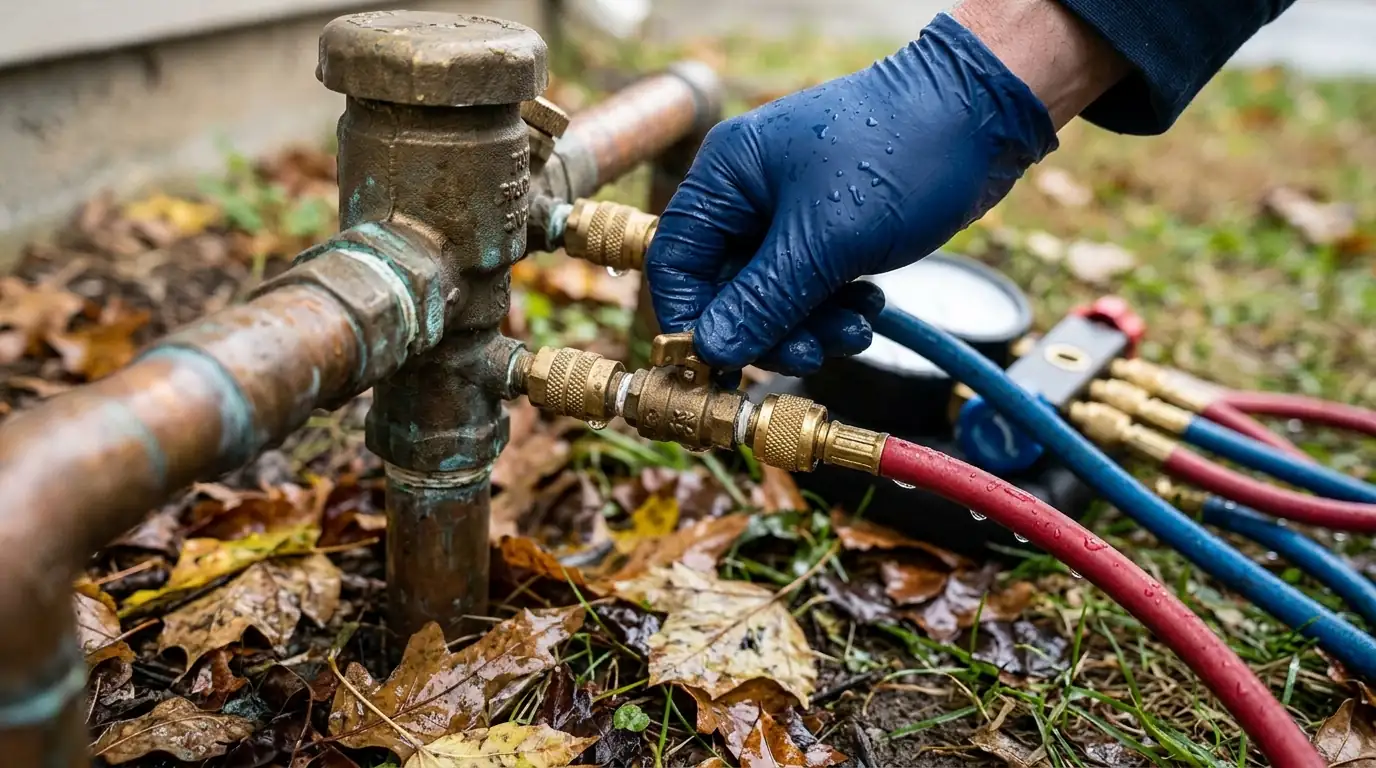
The tester connects a gauge kit to the small test ports on the assembly and closes the shutoff valves in a set order. With the water isolated, they measure the pressure difference across each check valve and confirm the valves hold and, on some designs, that the relief valve opens when it should. The whole process usually takes a short visit and requires the water to that line to be off for a little while.
The City notes that many tests cost about $30 to $50. Someone does not always need to be home, as long as the tester can reach the assembly and shut off the water to it. If the assembly passes, the report goes to the City and you are set until next year. If it fails, the report shows which part did not hold, and the assembly needs repair before it can be retested.
Spring and early summer are the easiest times to get the test done for an irrigation assembly, since the system is being turned back on anyway and any freeze damage from winter shows up right away. If your compliance month falls in the off season, the assembly still needs its test, so make sure the tester can reach it and the water to that line can be shut off.
When an assembly fails or needs replacing
Failures usually come down to a worn rubber seal, a weak spring, debris stuck in a check valve, or a cracked body. Freeze damage is a common cause in Salem. An irrigation assembly that sits above ground through a hard cold snap, like the January 2024 ice storm, can split or have its internals damaged if it was not drained and protected.
We install and repair backflow assemblies. A repair might mean rebuilding the check valves with a new seal kit, while a cracked or very old unit is often better replaced. In Salem, backflow installation or repair typically runs $279 to $1,290, depending on the size and type of assembly and how it is plumbed. The final price is given before work starts, after the plumber sees the job.
Once it is repaired, the assembly is retested so a passing report can go to the City. If you are replacing an old unit anyway, it is a good moment to think about placement. An assembly tucked behind a shrub or buried in bark dust is harder to test, harder to protect in winter, and easier to damage with a mower.
Protecting the assembly between tests
Most irrigation assemblies in Salem sit outdoors, so winter protection matters. Before freezing weather arrives, shut off the water to the irrigation system, drain the assembly through its test cocks according to its design, and cover it with an insulated pouch or box. In spring, open the valves slowly to avoid slamming the internal parts.
Keep shrubs and bark dust from burying the assembly, and do not let it get hit by mowers or trimmers. A leaking or dripping relief valve between tests is a sign that something inside is not sealing and is worth checking before your compliance month comes around. Leaving it to drip wastes water and usually means a bigger repair later.
Simple next steps when the letter arrives
Read the letter for your compliance month and put a reminder in your calendar a few weeks ahead. Walk out and find the assembly so you know where it is and whether it looks damaged. If it was not protected last winter, check for cracks or leaks before the tester arrives, because a test on a damaged unit will only confirm what you can see.
If you are adding a new irrigation system, pool or boiler, plan for the backflow assembly as part of the job. If your assembly has failed, leaks, or needs to be replaced, call First Choice Rooter. We install and repair backflow assemblies and can help set up the yearly test, so the passing report gets to the City on time.
- The City of Salem requires backflow assemblies on lines like irrigation, pools, wells and boilers to be tested every year.
- The test must be done by a tester certified by the Oregon Health Authority, who sends the report to the City.
- The City notes that many tests cost about $30 to $50, and a failed assembly needs repair and a retest.
- Draining and covering an outdoor assembly before freezing weather prevents the most common Salem failure.