How a cable machine clears a line
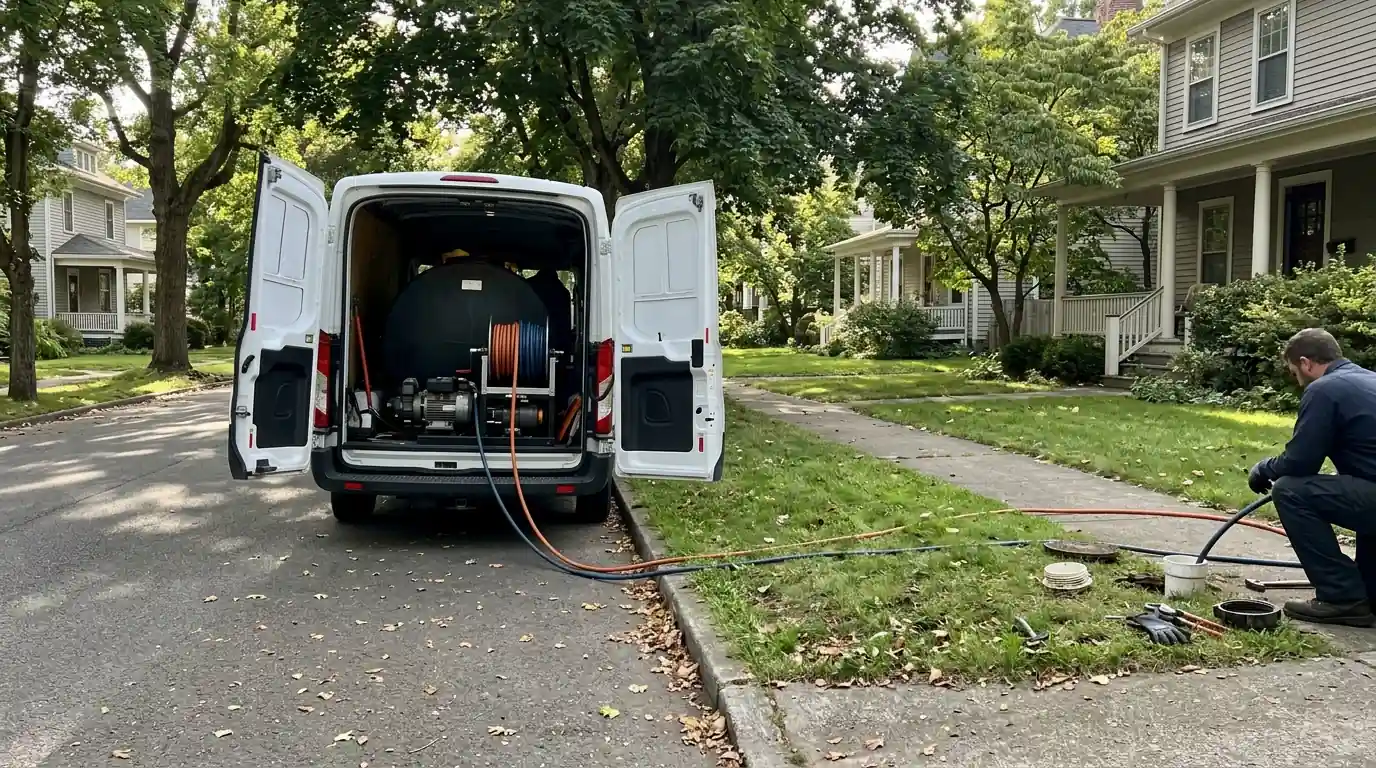
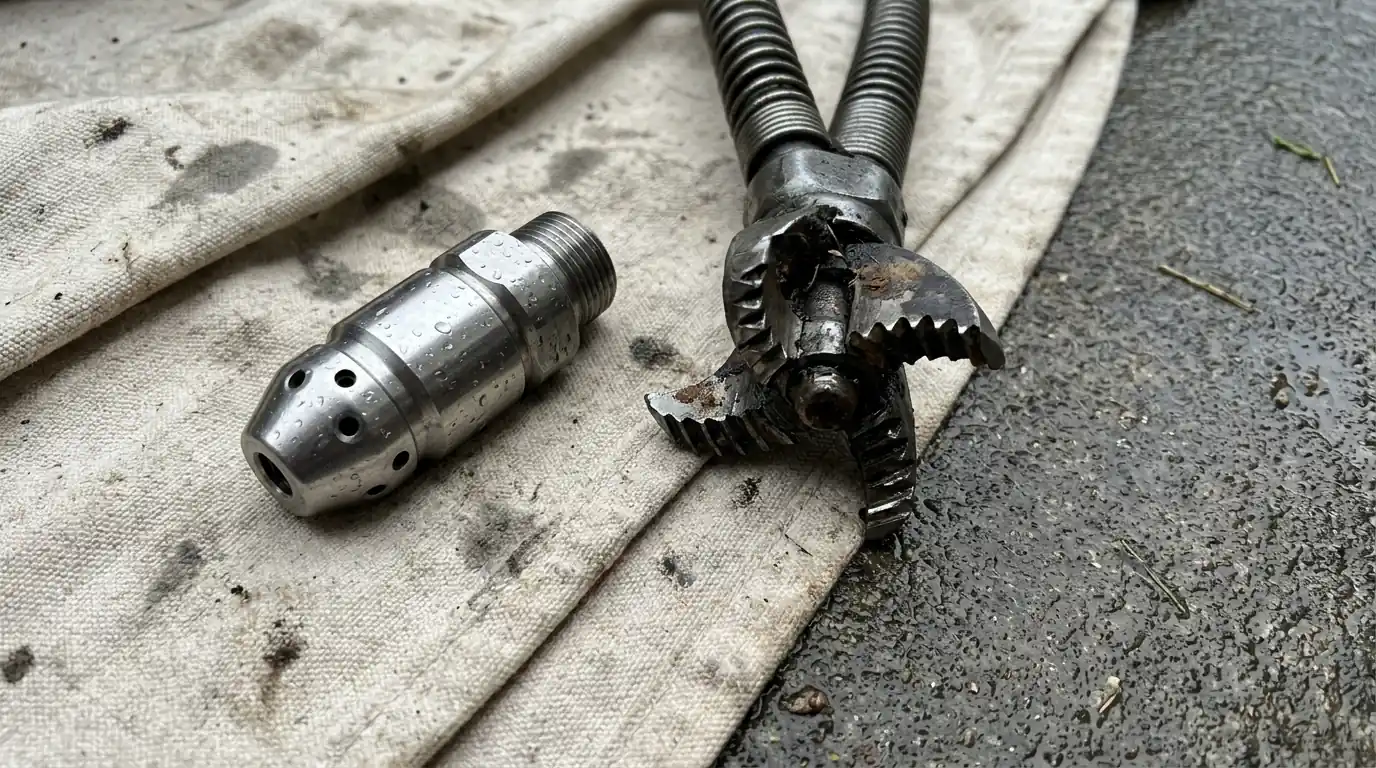
A drain cable, sometimes called a snake or an auger, is a coiled steel cable spun by a motor. The plumber feeds it into the drain through a cleanout or fixture opening, and a cutting head on the end bores through whatever is blocking the pipe. Different heads do different jobs: a spear punches a hole through a soft clog, while a toothed blade cuts roots and packed debris.
Cabling is fast, works on almost any drain in the house, and is usually the first tool for a fresh clog. It is especially good at cutting roots in a clay sewer lateral and at getting through a solid blockage in one spot. A single drain cleared in Salem typically runs $149 to $289, and a main line cleared through a cleanout typically runs $289 to $549.
The limit is that a cable opens a channel through the clog, about the width of its head. It does not clean the full inside of the pipe. Grease, sludge and fine roots left on the walls can start catching debris again soon after, which is why some lines clog again within weeks of a cabling even though the plumber got water flowing.
How hydro jetting scours the pipe wall
A hydro jetter pushes water at high pressure through a hose with a specially designed nozzle on the end. Some jets point backward, pulling the hose forward through the line, while others point forward to break up blockages. As the plumber draws the hose back toward the opening, those jets scrub the pipe wall from all sides and flush the debris downstream.
Because jetting cleans the full diameter of the pipe, it removes the grease coating, sludge, scale and fine root hairs that a cable leaves behind. That makes it the stronger choice for lines that keep clogging in the same spot, kitchen lines packed with grease, and sewer lines that need a thorough cleaning before a camera inspection.
Hydro jetting in Salem typically runs $389 to $795. Commercial kitchen lines are a separate case, with restaurant line jetting typically running $489 to $1,290. Jetting takes more setup than cabling, since the machine needs a water supply and the plumber has to choose a nozzle and pressure that suit the pipe size and material. The final price is given before work starts, after the plumber sees the job.
Matching the method to the clog
The cause of the clog tells you most of what you need to know. A camera inspection, or what came out on the cable head, usually makes the choice obvious. Here is how the common problems line up in Salem homes, from the simple bathroom clog to the sewer line that keeps coming back.
Many jobs use both. In a rooty Salem sewer line, the plumber often cables first to cut the main root mass and get water moving, then jets to wash out the fine hairs and the sludge they trapped. That two-step approach leaves a cleaner pipe, gives the camera a clear view, and tends to stretch the time before roots close the line again.
- Hair and soap in a tub or shower drain: cable usually handles it
- A toy or wad of wipes in a toilet line: cable or auger first
- Heavy root masses in a clay lateral: cable to cut, then jet if needed
- Grease coating a kitchen line: jetting gives a longer-lasting result
- Repeat clogs every few months in the same line: jetting plus a camera look
- Sludge before a camera inspection or lining job: jetting to clean the wall
When the pipe itself decides the method
Pipe condition matters as much as the clog. Old clay in Salem's prewar neighborhoods, like Grant, Highland and Gaiety Hill, can be cracked, offset, or missing chunks. Jetting a badly broken clay line can wash soil into the pipe or make a weak section worse. A camera look first lets the plumber see whether the pipe can take the pressure.
Orangeburg pipe, a tar-paper style sewer line used in some midcentury homes, can be soft and deformed with age, and it calls for extra care with any method. Cast-iron drains inside older homes build up scale on the walls, and jetting with the right nozzle can clean that buildup more fully than a cable can. Modern PVC and ABS lines handle both methods well.
When a line is in poor shape, clearing it is a short-term step while you plan a repair. We will tell you plainly if a pipe looks too fragile for jetting, and in that case a careful cabling to restore flow, followed by a talk about spot repair or replacement, is the honest path rather than a stronger cleaning that the pipe cannot survive.
Why a camera often comes next
If you have had the same line cleared more than once in a year, it is worth knowing why. A camera inspection after the line is open shows roots returning at specific joints, a belly where waste settles, an offset where debris catches, or grease buildup that keeps coming back. Each of those has a different long-term answer.
A sewer camera inspection in Salem typically runs $219 to $389. For many homes, the combination of a cleaning and a camera look on the same visit answers two questions at once: is the line open now, and what is causing it to clog. The final price is given before work starts, after the plumber sees the job, so you know what each step costs before we begin.
Keeping a line clear after it is cleaned
Whatever method clears your line, the habits that follow decide how long it stays clear. Scrape plates into the trash rather than rinsing grease down the kitchen sink, and wipe greasy pans with a paper towel before washing. Use a hair catcher in tubs and showers. Flush only toilet paper, even with wipes labeled flushable, since they do not break down the way paper does.
If you have big trees over an old clay lateral, ask about a maintenance schedule rather than waiting for a backup. If a drain is slowing down again or you are not sure which method fits your line, call First Choice Rooter and the plumber will check the line and explain the choice before starting work.
- A cable machine bores through a clog and cuts roots, and it is usually the first tool for a fresh blockage.
- Hydro jetting scrubs the whole pipe wall, removing grease, sludge and fine roots a cable leaves behind.
- Old clay and Orangeburg lines need a camera look before jetting so the pipe is not damaged further.
- Repeat clogs in the same line are a reason to find the cause, not just clear it again.