Where galvanized pipe hides in Salem houses
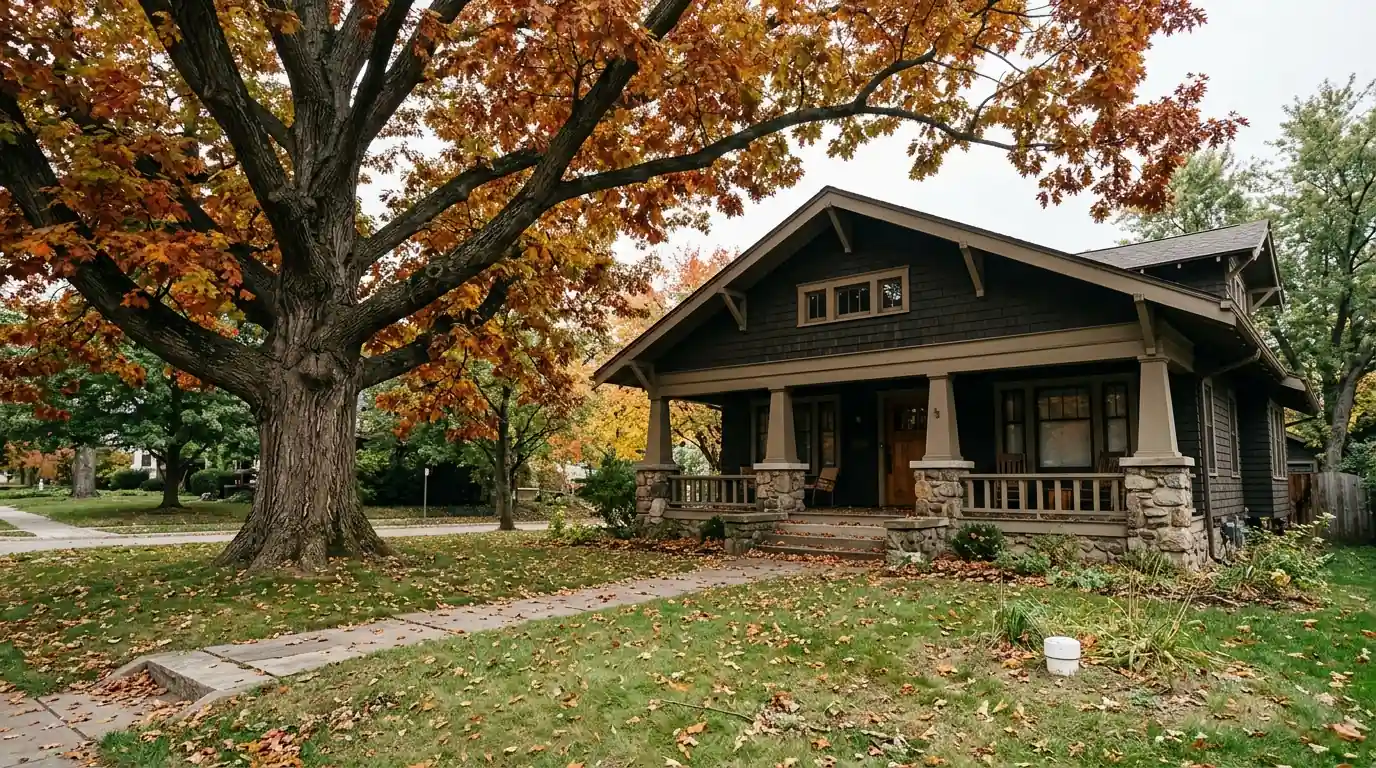
Galvanized steel was a standard water pipe in homes built in the early 1900s through the 1940s, and it shows up in older Salem neighborhoods like Grant, Highland, Gaiety Hill, Fairmount Hill and Northeast Salem, and around Bush's Pasture Park. Some postwar homes have it as well, sometimes mixed with copper from a later repair.
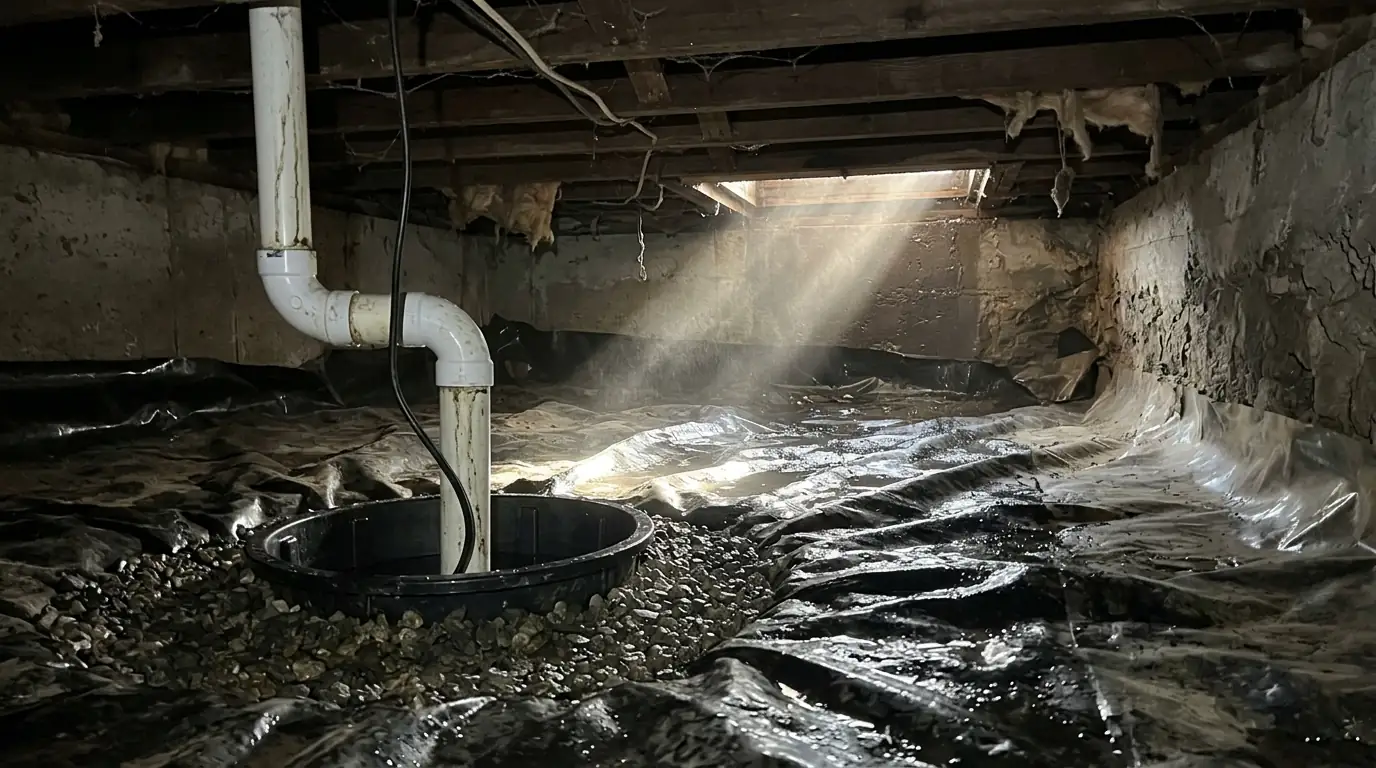
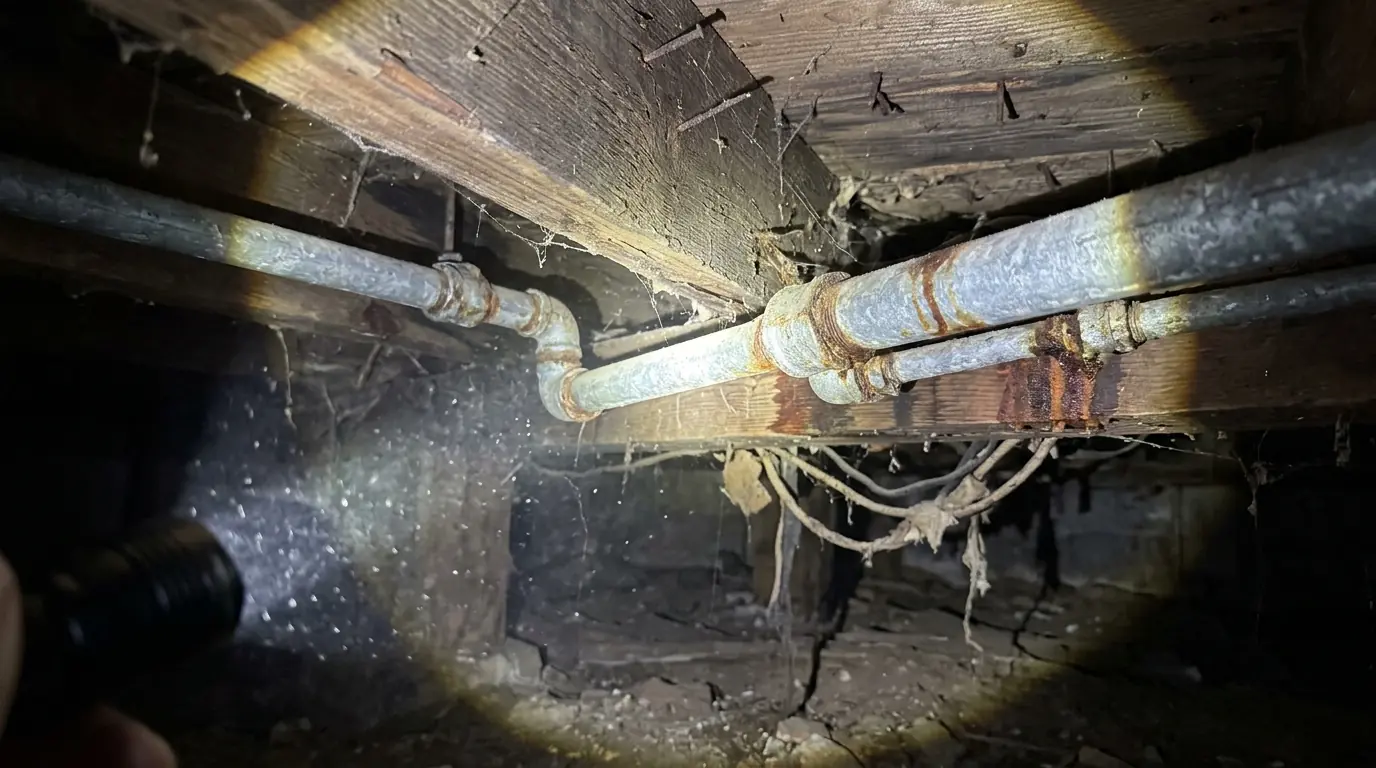
In a typical Salem crawlspace home, you can see much of the supply piping by looking under the house. Galvanized pipe is dull gray, with threaded fittings at every joint. If you scratch it with a key, it looks silver underneath, and a magnet sticks to it firmly. Copper is reddish brown and soldered, and PEX is flexible plastic tubing, usually red, blue or white.
Many homes have a mix. A previous owner may have replaced the line to the kitchen and left galvanized pipe everywhere else. Where copper was joined straight to steel without the right fitting, the two metals can corrode each other at that joint, so a patched system can have its own weak spots, separate from the age of the original pipe.
What happens inside an aging steel water line
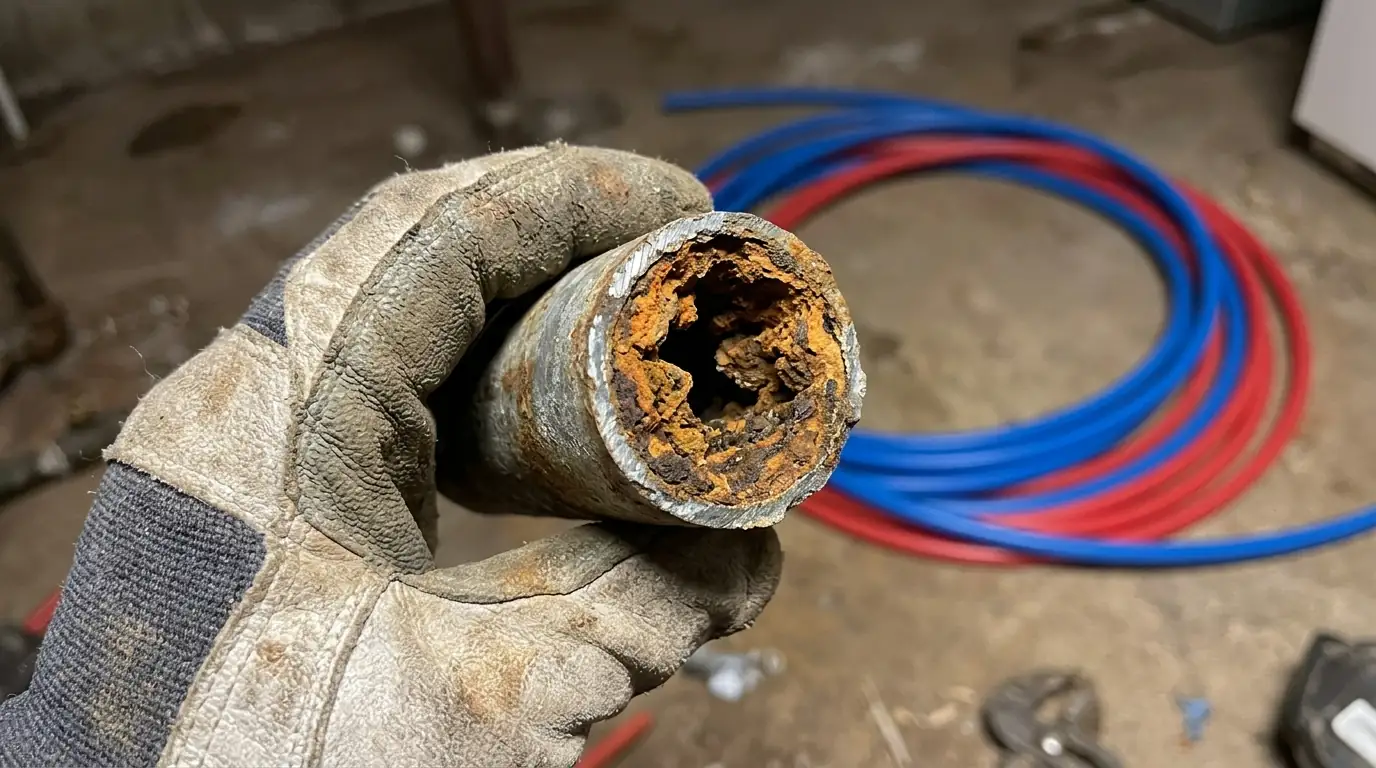
Galvanized pipe is steel coated with zinc to slow rust. Over many decades, the zinc wears away on the inside, and the steel begins to corrode. Rust and minerals build up on the pipe walls in layers, slowly narrowing the opening. A pipe that started with a full opening can end up with a much smaller channel, especially in horizontal runs and at fittings.
Salem's soft North Santiam water does not deposit heavy mineral scale the way hard water does, but steel still corrodes from the inside over time. The threads at each joint are the thinnest part of the pipe, since threading removes metal, so leaks often start at fittings first. That is why a crawlspace with galvanized lines often shows rust streaks or drips right at the elbows and tees.
Because the buildup happens slowly, many homeowners get used to weak water flow without realizing how much it has dropped over the years. The rust layer can also break loose when water pressure changes suddenly, such as after a main break or when the water is shut off and turned back on, sending a burst of brown water out of the faucets.
Signs your galvanized pipes are wearing out
Galvanized pipe rarely fails all at once. It gives you a list of smaller symptoms first, and those usually get worse over a few years. Check for these, especially in a house that has not been repiped, and note which fixtures show them, since the pattern points to which runs of pipe are most restricted.
Low pressure on the hot side only can point somewhere else, such as sediment in the water heater or a failing valve, so it helps to compare hot and cold at each faucet. When the cold water is weak at the far end of the house and fine near the main shutoff, narrowed galvanized pipe along that run is a likely cause.
- Low pressure at some faucets while others are fine
- Brown or rusty water after the house sits unused
- Pressure drops when two fixtures run at the same time
- Pinhole leaks or damp spots at threaded joints in the crawlspace
- Rust-colored stains in sinks, tubs or toilet tanks
- Visible rust or flaking on exposed pipe and fittings
Spot repairs versus whole-house repiping
When one section leaks, a plumber can cut out the bad piece and replace it, usually with copper or PEX and the right fittings to join the old and new materials. That stops the leak, but the rest of the galvanized pipe keeps aging. If the pipes are near the end of their life, you can end up chasing one leak after another.
Whole-house repiping replaces the supply lines throughout the house, usually with PEX or copper. In a Salem crawlspace home, much of the work happens under the floor, which often means fewer openings in finished walls than in a slab house. Whole-house repiping in Salem typically runs $5,800 to $14,900, depending on the size of the house, the number of fixtures, and access.
The final price is given before work starts, after the plumber sees the job and the layout of the existing pipes. A typical repipe moves from fixture to fixture over a few days, and the water is usually restored at the end of each workday, so most families stay in the house while the work goes on.
Do not forget the service line from the street
Inside the house is only part of the story. The water service line that runs from the meter to the house is often the same age as the original plumbing, and in older Salem homes it may be galvanized steel too. If the service line is clogged with rust, new pipes inside the house will still get weak flow, because the restriction is upstream.
Water service line replacement in Salem typically runs $2,390 to $6,800, depending on length, depth and what sits over the line. Many homeowners do the service line and the interior repipe in one project. While the water is off, it is also a good time to check whether the home has a pressure regulator and whether it is working, especially for homes on hillsides with high pressure.
Planning the replacement in a practical order
Start by finding out how much galvanized pipe is left. Look in the crawlspace, follow the line from the water heater and the main shutoff, and note where materials change. If you have weak pressure or rusty water, a plumber can check the pressure at different fixtures and the service line to see where the restriction is.
If leaks are already showing up, it may be time to plan a repipe rather than waiting for the next one. If the house is about to be remodeled, replacing the pipes during the remodel saves opening walls twice. When a permit is required, we pull it. If you want to know what is in your walls and crawlspace, call First Choice Rooter and a plumber will walk the system with you and lay out the options.
- Galvanized steel water pipe is common in Salem homes from the early 1900s to the 1940s.
- It corrodes from the inside, narrowing the pipe and causing low pressure, rusty water and leaks at threaded joints.
- Spot repairs stop single leaks, while whole-house repiping solves the problem for the whole system.
- Check the water service line from the meter too, since it may be the same age and just as restricted.